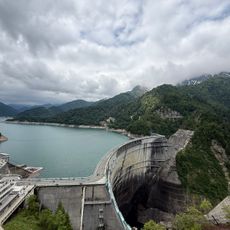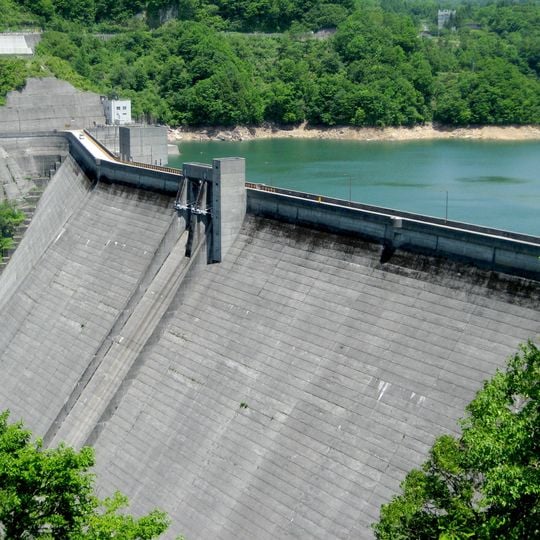
Arimine Dam, Gravity dam in Toyama, Japan.
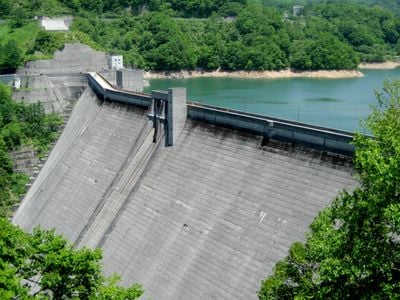
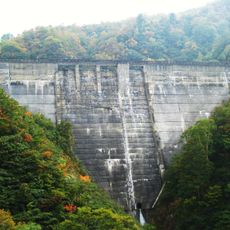
Arimine Dam is a 140-metre concrete gravity dam on the Wada River in Toyama. Its downstream face is built from grey rectangular blocks laid in rows, sloping from a straight crest with a low parapet and dark railing. A block-like gate structure with vertical rails and machinery stands near the centre of the crest, and a squat gatehouse and intake tower sit at the far left.
Toyama Prefecture bought the Arimine basin in 1920 and began a prefecture-run dam in 1937; work stopped in 1943. Hokuriku Electric Power took over in 1956, raised the planned height to 140 metres and finished the dam in 1960. The reservoir is named Arimine Lake.
The dam creation led to the formation of Arimine Lake, which has become part of the regional identity and recreational activities in Toyama Prefecture.
The site is most accessible during dry days as rain can make roads around the dam area slippery. Visitors should wear sturdy shoes and use marked paths to get the best views of the structure and the reservoir.
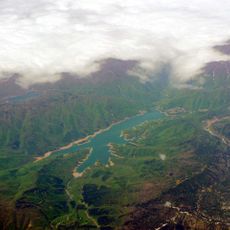
The reservoir, Arimine Lake, holds 222 million cubic metres, about 10 percent more than Kurobe Lake behind Kurobe Dam. Its total catchment of 219 square kilometres is over four times the area enclosed by the surrounding ridges, thanks to diversion tunnels from the Jinzu River system and other valleys. The small island Horai-jima is the summit of former Kichiji-yama, topped by a shrine Hokuriku Electric built to mark the dam's completion.
The community of curious travelers
AroundUs brings together thousands of curated places, local tips, and hidden gems, enriched daily by 93,851 contributors worldwide.