Jinkaku-ji, Buddhist temple in Bungoōno, Japan
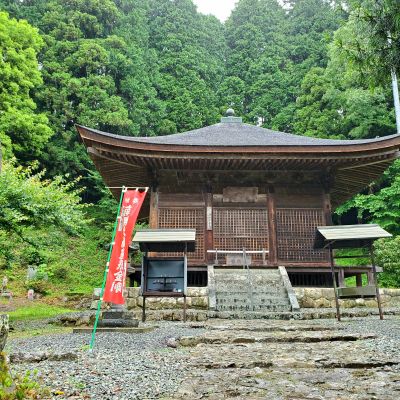
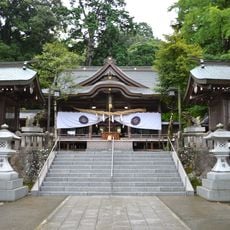
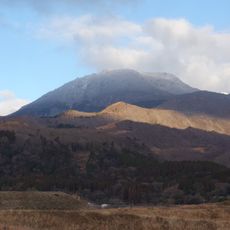
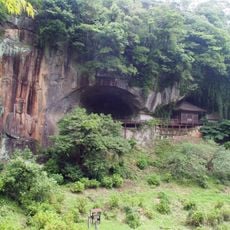
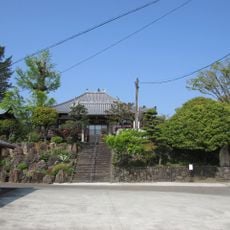
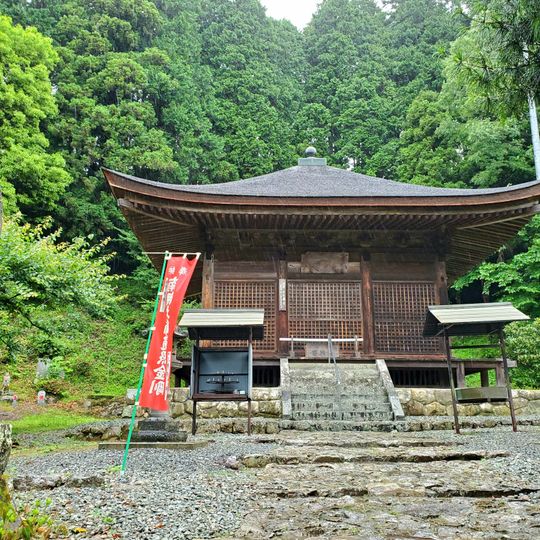
Jinkaku-ji is a Shingon temple near the summit of Mount Jinkakuji, a 730 m peak in northwestern Bungoōno, Ōita Prefecture. Its main hall is a square, single-storey building with a pyramidal hipped roof of cypress bark, three bays wide and three deep, retaining old Zen-style details. About 500 rhododendrons, some over a century old, grow in the grounds, and the old approach path is cut like a staircase into columnar-jointed volcanic rock.
Legend credits a Silla monk with founding Jinkaku-ji in 570, during Emperor Kinmei's reign. By the Heian period it was a Tendai temple with some 300 monks' quarters; Shōbō later rebuilt 36 quarters and converted it to Shingon. In 1369 the Ōtomo clan built the present main hall, and repairs followed under the Nakagawa lords of Oka domain in 1604 and in 1963.
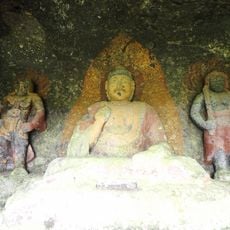
The temple is also called Shakunage-dera, or "Rhododendron Temple", for the roughly 500 rhododendrons over a century old in its grounds, which draw crowds when they flower in May. The main image, a hidden Eleven-Faced Thousand-Armed Kannon, is flanked by Fudō Myōō and the monk Shōbō Rigen Daishi; it is half-unveiled every 17 years and fully unveiled every 33 years.
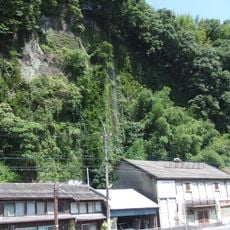
The temple stands near the summit of 730 m Mount Jinkakuji, reached by a path cut like stairs into the columnar joints of the Miyakeyama pyroclastic flow. The old approach is uneven, so wear sturdy shoes. About 500 rhododendrons over a century old bloom in May, when visitors crowd the grounds.
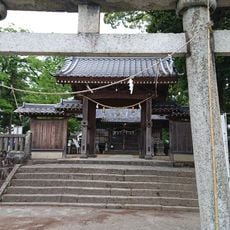
The pair of Kongōrikishi in the gate, about 2.5 m tall and carved in the early Kamakura period, were repaired over three years from 1983; a wooden tablet found inside lists 47 names, including the monk Ryōkei, and records that the sixth Okawa-domain lord Nakagawa Hisatada commissioned a major repair from the Kyoto sculptor Yamamoto Samon.
The community of curious travelers
AroundUs brings together thousands of curated places, local tips, and hidden gems, enriched daily by 93,231 contributors worldwide.