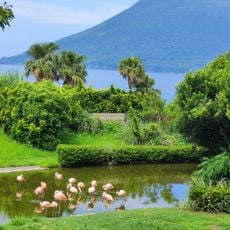
Lake Ikeda, Volcanic crater lake in Ibusuki, Japan.
Lake Ikeda fills the Ikeda Caldera, a depression about 3.5 km across in the southeastern Satsuma Peninsula, Kagoshima Prefecture. Its surface lies at 66 m elevation, and the lake reaches 233 m depth, putting the deepest point 167 m below sea level. A submerged volcano about 800 m wide and 150 m high rises from the lake floor. The shoreline runs roughly 15 km, with forested rims and small bays.
Lake Ikeda formed about 6,400 years ago, when a steam eruption near the present site was followed by scoria fall, a Plinian eruption and large pyroclastic flows that carved the Ikeda Caldera; rainwater later filled its floor. The same eruption group created Yamakawa Bay, Unagi Pond and other craters, classified together as the rank-C Ikeda-Yamakawa volcano. Local Shinto tradition held the lake as the origin of humankind.
Local stories speak of a creature called Isshii said to inhabit these waters, with a famous photograph from 1978 that people still debate today. This legend shapes how visitors and residents think about the lake.
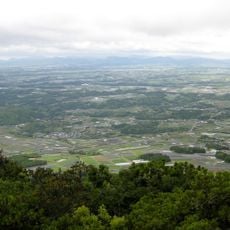
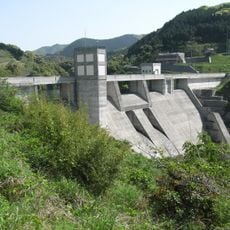
The lake lies about 40 km south of Kagoshima city in the Ikeda Caldera, ringed by its rim and volcanic domes; the shoreline runs roughly 15 km. An irrigation system diverting three nearby rivers has operated since 1982. The lake is part of Kirishima-Kinkowan National Park, and the water is a protected supply, so access is for viewing rather than swimming or boating.
During the Edo period, boats were forbidden from the water due to beliefs about a dragon god living below, with stories claiming storms would strike if anyone broke this rule. This restriction shaped how people related to the lake for centuries.
The community of curious travelers
AroundUs brings together thousands of curated places, local tips, and hidden gems, enriched daily by 93,274 contributors worldwide.