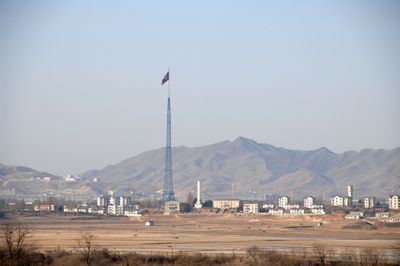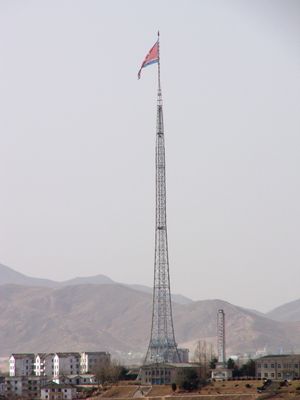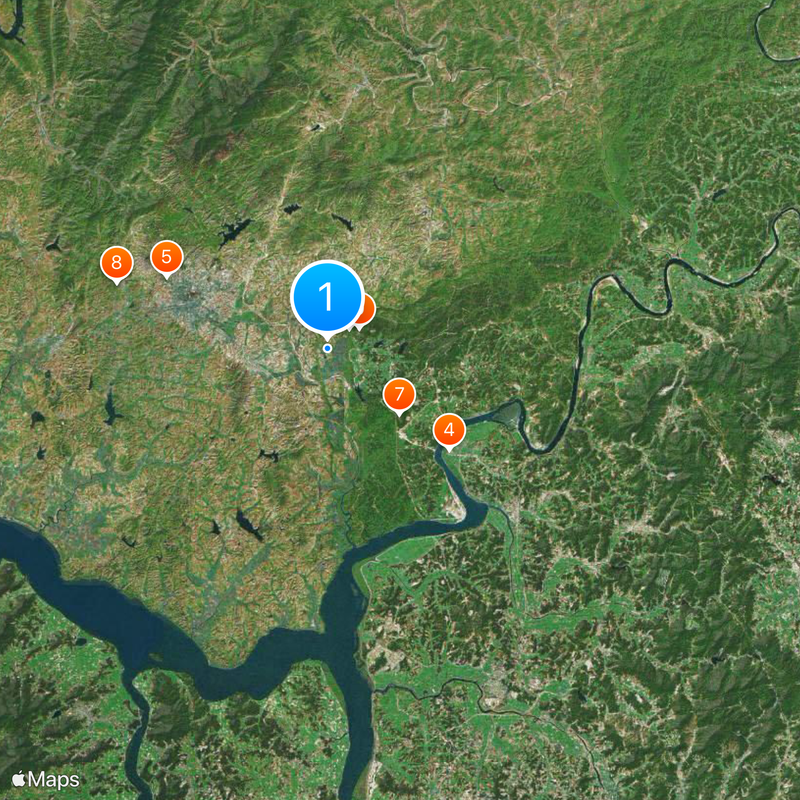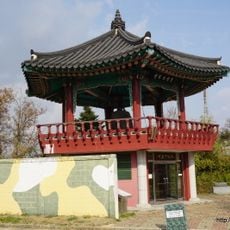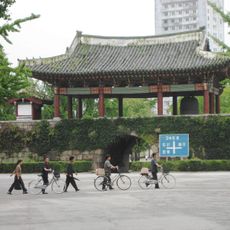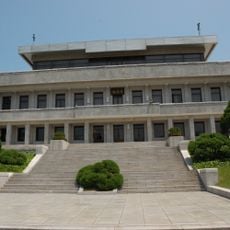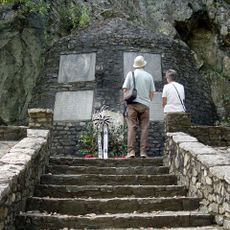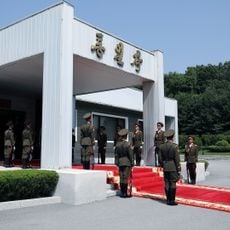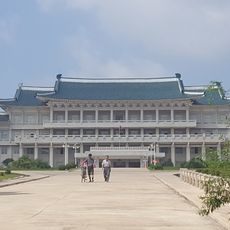
Kijŏng-dong, Village in Korean Demilitarized Zone, North Korea.
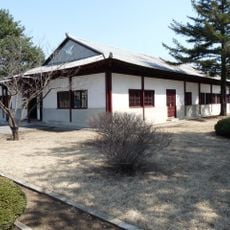
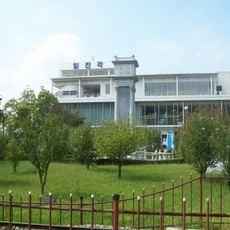
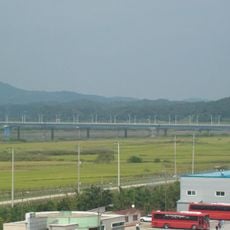
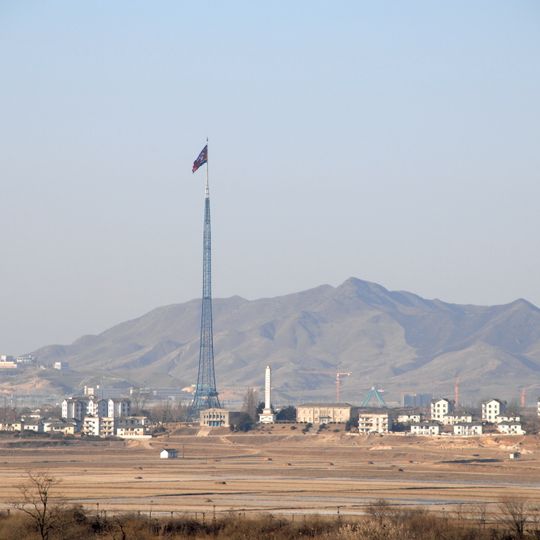
Kijŏng-dong is a settlement in the Korean Demilitarized Zone composed of concrete structures with painted facades arranged in orderly rows. The buildings follow a symmetrical pattern along the northern section of the border area.
The settlement arose in 1953 during armistice negotiations as a demonstration project of North Korean development near the border. The village was built as a visual statement toward the South, intended to suggest economic strength and prosperity.
The settlement marks its place across the Demilitarized Zone through a prominent flagpole that reflects the political rivalry between the two nations. The village functions as a visible symbol of presence and identity on the border.
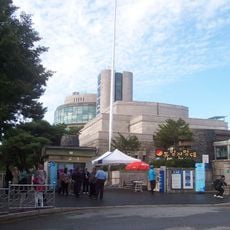
The village can be observed through binoculars from designated viewing points on the South Korean side of the Demilitarized Zone. The clearest views are available from specific observation platforms set up for this purpose.
The buildings are hollow inside and lack windows or interior walls, revealing their role as facades only. These empty structures were designed to appear impressive from a distance without providing actual living spaces.
The community of curious travelers
AroundUs brings together thousands of curated places, local tips, and hidden gems, enriched daily by 92,173 contributors worldwide.