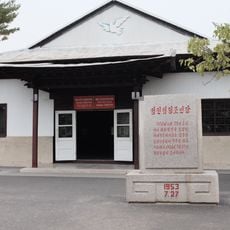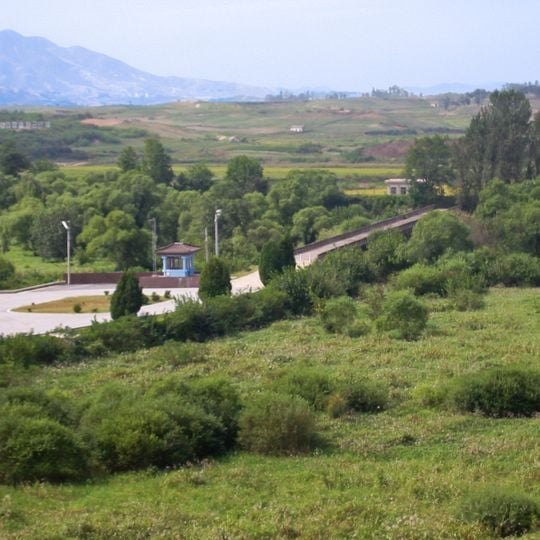
Bridge of No Return, International road bridge at Korean Demilitarized Zone, North Korea-South Korea border
This span crosses the Military Demarcation Line within the Joint Security Area, linking North Korea to South Korea. The crossing sits on the border between both countries and once served for exchanges across the armistice line.
The bridge carried prisoner exchanges after the 1953 Korean Armistice. In Operation Big Switch, 13,444 UNC prisoners returned while 89,493 KPA and CPV prisoners went back; Operation Little Switch had already swapped 605 sick or wounded UNC prisoners for 6,030 North Korean prisoners. The last exchange was the USS Pueblo crew on 23 December 1968. After the August 1976 axe murder incident, North Korea built the "72-Hour Bridge" and this span fell out of use.
The name comes from the ultimatum given to prisoners of war brought to the bridge for repatriation after the 1953 armistice: they could stay in the country of captivity or cross to their homeland, but once across they could never return. The bridge's original name was Sachon Bridge (Sachongyo).
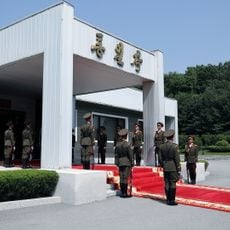
The crossing has remained impassable for decades and can only be seen from a distance on guided tours through the Joint Security Area. Visitors cannot approach the closed zone, as guards monitor the surrounding area at all times.
American soldiers occasionally hold promotion and reenlistment ceremonies at the center of this span, standing between both Korean states. These rituals take place at one of the few spots on Earth where two countries technically still at war come this close.
The community of curious travelers
AroundUs brings together thousands of curated places, local tips, and hidden gems, enriched daily by 92,793 contributors worldwide.