Independence Gate, Historic gate in Hyeonjeo-dong, Seoul, South Korea
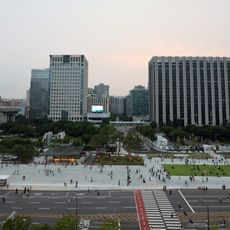
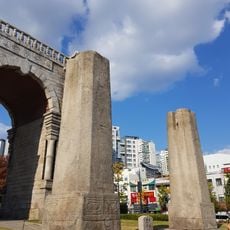
Independence Gate is a portal in Hyeonjeo-dong, South Korea, that rises from an open square with paved paths and small green spaces. The passageway no longer leads to a road but opens onto a park where visitors can view the monument from different angles.
Construction took place from 1897 to 1898 when the country reshaped its diplomatic relations and ended former tributary obligations. Previously, a gate stood at this site that served exclusively for receiving Chinese envoys.
Seo Jae-pil proposed the gate in editorials in the Independence Newspaper in June and July 1896, tying it to freedom from Qing China; the English edition also framed it as independence from deception and corruption. The plaque inscription is attributed either to Yi Wan-yong or to Kim Ga-jin, and the dispute remains unresolved. Many Koreans still mistake the gate for a monument to independence from Japan.
The gate stands near Dongnimmun Station on Line 3, so visitors can reach it after a short walk. The best time to come is in the morning or afternoon when sunlight evenly illuminates the stone surface.
The gate's central keystone carries a plum-blossom motif, the emblem of the Joseon royal house, and the words "Independence Gate" in Korean and Chinese flank a taegeukgi above it. The gate also holds an internal staircase leading up to its top. The designer's identity is still debated: Seo Jae-pil's autobiography names only a Swiss engineer from the German legation, while some Russian historians since 2009 argue for Afanasy Seredin-Sabatin, a claim Korean heritage researchers say is unconfirmed.
The community of curious travelers
AroundUs brings together thousands of curated places, local tips, and hidden gems, enriched daily by 93,470 contributors worldwide.