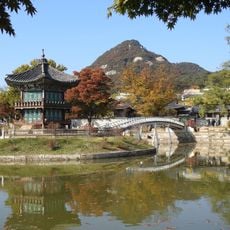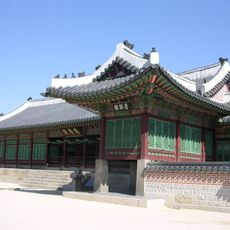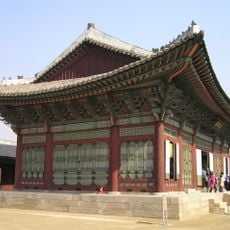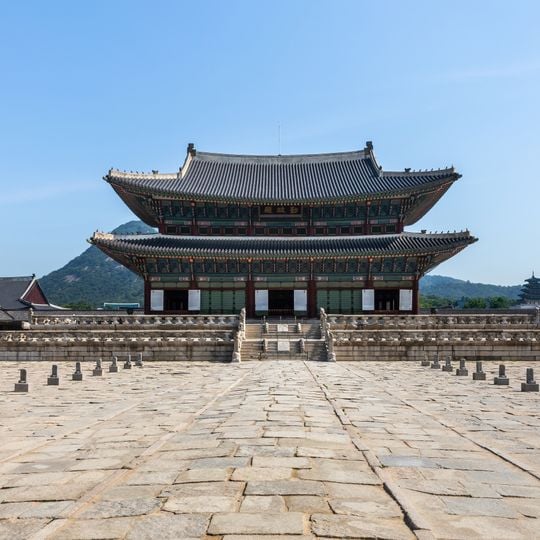
Geunjeongjeon, Main throne hall in Jongno District, South Korea
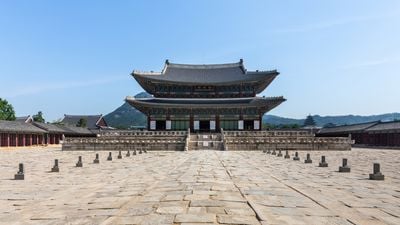
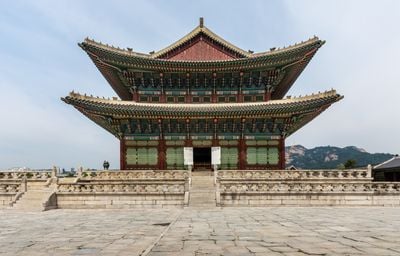
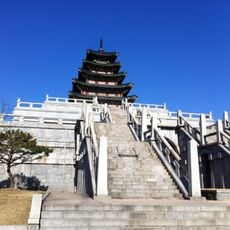
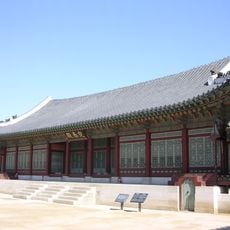
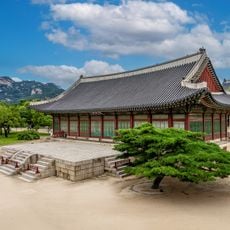
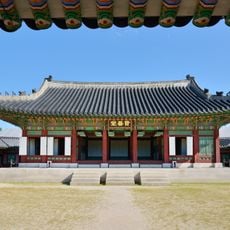
Geunjeongjeon is a throne hall in Jongno District featuring traditional Korean architecture with curved roofs, colored tiles, and carved dragon motifs on stone platforms. The building stands on an elevated stone platform with three sets of stairs designed to accommodate officials and visitors during ceremonies.
King Taejo had Geunjeongjeon built in 1395 as the main hall of Gyeongbokgung, and Jeong Do-jeon named it from a passage in the Book of Documents urging diligent rule. Burned during the Imjin War, it was rebuilt under Heungseon Daewongun: the site was prepared in 1866, the ridge beam raised on 9 February 1867, and the hall completed by 1868. Seven kings, from Jeongjong to Seonjo, were enthroned here.
The hall's name, 勤政, comes from the Book of Documents: a ruler should govern diligently, day after day. Behind the throne stands a screen of the sun, moon, five peaks, pines and water, called Irworobongdo; a version of it appears on the 10,000-won note. Each October a reenactment of the state examinations once held here takes place in the courtyard.
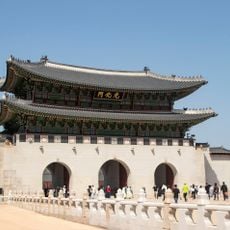
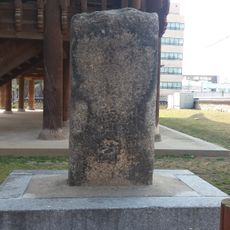
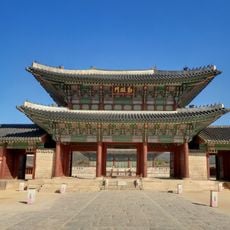
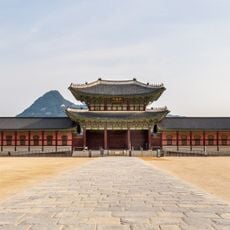
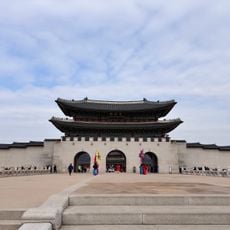
The hall sits at the rear of a courtyard about 140 m long and 100 m wide, entered through Geunjeongmun gate; the king's raised walkway runs up the centre of the yard, with the rank stones of civil officials to the east and military officials to the west. The courtyard paving is deliberately uneven to cut glare and give grip in snow. The throne room can be viewed inside, though at night openings it stays unlit apart from the throne.
The staircases were divided by rank, with higher officials able to use the central pathway while lower ranks used outer routes. This staircase design was not just practical but also visually displayed hierarchy during ceremonial occasions.
The community of curious travelers
AroundUs brings together thousands of curated places, local tips, and hidden gems, enriched daily by 93,806 contributors worldwide.