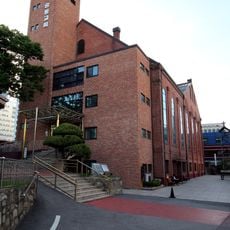
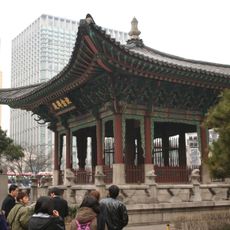
Jogyesa, Buddhist temple in Jongno district, Seoul, South Korea
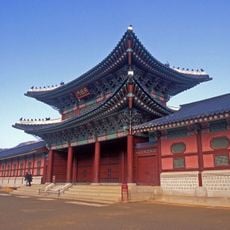
Jogyesa is a Buddhist temple in Seoul's Jongno district that features a large main hall housing three golden Buddha statues and shelters ancient trees within its walled courtyard. The layout creates a quiet sanctuary set apart from the surrounding city streets.
Founded in 1395 as Gakhwangsa at the start of the Joseon dynasty, the temple became a stronghold of resistance to Japanese suppression of Korean Buddhism during the colonial period. The Main Buddha Hall was built in 1938, the year the temple was renamed Taegosa. It took the name Jogyesa in 1954 as the main temple of the Jogye Order.
The temple's name, Jogyesa, refers to Jogye, the Korean Seon (Zen) order that has around 1,700 years of history and is the largest Buddhist order in Korea. Each May the temple hosts the Yeondeunghoe lotus lantern festival for Buddha's Birthday, a tradition begun in the Unified Silla era over 1,300 years ago; its Lotus Lantern Parade runs from Dongdaemun Gate to the temple.
Enter through the Iljumun, the one-pillar gate that marks the passage from the street into the temple grounds. The temple runs a Templestay programme where visitors sign up to experience monks' daily life, eat Buddhist food and learn the temple's history. A separate information centre serves foreign nationals.
The white pine by the Main Hall, about 10 meters tall, is Natural Monument No. 9 and gave the nearby area its name, Susong-dong, from song, meaning pine. Chinese missionaries brought it during the Joseon period. The Chinese scholar tree in the courtyard stands 26 meters tall with a four-meter circumference.
The community of curious travelers
AroundUs brings together thousands of curated places, local tips, and hidden gems, enriched daily by 93,468 contributors worldwide.