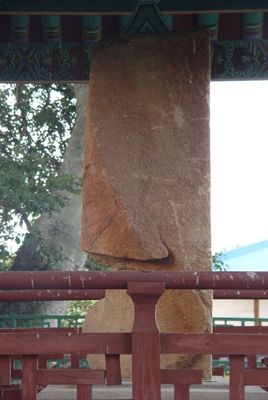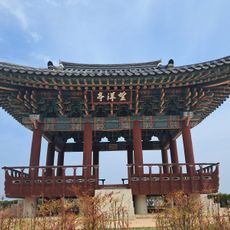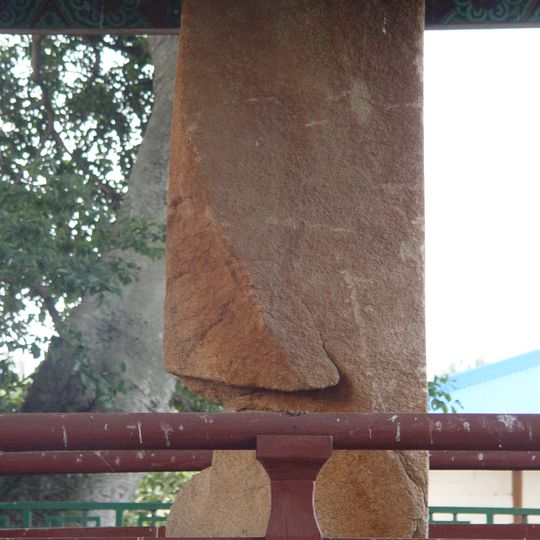
Bongpyeongri Sillabi, Stone stele in Jukbyeon-myeon, South Korea.
The Bongpyeongri Sillabi is a stone monument with carved inscriptions that display early Silla Kingdom writing and craftsmanship techniques. The object is now housed in an exhibition hall where visitors can examine the fine details of the carving and text up close.
The stone was created in 524 during the Silla Kingdom period and ranks among the oldest surviving written documents of that era. Its status as a National Treasure reflects its importance for understanding this distant period of Korean history.
The inscription opens with the date "the fifteenth day of the first month of the Gapjin year" and calls the king Maegeumwang (寐錦王), while a senior official beside him bears the title Galmunwang (葛文王). Its 398 characters in clerical script record punishments and the royal inspection of the newly annexed area, and the text follows Silla's own grammar rather than pure Chinese.
The stone is housed in a dedicated exhibition hall designed specifically for studying Korean memorial stones. You can take your time examining the inscriptions and carvings in detail without feeling rushed.
The stone preserves sixth-century text that directly documents government policies and social conditions of the Silla Kingdom. These direct records are rare since most writings from that era have been lost.
The community of curious travelers
AroundUs brings together thousands of curated places, local tips, and hidden gems, enriched daily by 93,464 contributors worldwide.