交泰殿, Queen's bedchamber hall in Gyeongbokgung Palace, Seoul, South Korea
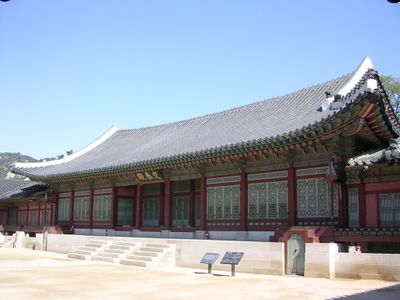
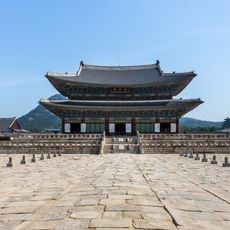
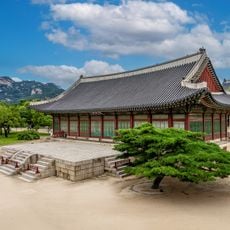
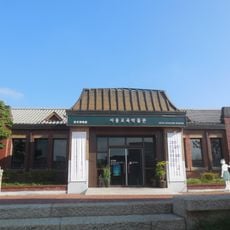
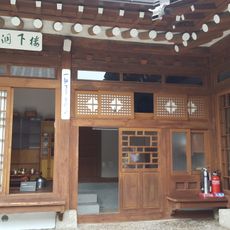
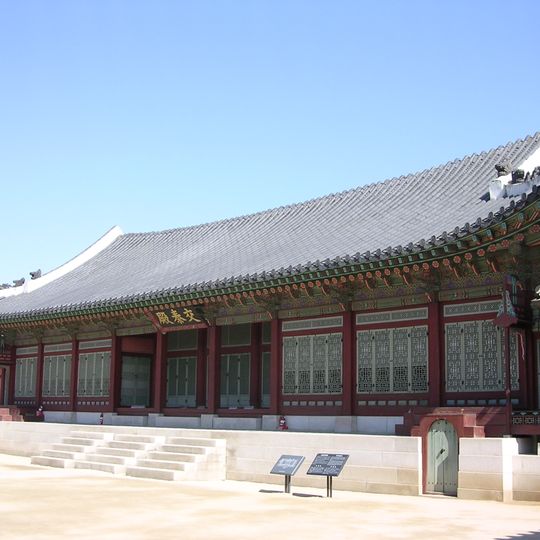
Gyotaejeon is the queen's bedchamber of Gyeongbokgung Palace, also called Junggungjeon. The single-storey hall stands on a pale stone platform reached by three short flights of broad steps; red pillars divide its facade into bays with dark green latticed windows and doors, and a painted green, red and blue bracket band runs below a wide grey tiled roof. A plaque with gold characters reading 交泰殿 hangs at the left of the facade.
Gyotaejeon was built in the Joseon era as the queen's bedchamber, separate from the king's. Records show King Sejo often used it to meet ministers unofficially and discuss state affairs over small drinks. It was dismantled in 1918, ostensibly to rebuild halls lost in the 1917 Changdeokgung fire, and reconstructed in its present form in 1995.
The name comes from the I Ching: heaven and earth in harmonious union generate all things. Records show Sejo discussing state affairs and holding small drinking parties here with ministers such as the chief state councillor and the chief royal secretary, so the hall was also a place of informal royal consultation.
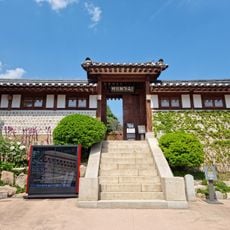
Gyotaejeon stands in the inner court of Gyeongbokgung, north of the main throne hall, on a raised stone platform reached by three short flights of broad steps. The hall is viewed from outside; there is no preserved furniture or throne to see inside. A small green door sits in the stone base at the right of the facade.
The hall was dismantled in 1918, when the Japanese colonial administration used the rebuilding of structures lost in the 1917 Changdeokgung fire as a pretext; the present building dates from the 1995 reconstruction. Records show Sejo discussing state affairs and holding small drinking parties here with ministers such as the chief state councillor.
The community of curious travelers
AroundUs brings together thousands of curated places, local tips, and hidden gems, enriched daily by 93,470 contributors worldwide.