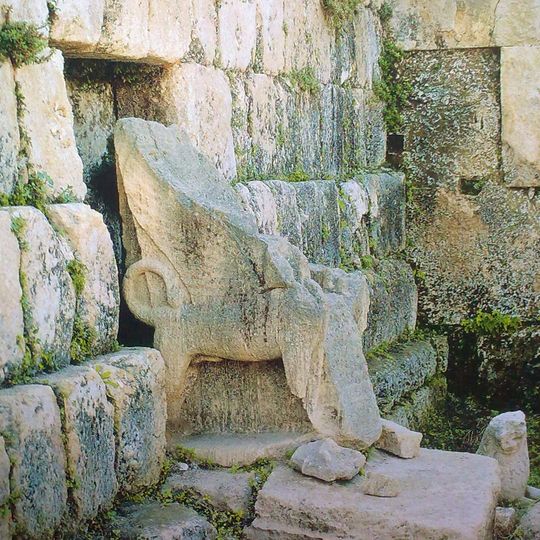
Temple of Eshmun, Ancient Phoenician temple complex in Sidon, Lebanon
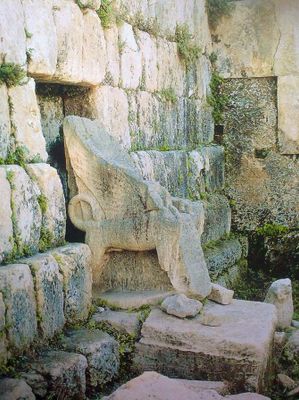
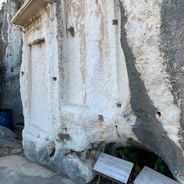
The Temple of Eshmun is an ancient Phoenician temple complex near Sidon featuring limestone terraces, ritual basins, and a monumental podium that once supported a marble temple structure. The ruins display remains from multiple construction phases spanning several centuries.
The temple was founded under King Eshmunazar II during the Achaemenid period and later expanded under King Bodashtart. The complex remained in use from the 7th century BC through the 8th century AD.
Eshmun was equated with the Greek healer Asclepius after Hellenic influence reached Phoenicia; coins from Amrit and Acre of the 3rd century BC are the earliest evidence of this pairing. The Awali was accordingly called Asclepius fluvius, and the groves around the sanctuary were known as the groves of Asclepius. Basins fed by canals from the river and the sacred YDLL spring served therapeutic and purificatory washing.
The archaeological site is located roughly 2 kilometers northeast of Sidon and remains open to visitors without entrance fees. Finding the location is straightforward, though asking locals for directions beforehand can be helpful.
The complex featured an engineered water system that channeled water from the Awali River to ritual basins, showing how construction skill served religious purpose. These channels allowed thousands of pilgrims to participate in washing rituals.
The community of curious travelers
AroundUs brings together thousands of curated places, local tips, and hidden gems, enriched daily by 93,491 contributors worldwide.