Royal Palace of Kandy, Royal palace in Kandy, Sri Lanka.
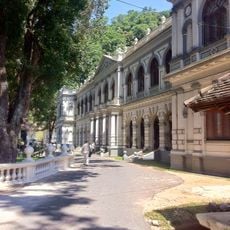
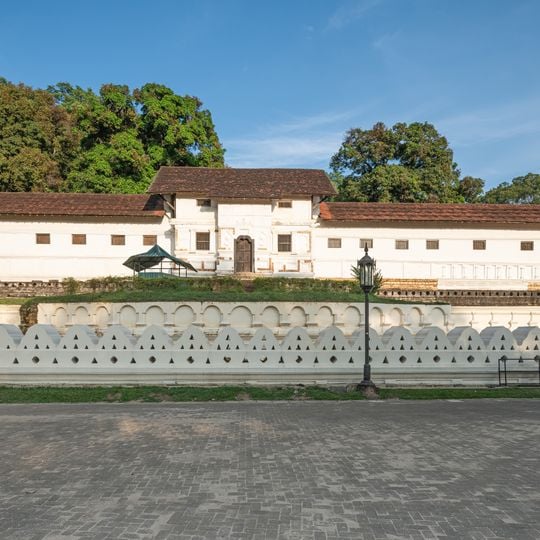
The Royal Palace of Kandy is a long, low white building with a dark reddish-brown tiled roof, its central two-story block fronted by a dark wooden double door with a rounded top and barred windows. A raised base carries a low white balustrade of repeated arches and triangular openings, and a green-roofed canopy stands on the grassy terrace to the left.
Sinhalese kings made this palace their home from the 14th century until British colonial rule arrived in 1815. The Kandyan Convention marked the end of royal authority and the shift to European control.
The complex takes its Sinhala name, Sengkadagala Rajakiya Parishraya, from the city of Kandy. The Maha Maluwa, the great terrace before the Temple of the Tooth, was once the threshing floor of a paddy field; folklore says astrologers chose it because a white mongoose frequented the spot. A stone pillar there holds the skull of Keppetipola Disawe, executed for leading the 1818 Uva rebellion.
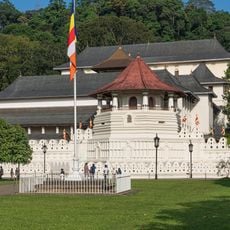
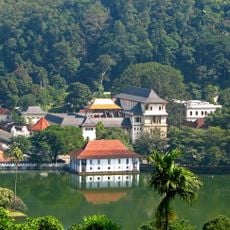
The palace complex sits north of the Temple of the Tooth, and the Maha Maluwa terrace in front of the temple links the two. The King's Palace, now an archaeology museum, lies to the right of the Magul Maduwa. The complex was once entered through three wahalkadas, gateways set in a wall 2.4 m (8 ft) high.
The Magul Maduwa royal audience hall still stands with its carved wooden columns in its original location. This is where the final Sinhalese king signed away royal authority to the British.
The community of curious travelers
AroundUs brings together thousands of curated places, local tips, and hidden gems, enriched daily by 94,687 contributors worldwide.