Hakgala Botanical Garden, Botanical garden in Nuwara Eliya, Sri Lanka
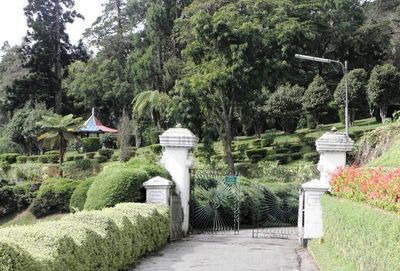
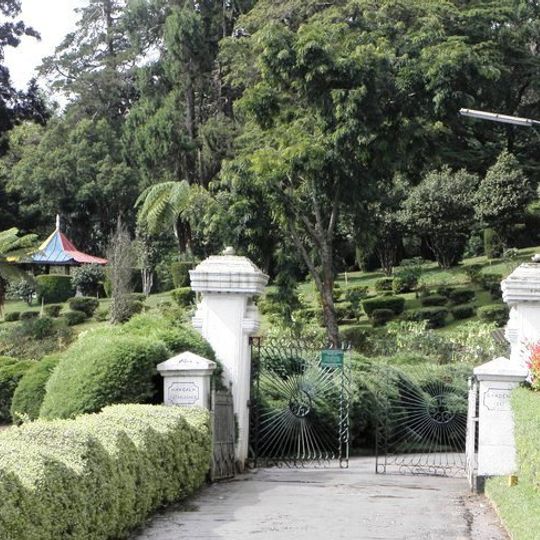
Hakgala Botanical Garden covers about 28 hectares on a slope beside the Nuwara Eliya–Badulla road, 16 km from Nuwara Eliya. Its entrance is marked by white square pillars with stepped caps and a black metal gate with a fan of curved spokes; the right pillar is inscribed "GARDEN". Behind, trimmed hedges and trees rise on the slope.
Hakgala was established in 1861 under George Henry Kendrick Thwaites as an experimental cinchona plantation, chosen because its climate resembled the Andean home of the tree. When tea proved more suitable, the site became an experimental tea cultivation. In 1884 it was transformed into a botanical garden, and the Nock family managed it for 58 years, from 1882 to 1940.
Local legend links the area to the Ramayana: King Ravana is said to have hidden Sita at nearby Sita Eliya, where the Sita Amman Temple now stands. The temple draws Tamil and Indian pilgrims, and Hindus believe Sita bathed in the river below it.
The garden lies on the Nuwara Eliya–Badulla main road, 16 km from Nuwara Eliya, at about 5,500 feet above sea level. January to March is the driest stretch, with rainfall of 70–100 mm, while October to December brings the heaviest rain, 190–225 mm. December to February is cold; April to August is warmer.
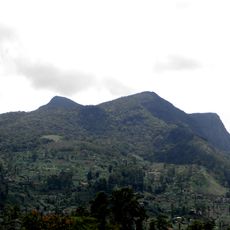
The garden's first curator, M. R. W. MacNicholl, was appointed in 1861, and the Nock family then managed it for 58 years, from 1882 to 1940. A small memorial bungalow built by staff after J. K. Nock drowned in 1909 still stands in the grounds, and from its raised site visitors can see the Namunukula range, the Uva basin, the Haputale gap and the Madulsima ridge.
The community of curious travelers
AroundUs brings together thousands of curated places, local tips, and hidden gems, enriched daily by 93,466 contributors worldwide.