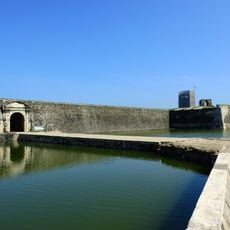
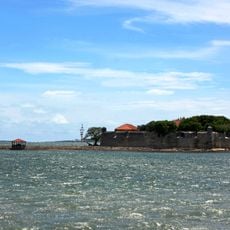
Pooneryn Fort, Colonial fort in Pooneryn, Sri Lanka.
Pooneryn Fort is a small square fort with sides about 100 feet long, slightly larger than the fort at Elephant Pass, standing inland over a mile from the shore on the south bank of the Jaffna lagoon. Two bastions stood at its east and west corners, and its gate opened in the north wall. Inside were a guardroom by the gate and rows of soldiers' quarters along the south and west walls, with a many-roomed building against the east wall.
The Portuguese, who ruled the Jaffna kingdom from 1620, built the fort near the end of their rule, before 1658, where the Mannar–Jaffna road met the lagoon's southern shore. It likely curbed smuggling between Vanni and Jaffna and stopped criminals fleeing to Vanni. The Dutch took it in 1658 and made no major repairs; the British captured it in 1796.
The fort's Tamil name is Poonagarik Kottai and its Sinhala name Punarin Balakotuwa, both used locally alongside the English form. It stood inland, over a mile from the shore, on the southern bank of the Jaffna lagoon where the road from Mannar to Jaffna ended. Nelson, who studied Sri Lanka's Dutch forts, doubted any major work was ever done here.
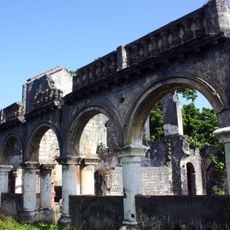
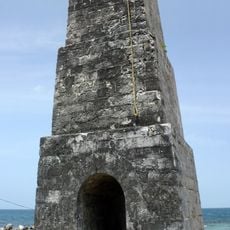
The fort lies in Pooneryn, on the southern shore of the Jaffna lagoon where the road from Mannar to Jaffna ends, about a mile inland from the water. Only fragments of the structure survived the civil war damage after the 1980s, and by around 2004 just some parts remained. The site is now open to the public, but the ruins are in a poor state of repair, so watch your footing among the broken walls.
The British administration converted the military structure into a rest house in 1805, shifting it from defensive use to civilian purposes. This transformation shows how the fort's function changed as colonial rule evolved on the island.
The community of curious travelers
AroundUs brings together thousands of curated places, local tips, and hidden gems, enriched daily by 93,518 contributors worldwide.