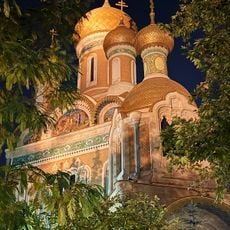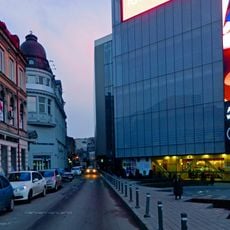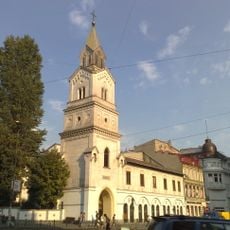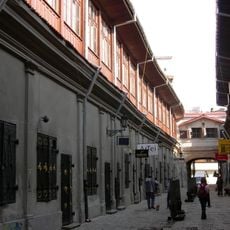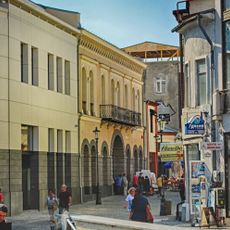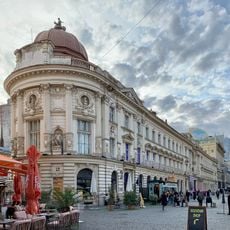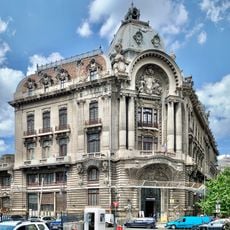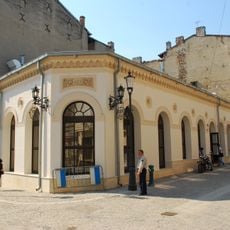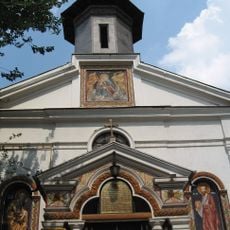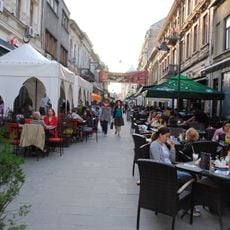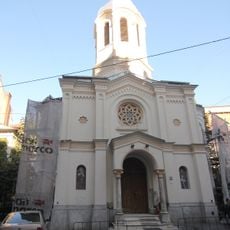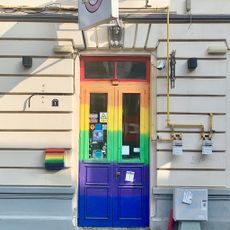
Lipscani, Commercial thoroughfare in Old Town, Bucharest, Romania
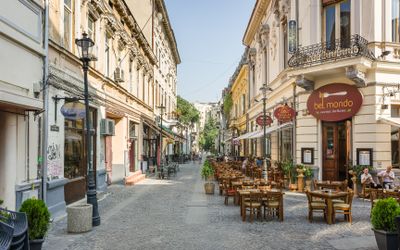
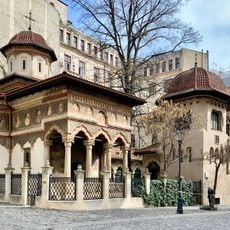
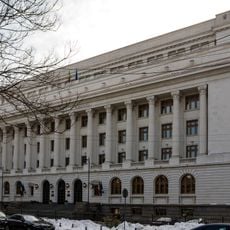
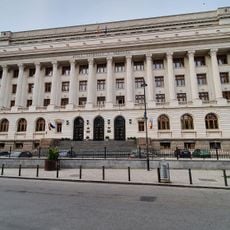
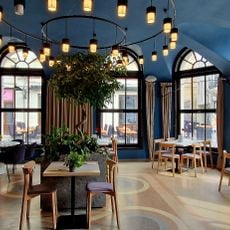
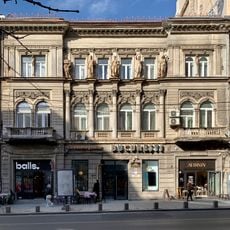
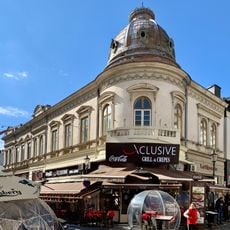
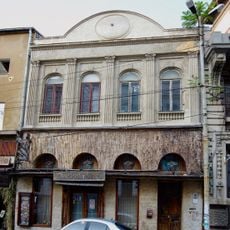
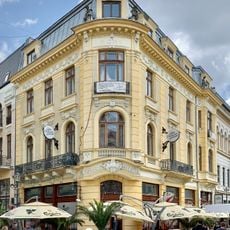
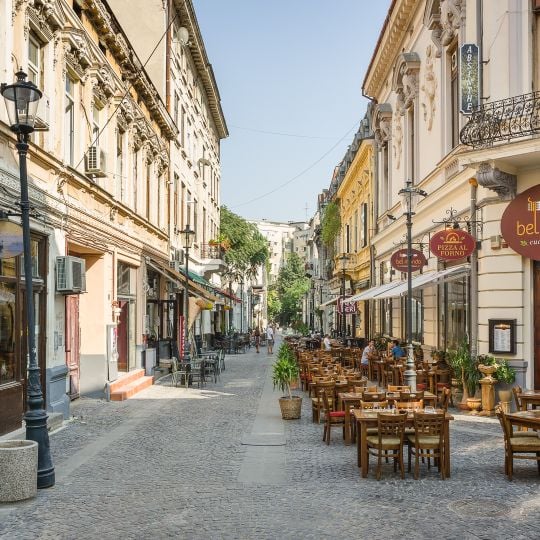
Lipscani is a pedestrian street running through medieval Bucharest that showcases Baroque, Neoclassical, and Art Nouveau buildings mixed along its path. The lane connects several small squares and side alleys lined with shops, cafes, and restaurants serving both locals and tourists.
The area formed in medieval times as a trading hub and took its name in 1750 from Leipzig merchants who imported goods from Western Europe. Before that it was called Ulița Mare and served as the main thoroughfare through the city.
The area grew from medieval craft traditions visible in street names like Blănari for furriers and Șelari for saddlers that mark where specific trades once worked. These old work patterns shaped how people still move through and use the narrow lanes today.
The ground is uneven with bumps in places, so comfortable shoes are important when walking through. The area gets crowded at peak times, but visiting in early morning or late afternoon gives you more room to move and better light for viewing the buildings.
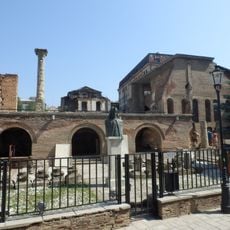
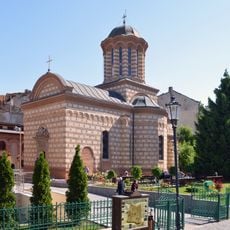
The quarter escaped planned demolition during Communist times, leaving medieval structures standing next to modern retail chains. This mixture of old foundations with contemporary commerce creates an unusual urban layer that shows how the city layered different time periods on top of each other.
The community of curious travelers
AroundUs brings together thousands of curated places, local tips, and hidden gems, enriched daily by 92,729 contributors worldwide.