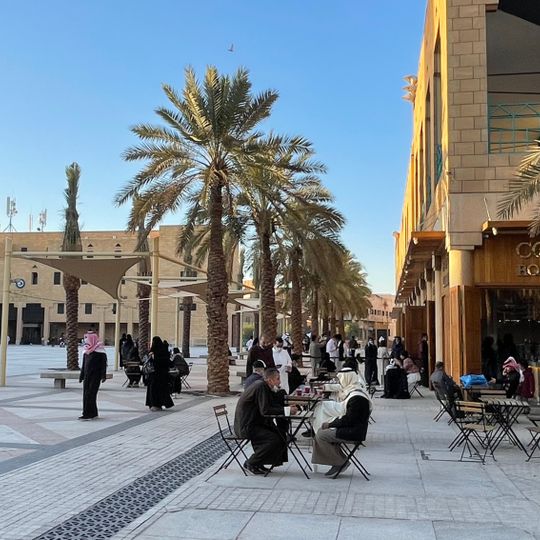
Deera Square, Public square in Riyadh, Saudi Arabia
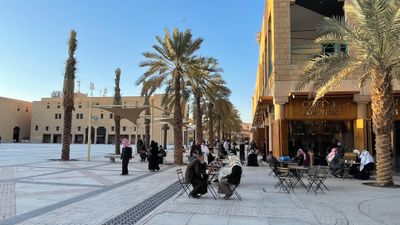
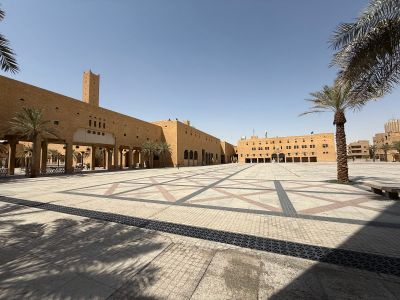
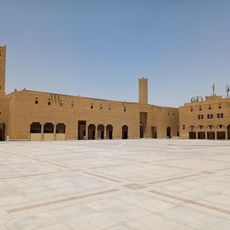
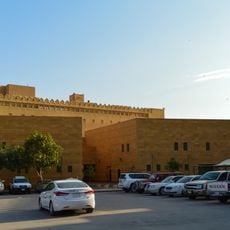
Deera Square, also called Justice Square, lies west of the Qasr al-Hukm government palace in the old centre of Riyadh. Its paving is laid in alternating light grey and beige stone strips, with a dark drainage channel crossing the foreground. The long, low tan-stone building on the square has two rows of small windows, triangular features above the upper row, and a central circular emblem of a palm tree over crossed swords, with raised Arabic inscription below it and two green signs above the central doorways.
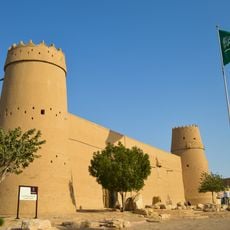
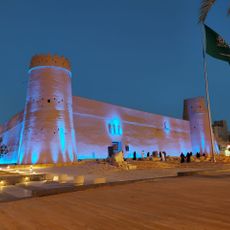
The square dates to the 13th Hijri century (19th century AD), when Imam Turki bin Abdullah made Riyadh the capital of the Second Saudi State and built the Grand Mosque beside it. The Masmak building was added and was the scene of King Abdulaziz's capture of Riyadh in the early 20th century; it later served as an arsenal and a prison before reopening as a museum in 1995 (1416 AH). In 2002 the Danish Architects' Association listed the Qasr al-Hukm squares, including this one, among the world's best squares.
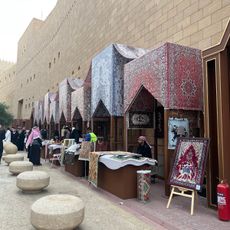
The square is also called Justice Square, and its name Al-Safah refers to the flat stone ground. Markets once surrounded it: Al-Muaiqiliyah to the west, the Zall souq by the mosque, and the gold market on Al-Thumairi Street to the east. A book market, Qaisariyat Al-Kitab, was added in 2019.
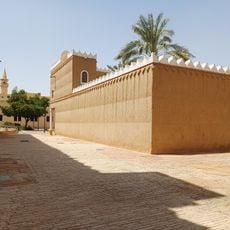
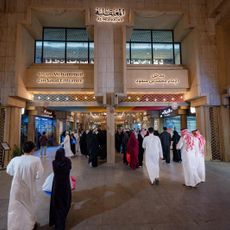
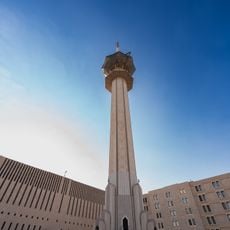
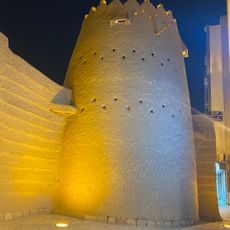
The square lies west of Qasr al-Hukm and the Masmak Fortress, at the crossing of Al-Thumairi Street with Sheikh Muhammad bin Ibrahim and Sheikh Muhammad bin Abdul Wahhab streets. The clock tower stands at that junction, hemmed in by later buildings, so it is only visible from a few steps away. The surrounding souks, including Souq al-Zal and the gold market on Al-Thumairi, are reached on foot from the paving.
The clock at the intersection of Al-Thumairi Street and Sheikh Muhammad bin Ibrahim Street was the work of Prince Fahd Al-Faisal Al-Farhan, Riyadh's first mayor; it began operating on Monday 29 Dhu al-Hijjah 1385 AH (1966). Its female voice announcing each hour was replaced by a man's after objections from some mutasib. Modern buildings now hem it in, so it is seen only from a few steps away.
The community of curious travelers
AroundUs brings together thousands of curated places, local tips, and hidden gems, enriched daily by 93,344 contributors worldwide.