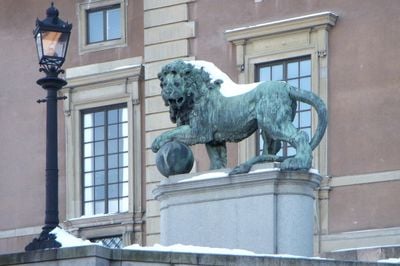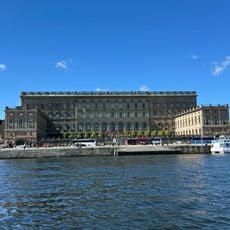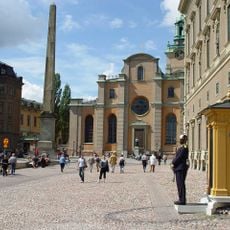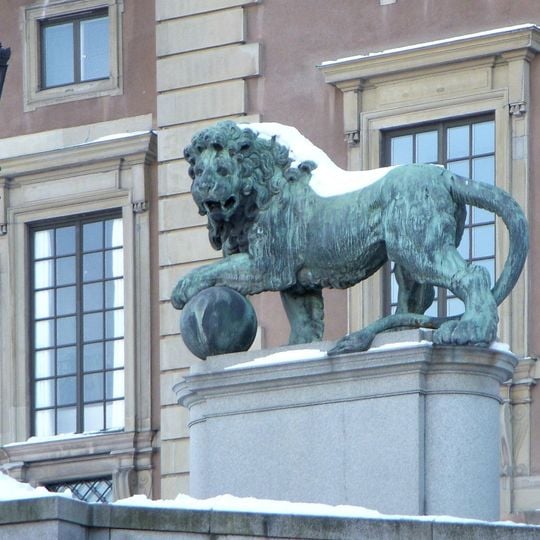
Royal Palace Lions, Bronze sculpture in Gamla stan, Sweden.
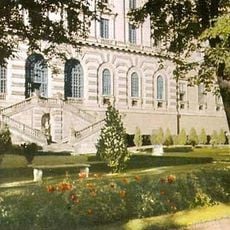
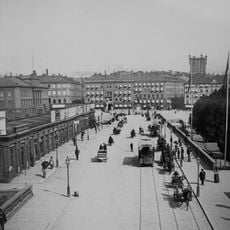
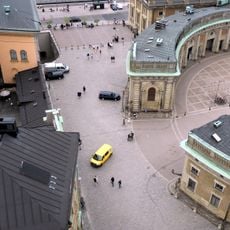
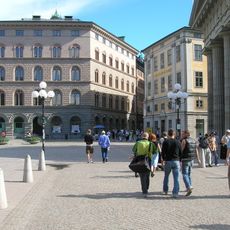
The Royal Palace Lions are two massive bronze and granite figures positioned on the northern side of Stockholm's Royal Palace in Gamla stan. They flank the entrance area and form a cohesive composition together with the palace's architecture.
The French sculptor Bernard Foucquet the Elder made the lions, with models approved by Charles XII in 1700. They were cast in bronze in 1702 and 1704 at the Norrmalm foundry and placed on Lejonbacken as a symbol of royal power. The bronze came from a well seized as war booty at Kronborg Castle during Charles X Gustav's Danish campaign.
The lion sculptures represent classic symbols of royal power and are perceived by visitors as majestic guards standing at the entrance to watch over the palace.
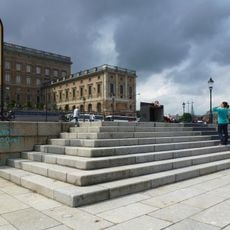
The lions stand on Lejonbacken, the sloping ramp below the palace's north facade, reached on foot from Norrbro or Gamla stan. The slope is paved and open year-round; the bronze and granite are exposed to weather, so surfaces can be slippery in rain or snow.
The bronze used for these lions came from melted statues originally taken from Denmark's Kronborg Castle, reflecting an intriguing chapter in Swedish-Danish relations. This material origin gives the sculptures a hidden historical depth.
The community of curious travelers
AroundUs brings together thousands of curated places, local tips, and hidden gems, enriched daily by 93,456 contributors worldwide.