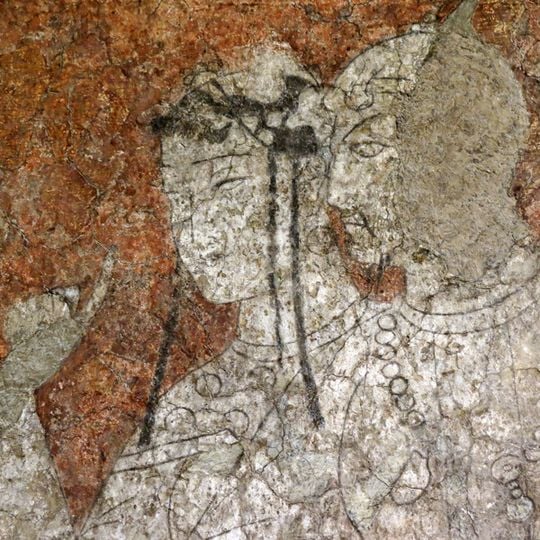
Penjikent murals, Ancient wall paintings in Panjakent, Tajikistan.
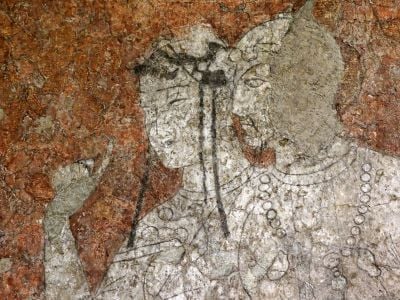
The Penjikent murals are ancient frescoes from a trade city that show scenes of feasts, battles, and religious ceremonies with careful attention to detail. The walls are covered with skillfully painted images in bright colors that reveal the technical abilities of the artists who created them.
These frescoes were created from the 5th to the 8th century in a flourishing trade city. In 722, artistic production stopped suddenly when the Abbasid Caliphate invaded the region.
The paintings show how different artistic traditions from neighboring regions came together in one place. You can see Greek, Iranian, Buddhist, and Indian influences mixed in the same walls, telling the story of a society that connected many cultures.
The murals are displayed in two museums today: the Hermitage Museum in Saint Petersburg and the National Museum of Antiquities in Dushanbe. Take time to study the works closely and notice the variety of scenes and styles shown across the different pieces.
One section of the paintings features scenes from the Iranian epic tradition, showing the hero Rostam and other characters known from the Shahnameh stories. These images connect the artistic world of the city to the larger literary heritage of the region.
The community of curious travelers
AroundUs brings together thousands of curated places, local tips, and hidden gems, enriched daily by 91,361 contributors worldwide.