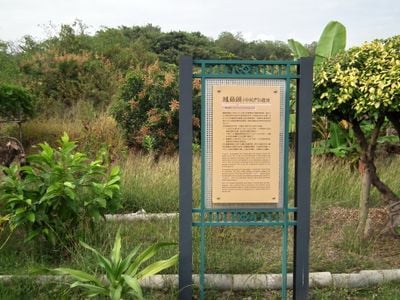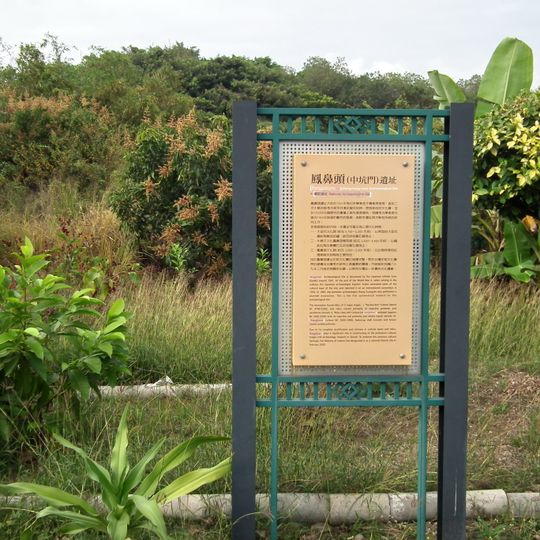
Fengbitou Archaeological Site, Archaeological site in Linyuan District, Taiwan.
Fengbitou is an archaeological site located on the slope of Fengshan Hill covering roughly 10 hectares at elevations between 28 and 55 meters above sea level. Excavations have uncovered cord-marked pottery, fishing net weights, spearheads, ceramic spindle whorls, and stone tools including axes and hoe-shaped implements.
Japanese scholar Sueo Kaneko discovered the site in 1941, with further excavations conducted by Naoichi Kokubu in 1943 and Kiyotari Tsuboi in 1945. The layers of occupation span from roughly 5200 years ago through the Qing Dynasty period and into the era of Japanese colonial rule.
This settlement was home to different communities across millennia, each leaving marks that show how people lived and adapted to their surroundings. Walking through the site offers insight into how human life in this region changed and developed over time.
The site sits on a sloped terrain with elevation changes, so visitors should expect uneven ground and wear sturdy footwear. Bringing plenty of water and preparing for varying weather conditions will make the visit more comfortable, especially during warmer months.
The excavated items represent different prehistoric cultures, including Tapenkeng, Niuchoutzi, and Fengpitou traditions. These findings demonstrate how various groups inhabited the same area across thousands of years and passed down their techniques to successive generations.
The community of curious travelers
AroundUs brings together thousands of curated places, local tips, and hidden gems, enriched daily by 60,000 contributors worldwide.