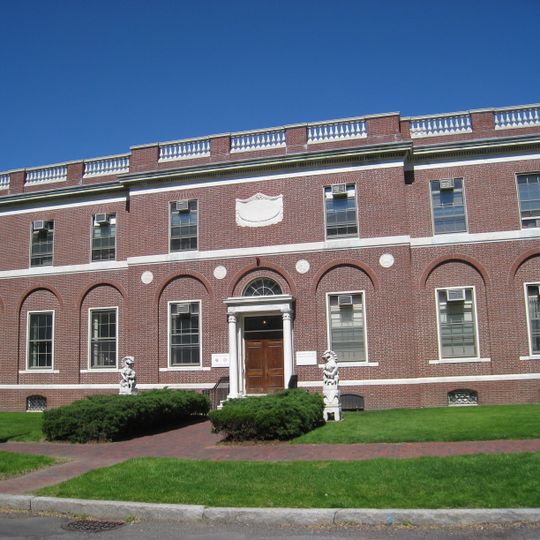
Harvard–Yenching Institute, Independent educational foundation in Cambridge, United States
The Harvard-Yenching Institute is a research organization on the Harvard University campus in Cambridge, Massachusetts, focused on the humanities and social sciences as they relate to Asia. It awards fellowships to doctoral students, postdoctoral researchers, and faculty members from universities across Asia.
The institute was founded in 1928 using funds from the estate of Charles Martin Hall, the inventor of an affordable aluminum production process. Over the following decades, it gradually expanded its fellowship program to universities across a growing number of Asian countries.
The institute publishes the Harvard Journal of Asiatic Studies, one of the oldest English-language journals in the field, and its library holds materials in Chinese, Japanese, Korean, and other Asian languages. Visiting scholars from across Asia regularly spend time on campus here, giving the place a notably international feel.
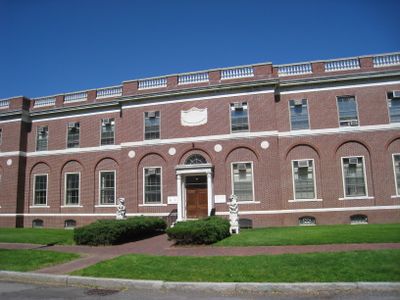
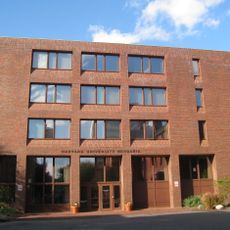
The institute is located on the Harvard University campus, which is open to visitors and easy to walk around. Anyone interested in events or library access should check the website beforehand, as resources are generally reserved for affiliated scholars.
The name Yenching refers to an old name for Beijing, and the institute was originally set up with a strong focus on China before gradually widening its scope to cover all of Asia. Despite the name, it has no formal connection to the former Yenching University, which closed in 1952.
The community of curious travelers
AroundUs brings together thousands of curated places, local tips, and hidden gems, enriched daily by 90,826 contributors worldwide.












![Gund Hall - Graduate School of Design [Harvard University]](https://img9.digsty.com/MxS4GVZZ6ceYqvq7BmvRuupz_5GuWC2qfiT2RNpQJoc/rs:fill:230:230:1/g:fp:0.5:0.5/czM6Ly9hcm91bmR1cy8xNC8xNjU4ODA5MjItOTIwYmE4YTUuanBn.jpg)
