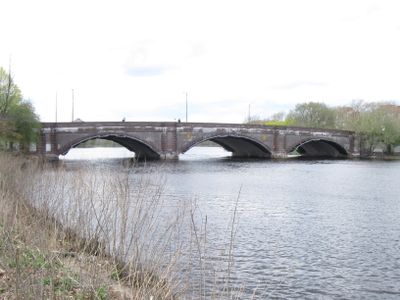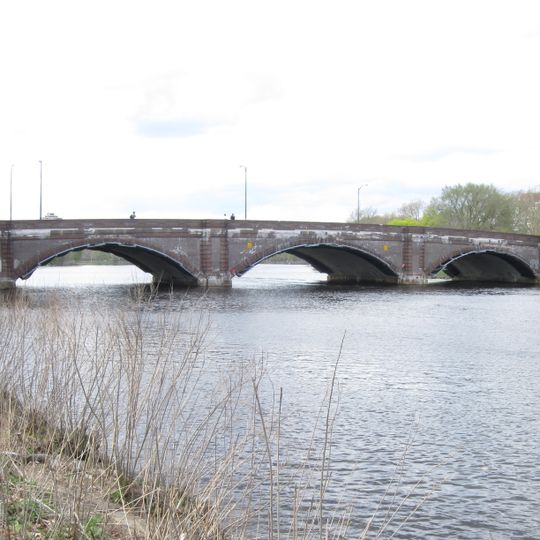
Anderson Memorial Bridge, Arch bridge in Cambridge and Boston, United States.
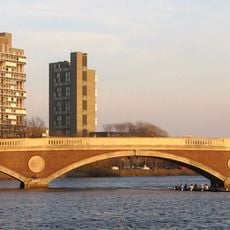
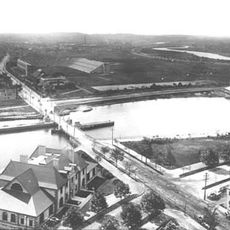
Anderson Memorial Bridge is a road bridge over the Charles River, connecting Cambridge and Boston with three arches built from reinforced concrete and faced with red brick. It carries three lanes of traffic and has separate paths for pedestrians and cyclists on either side of the roadway.
The bridge was completed in 1915 and replaced a much older crossing known as the Great Bridge, which had first spanned the Charles River back in 1662. The new structure was built to handle the growing demands of city traffic at the start of the 20th century.
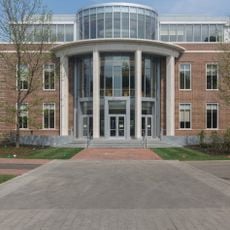
A bronze plaque on the bridge honors Nicholas Longworth Anderson, a Civil War general who graduated from Harvard. The plaque is easy to spot as you cross, and it connects the structure directly to the university that stands just steps away on the Cambridge side.
The bridge sits along a busy corridor between Cambridge and Boston, so crossing on foot is easier outside of peak commuting hours when traffic is lighter. Pedestrians and cyclists have marked paths on both sides, clearly separated from the road lanes.
William Faulkner used this bridge as the setting for a pivotal scene in his novel The Sound and the Fury, in which the character Quentin Compson makes a final decision. This makes the bridge one of very few road crossings to appear directly in a major work of American fiction.
The community of curious travelers
AroundUs brings together thousands of curated places, local tips, and hidden gems, enriched daily by 90,758 contributors worldwide.