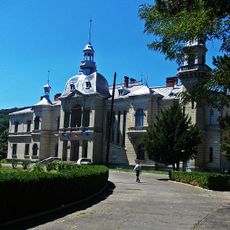
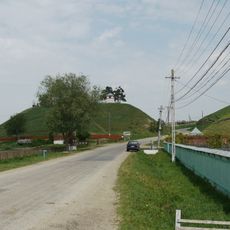
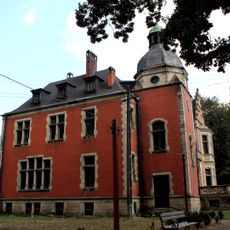
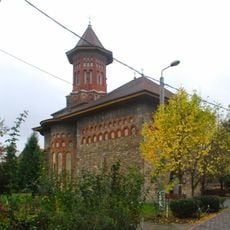
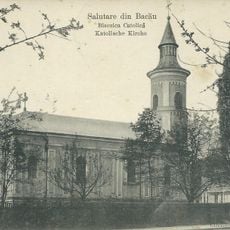
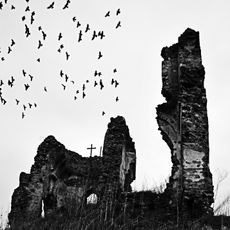
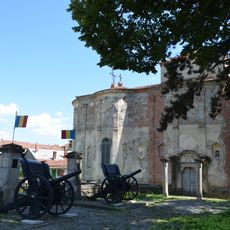
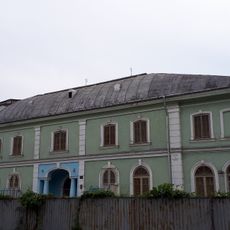
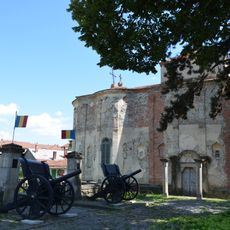
Conacul Rosetti-Tescanu din Tescani, historic monument ensemble in Tescani, Bacău County, Romania
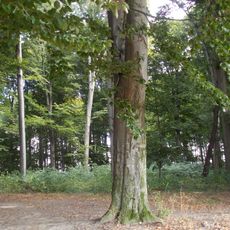
Conacul Rosetti-Tescanu in Tescani is a residential building of wood and brick construction with a tiled roof, built in 1880 by the Rosetti-Tescanu family. The structure sits on sprawling grounds surrounded by tall trees and park areas in a hilly location.
The manor was built in 1880 by the boyars Alice and Dumitru Rosetti-Tescanu and served as a family residence across generations. After being donated to the state in 1947, it was converted into a memorial museum in 1980 and became part of the National George Enescu Museum in 2007.
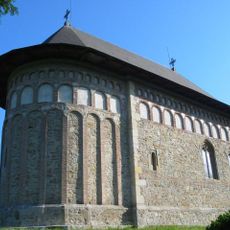
The ensemble carries the Rosetti family name in three listed parts: Casa Rosetti-Tescanu, the "Sf. Gheorghe" church and the Rosetti Spirit Factory, each with its own heritage code under the ensemble code LMI BC-II-m-A-00914. The estate is also recorded in the National Archaeological Repertory under code 21392.01. Two related Rosetti mansions stand elsewhere: Rosetti-Roznovan at Lipcani and Rosetti-Solescu at Solești.
The ensemble lies in Tescani, in Berești-Tazlău commune, Bacău County, and is reached by road from the DN2G route. The site comprises three separately listed monuments: Casa Rosetti-Tescanu, the Church of St. George and the Rosetti Spirit Factory. Visitors move between them on foot within the village.
Composer George Enescu wrote his opera Oedip here and dedicated it to his wife Maruca, yet spent his life in Paris. Though both wished to be buried at Tescani, they rest in Père-Lachaise Cemetery in Paris instead.
The community of curious travelers
AroundUs brings together thousands of curated places, local tips, and hidden gems, enriched daily by 94,387 contributors worldwide.