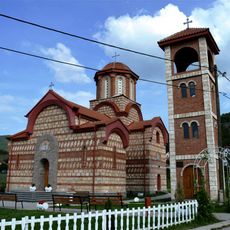
Altun-Alem Mosque, Ottoman mosque in Novi Pazar, Serbia.
Altun-Alem Mosque is an Ottoman-style building in Novi Pazar featuring a twelve-sided minaret built from sandstone blocks. The walls are constructed from cut sandstone, and the dome is topped with brick tiles.
Construction took place between 1516 and 1528 under master builder Abdul Gani, during an era when Ottoman architectural styles from Edirne shaped buildings across the region. This period marked an expansion of the empire's influence on local design.
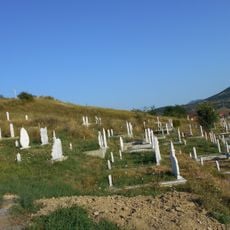
The name Altun-Alem means "golden gem", referring to the golden finial (alem) on the mosque. The walled complex also holds a mekteb, the Koranic school, listed with the mosque in the 1550 vakufnama of its founder Muslihudin Abdulgani, alongside houses for imams, a han and shops. About 50 nišans, Ottoman gravestones, stand in the yard, 29 of them bearing epitaphs.
The building sits on Prvog Maja Street, a former major trade route that once connected empire cities and remains a main thoroughfare through Novi Pazar. This central location makes it easy to visit while walking through the city.
The name means "Golden Gem Mosque", from altun (gold) and alem (gem). The exact construction year is unknown: the Muezzin Hodja quarter appears in the 1528 Ottoman census but not in that of 1516, placing the build between those years. The architect was Muslihudin Abdulgani, also called Muezzin Hodja al-Medini, honoured as Mevlana.
The community of curious travelers
AroundUs brings together thousands of curated places, local tips, and hidden gems, enriched daily by 93,359 contributors worldwide.