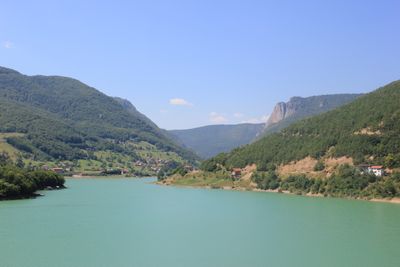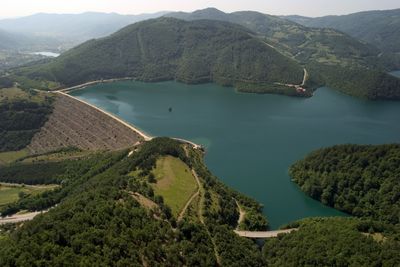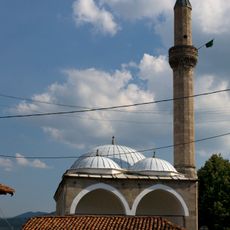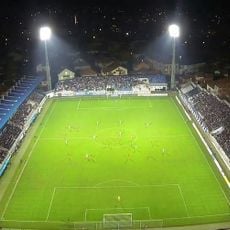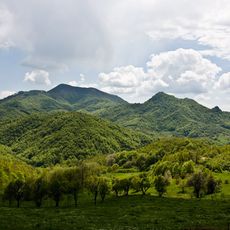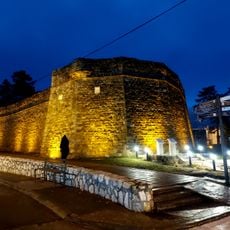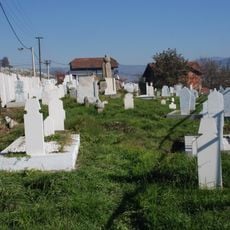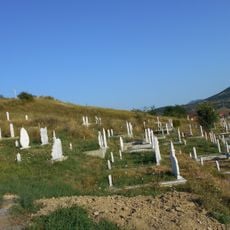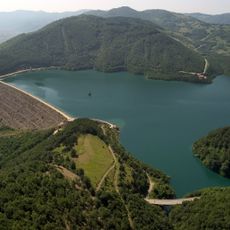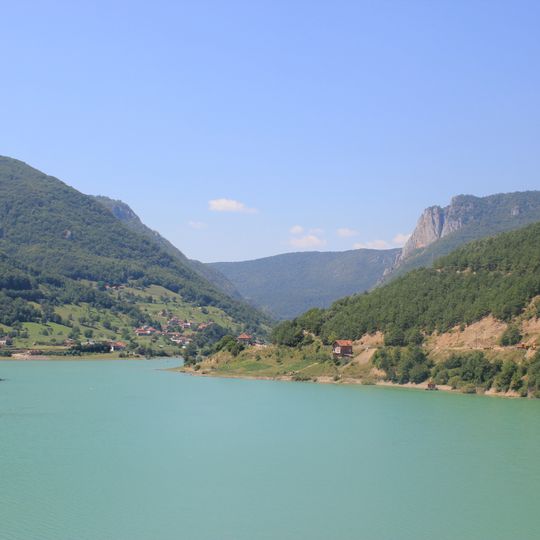
Gazivoda Lake, Artificial reservoir in Kosovska Mitrovica region, Kosovo and Serbia.
Gazivoda Lake is an artificial reservoir in the Kosovska Mitrovica region, straddling Kosovo and Serbia. The water serves cooling functions for two power plants and supplies irrigation for farmland in the surrounding communities.
The Ibar was dammed between 1973 and 1978 to build the reservoir, a project of Yugoslavia's Energoprojekt with Belgrade-based Hidrotehnika as main contractor. The $90 million cost was split between a federal infrastructure fund and World Bank loans. Since the 1990s and Kosovo's 2008 independence, Serbia and Kosovo have disputed ownership of the lake.
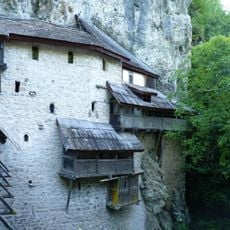
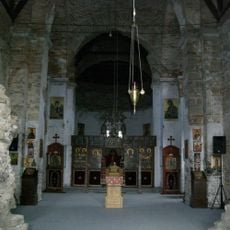
The lake's name comes from the village of Gazivode, whose land was flooded for the reservoir. Since 2017, underwater surveys have mapped medieval Serbian monuments on the lakebed, including the remains of a palace of Queen Helen of Anjou and the monastery of Čkilje. In Brnjak, Helen founded a vocational course for poor girls that locals call the first school for women in the Balkans.
The lake is easiest to reach by car, with good roads and clear signage in the region. Access to certain areas may be restricted due to the proximity of energy facilities, so visitors should check local conditions beforehand.
In 2017 and 2018 an international team of archaeologists surveyed the lake bed and mapped monuments of medieval Serbian culture beneath the water, among them the remains of a 13th-century bell tower, two medieval churches and nine Roman necropolises. The finds lie submerged, not on the shore.
The community of curious travelers
AroundUs brings together thousands of curated places, local tips, and hidden gems, enriched daily by 93,107 contributors worldwide.