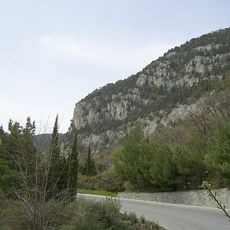
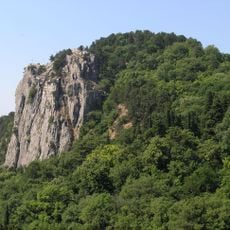
Avrorina Rock, Rock formation near Cape Ai-Todor in Gaspra, Crimea.
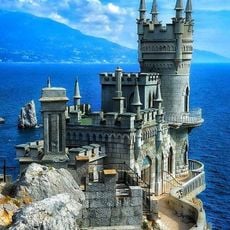
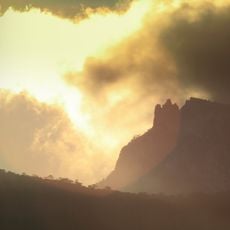
Avrorina Rock is the steep eastern spur of Cape Ai-Todor (Monastyr-Burun), jutting into the Black Sea at Gaspra. It is a Yayla olistolith of the Massandra Formation, made of Upper Jurassic limestone, and the Swallow's Nest palace stands on its summit. The rock contains karst grottoes up to 30 metres long, with stalactites on their walls.
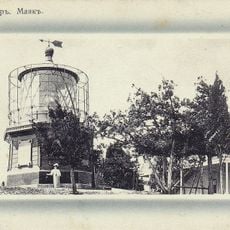
A wooden structure was built on the rock at the end of the 19th century, preceding the Swallow's Nest palace erected there in 1912. In 1927 the Yalta earthquake destroyed part of the rock and opened a crack beneath the castle, sealed during the 1960s reconstruction.
The rock's name was given by Russians in the 19th century after Aurora, the Roman goddess of dawn. It appears with the Swallow's Nest palace on Gaspra's flag and coat of arms, and on anniversary coins of Ukraine and Russia.
The rock is the eastern spur of Cape Ai-Todor (Monastyr-Burun) in Gaspra, with the Swallow's Nest palace on top. The 1927 Yalta earthquake destroyed part of the cliff and opened a crack under the palace, sealed during 1960s reconstruction. The cliff holds karst grottoes up to 30 m long with stalactites.
The limestone cliff is a Yayla olistolith of the Massandra Formation, a block that slid toward the sea as the Main Ridge of the Crimean Mountains rose. Inside are karst grottoes up to 30 m long with stalactites; one served as Ichthyander's lair in the 1961 film The Amphibian Man, and part of Ten Little Indians was also shot here.
The community of curious travelers
AroundUs brings together thousands of curated places, local tips, and hidden gems, enriched daily by 93,240 contributors worldwide.