See the monuments around you in AROpen chests in the app
Around Us is built for your phone — point your camera at the streets and discover the monuments and places around you in augmented reality.Around Us is built for your phone — chests unlock when you walk, explore and capture nearby places.
Behind Rome's church doors lies a living record of how the city shaped Christian architecture across centuries.
Rome contains over 900 churches that demonstrate two thousand years of sacred architecture, from Roman antiquity to the Baroque period. These buildings reveal the evolution of construction techniques and artistic expressions over the centuries. St. Peter's Basilica covers 20,000 square meters and features a dome designed by Michelangelo. The Pantheon retains its Roman dome with a 43-meter (141 feet) diameter, the largest ever constructed in unreinforced concrete.
Major basilicas such as Santa Maria Maggiore showcase Byzantine mosaics from the 5th century beneath a Renaissance ceiling with gilded coffers. Saint Clement's Basilica in the Lateran overlays three levels of construction from the 1st to the 12th centuries, illustrating Rome's urban stratification. Santa Maria in Trastevere, one of the city's oldest churches, presents medieval gilded mosaics, while Saint Peter's in Chains houses Michelangelo's Moses. These monuments help understand how Rome shaped European religious architecture for over fifteen centuries.
Behind Rome's church doors lies a living record of how the city shaped Christian architecture across centuries.
Rome contains over 900 churches that demonstrate two thousand years of sacred architecture, from Roman antiquity to the Baroque period. These buildings reveal the evolution of construction techniques and artistic expressions over the centuries. St. Peter's Basilica covers 20,000 square meters and features a dome designed by Michelangelo. The Pantheon retains its Roman dome with a 43-meter (141 feet) diameter, the largest ever constructed in unreinforced concrete.
Major basilicas such as Santa Maria Maggiore showcase Byzantine mosaics from the 5th century beneath a Renaissance ceiling with gilded coffers. Saint Clement's Basilica in the Lateran overlays three levels of construction from the 1st to the 12th centuries, illustrating Rome's urban stratification. Santa Maria in Trastevere, one of the city's oldest churches, presents medieval gilded mosaics, while Saint Peter's in Chains houses Michelangelo's Moses. These monuments help understand how Rome shaped European religious architecture for over fifteen centuries.
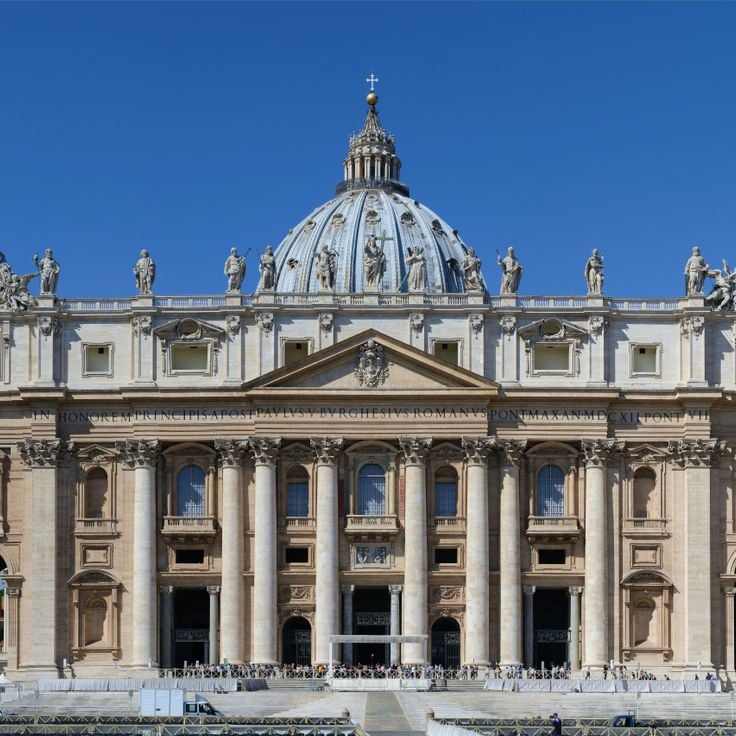
St. Peter's Basilica stands at the heart of Vatican City and is the principal church of Catholic Christianity. The current building, from the 16th and 17th centuries, replaced a church dating back to the 4th century. Michelangelo designed the dome, while Bernini shaped the forecourt with its sweeping colonnades. Inside, works by Michelangelo, Bernini, and other Renaissance and Baroque artists line the walls and altars. This basilica shows how Rome's religious architecture evolved over many centuries.
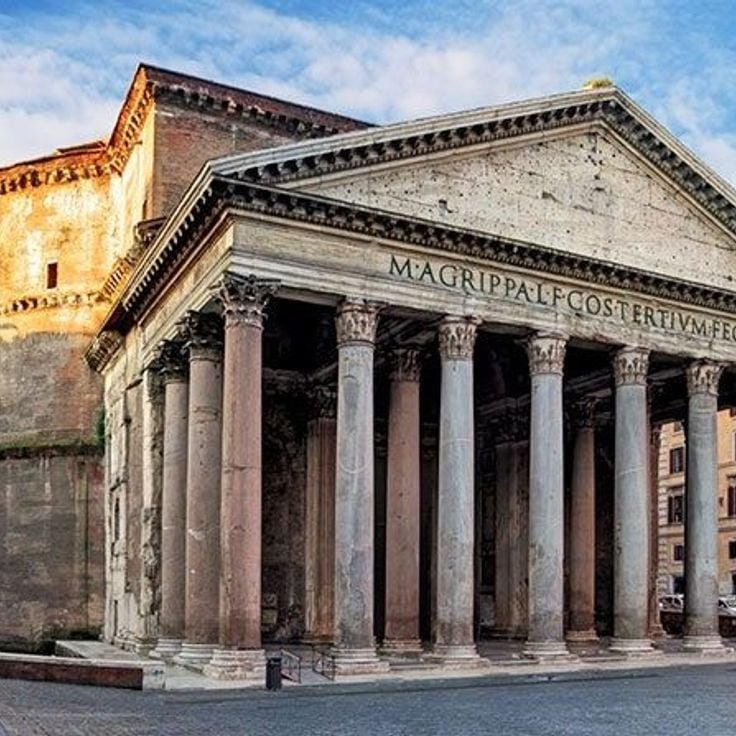
The Pantheon is one of the best-preserved buildings from ancient Rome. Built in the 2nd century, it is known above all for its dome made of unreinforced concrete, which measures 142 feet (43 meters) across and remains the largest of its kind ever built. In the 7th century, the building was converted into a Christian church, making it part of Rome's long tradition of sacred architecture. Stepping inside, visitors look straight up through the oculus, a circular opening at the top of the dome that lets in the only natural light. This shift from Roman temple to church gives the Pantheon a central place in any story about how Rome shaped religious architecture over the centuries.
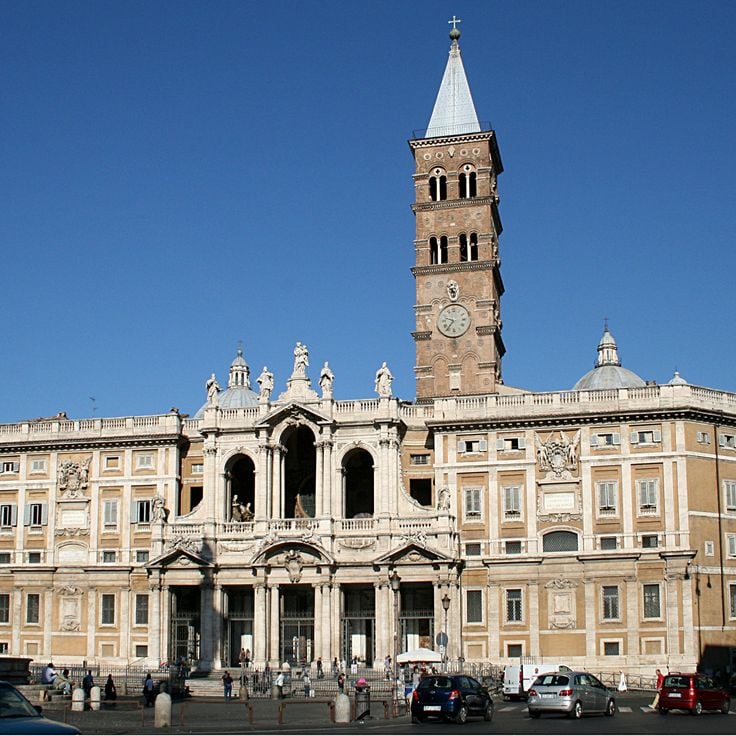
The Basilica di Santa Maria Maggiore dates to the fifth century and is one of the oldest churches in Rome. Its Byzantine mosaics show biblical scenes in detail, while the gilded coffered ceiling above was added in the sixteenth century. Walking through this church, you can see how different periods left their mark on a single sacred space, from early Christian art to Renaissance decoration.
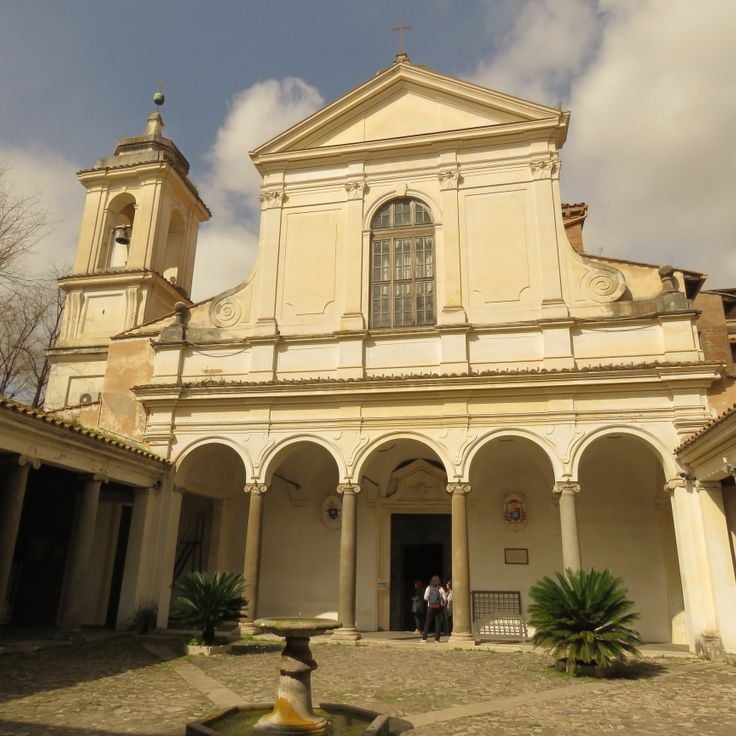
The Basilica of San Clemente in Lateran documents the urban stratification of Rome over 2000 years through its three levels of construction from the 1st, 4th, and 12th centuries. The medieval church building rests on an early Christian basilica from the 4th century, which in turn was built over a Roman residence from the 1st century. This layering makes the church an exceptional archaeological witness to the development of religious architecture in Rome, from antiquity to the High Middle Ages. The threefold construction stratification allows the study of building techniques and artistic expressions from different periods within a single sacred complex.
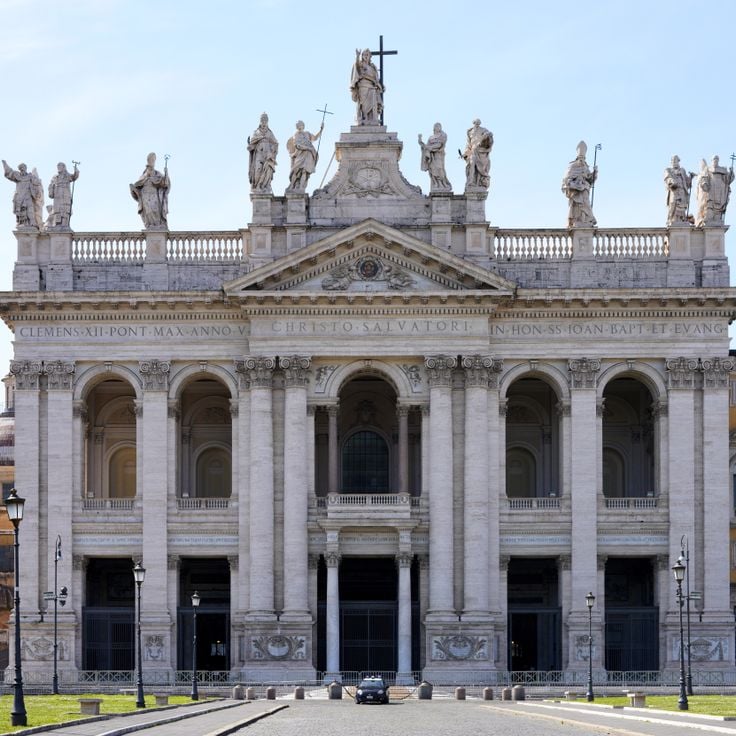
The Basilica of Saint John Lateran is the cathedral of Rome and has served as the official seat of the Pope since the 4th century. Its 18th-century facade carries 15 large statues of Christ, John the Baptist, and Doctors of the Church. Inside, a medieval cloister from the 13th century stands with decorated columns, and the papal altar where only the Pope may celebrate Mass. This church traces the full arc of Roman sacred architecture, from its Constantinian origins through the Baroque transformations of the 17th century.
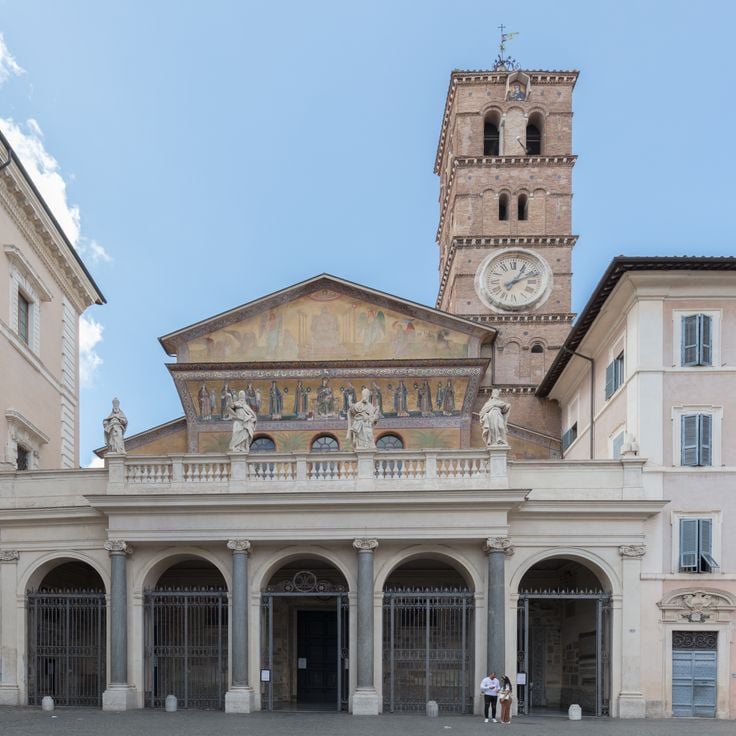
Santa Maria in Trastevere is one of the oldest churches in Rome, dating back to the 4th century. The facade displays a medieval mosaic showing the Virgin Mary and ten female figures. Inside, golden mosaics from the 12th and 13th centuries cover the apse and show scenes from the life of Mary. The 21 granite columns were taken from Roman baths and reused here. The floor features 13th-century Cosmatesque work, and the gilded coffered ceiling was added in the 17th century. This church traces the story of religious art in Rome across more than ten centuries.
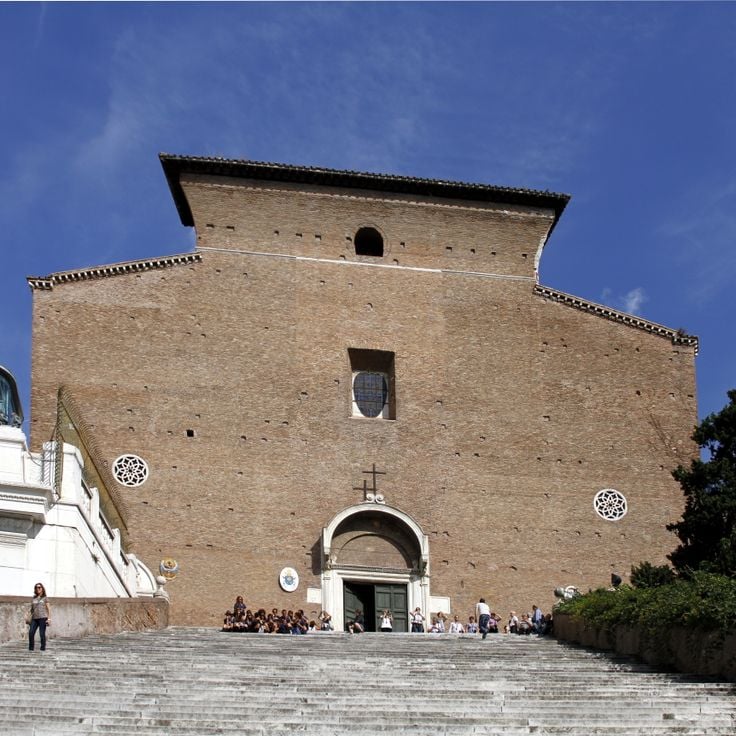
The Basilica of Santa Maria in Ara Coeli stands on the Capitoline Hill at the site of an ancient Roman temple. The 13th-century church features a simple medieval brick facade and houses a Renaissance coffered ceiling with gilded decorations. The interior divides into three naves by 22 ancient columns salvaged from various Roman buildings, displaying different styles and materials. The church preserves frescoes by Pinturicchio from the late 15th century, along with several tombs and sculptures from different periods. A 14th-century staircase of 124 steps connects the basilica to the Piazza del Campidoglio.
The Basilica of San Pietro in Vincoli in Rome holds two things that draw visitors from all over: the chains said to have bound Saint Peter during his time in prison in Jerusalem and Rome, and Michelangelo's Moses. This statue, carved in the 16th century, was meant for the grand tomb of Pope Julius II. The prophet is shown with horns, the result of a medieval mistranslation of the Hebrew text. The church itself dates to the 5th century and was rebuilt in the 15th century, keeping its three-nave layout. Frescoes from the 17th century and the reduced version of Julius II's tomb complete the interior.
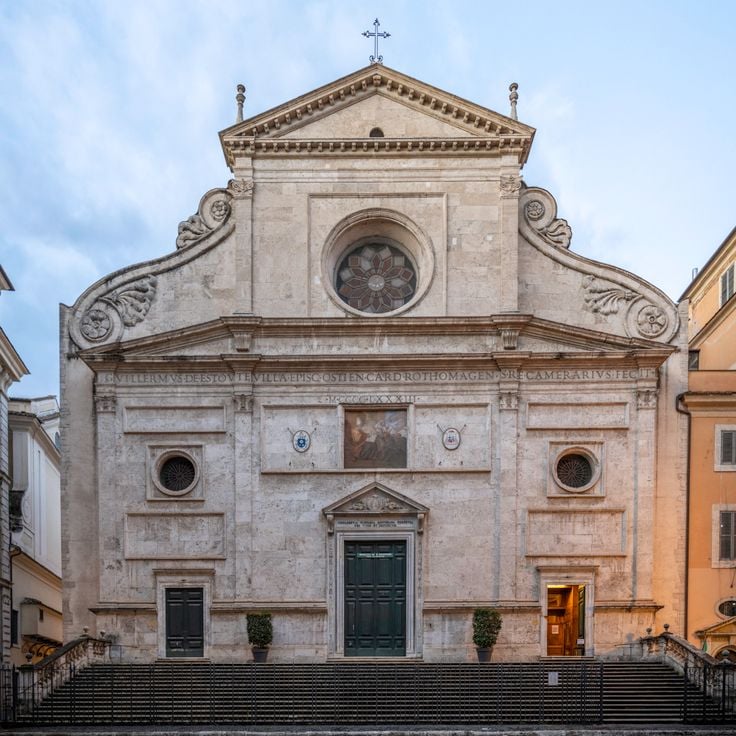
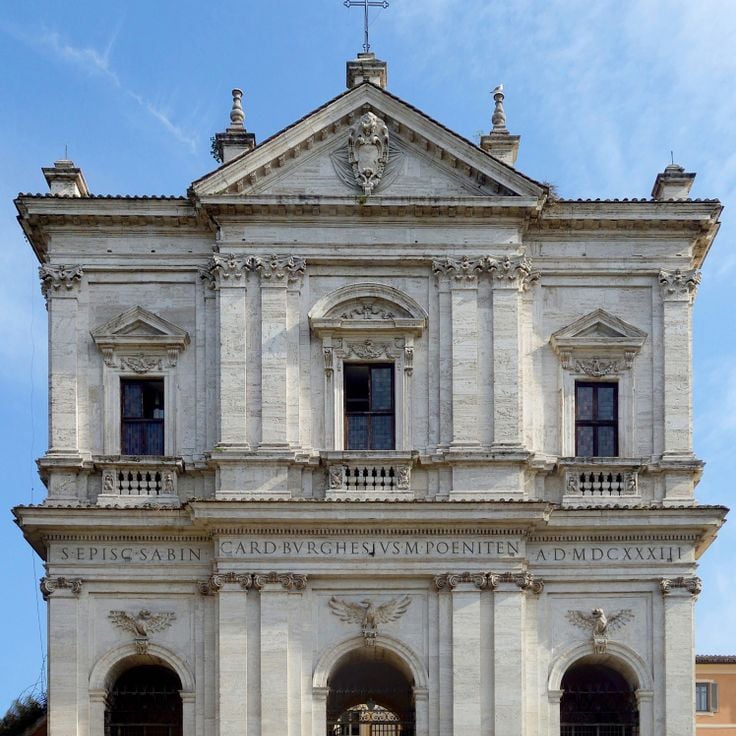
The Basilica of Saint Augustine in Campo Marzio combines Renaissance architecture with significant artworks that document the evolution of religious art in Rome. Built between 1479 and 1483, this church features a travertine facade sourced from the Colosseum. Inside, the basilica preserves Caravaggio's Madonna of the Pilgrims from 1604, a work that marks a decisive moment in the transition from Mannerism to Baroque. The church also contains Raphael's fresco of the Prophet Isaiah and Jacopo Sansovino's marble sculpture of the Madonna and Child. This combination of architectural elements and artworks illustrates how Roman churches functioned as centers of artistic innovation during the 15th and 16th centuries.
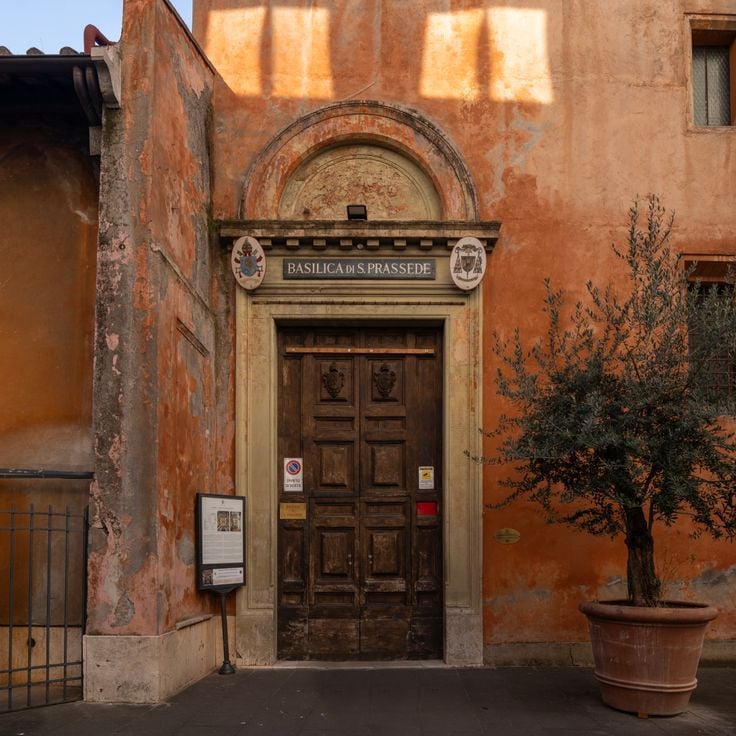
Santa Prassede is a minor basilica tucked into the Monti neighborhood, close to the Esquiline Hill. Built in the 9th century, it is home to some of the finest Byzantine mosaics in Rome outside of Ravenna. Inside, gold backgrounds and colorful figures cover the apse and the triumphal arch. The Chapel of Saint Zeno is one of the rare chapels in the Western world entirely lined with mosaics. It gives a strong sense of what early medieval Christian art looked like in Rome.
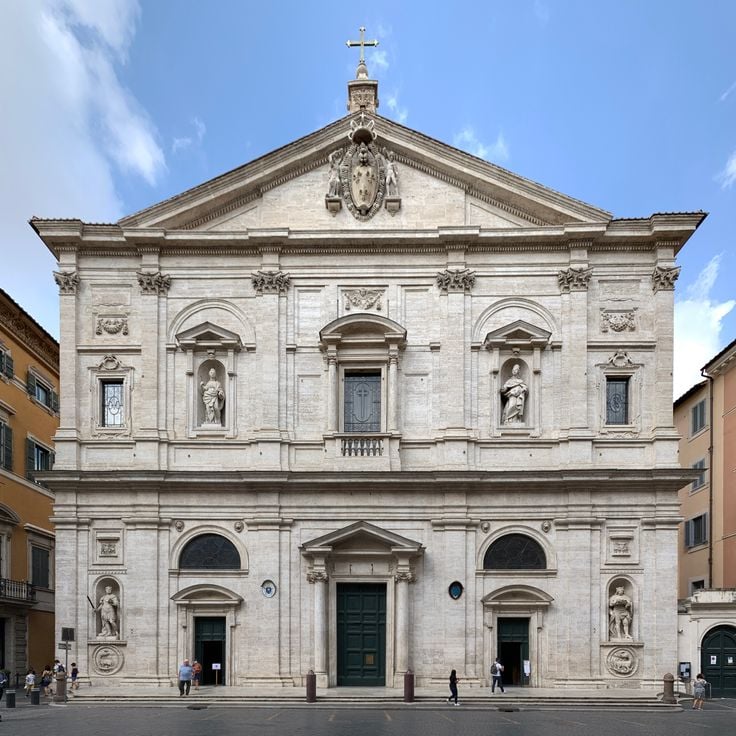
The Church of San Luigi dei Francesi in central Rome serves the French community and is home to three paintings by Caravaggio from the early 17th century. They hang in the Contarelli Chapel and depict the life of Saint Matthew: The Calling of Saint Matthew, Saint Matthew and the Angel, and The Martyrdom of Saint Matthew. The church was built between 1518 and 1589, with a facade by Giacomo della Porta. Inside, the Chapel of Saint Cecilia holds frescoes by Domenichino. This church shows how strong the French presence in Rome was during the Counter-Reformation.
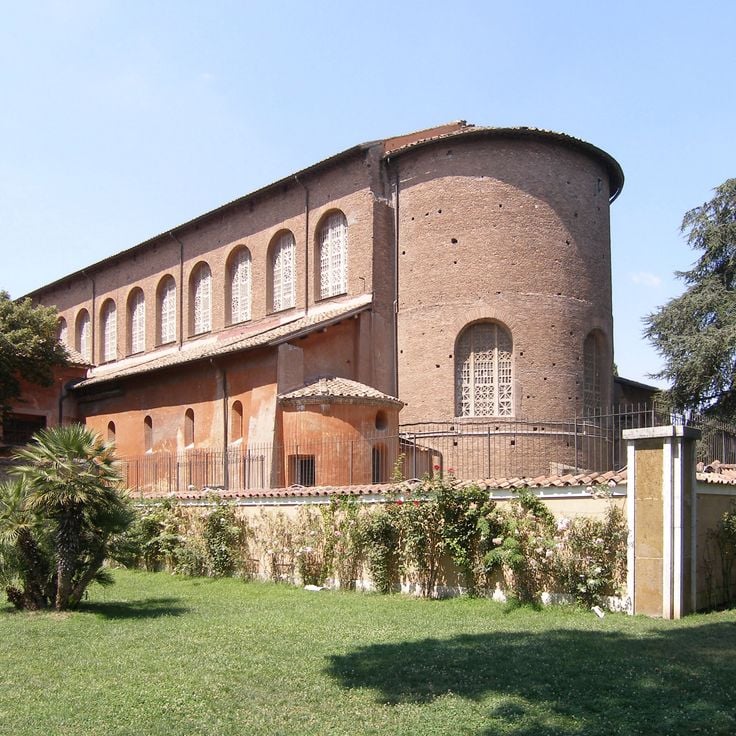
The Basilica of Santa Sabina, built in the 5th century, represents one of the best preserved early Christian church structures in Rome. Pope Celestine I commissioned its construction between 422 and 432 on the Aventine Hill, incorporating columns salvaged from an ancient Temple of Juno. The three-nave layout preserves its original spatial configuration with 24 Corinthian columns of Parian marble and windows made from alabaster rather than glass. The main door, crafted from cypress wood, displays 18 surviving wooden panels depicting biblical scenes, including one of the earliest representations of Christ's crucifixion. This basilica demonstrates the transition from Roman secular architecture to Christian sacred buildings and has served as the conventual church of the Dominican Order since 1220.
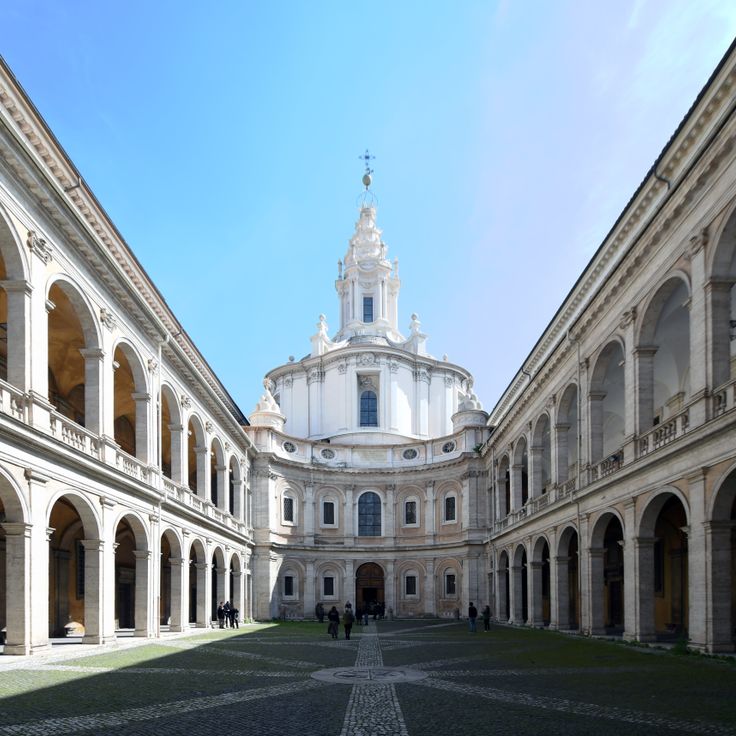
Sant'Ivo alla Sapienza was built between 1642 and 1660 by Francesco Borromini as the chapel of La Sapienza University. The church displays Borromini's characteristic architecture with a star-shaped floor plan combining two interlocking equilateral triangles. The dome rises above this geometric scheme and is crowned by a spiral lantern extending 59 feet (18 meters). The interior develops vertically with white stucco and uses natural light entering through the dome's windows. This church documents the experimental construction methods of Roman baroque and its influence on 17th-century religious architecture.
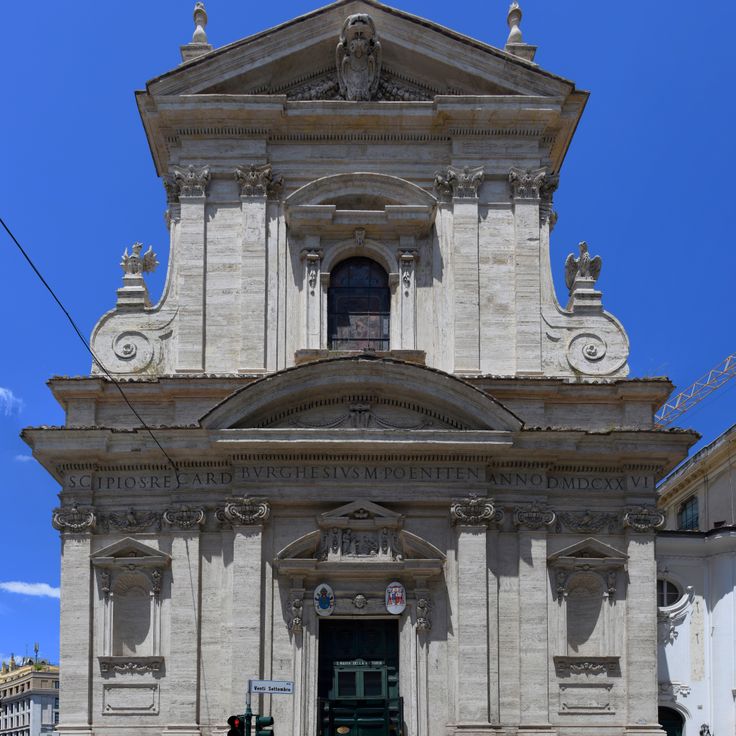
The church of Santa Maria della Vittoria houses one of Rome's most significant Baroque sculptural groups: the Ecstasy of Saint Teresa by Gian Lorenzo Bernini. Created between 1647 and 1652 for the Cornaro Chapel, this marble composition depicts the Spanish mystic in a moment of spiritual rapture. Bernini combined sculpture, architecture, and natural light to create a theatrical setting that represents a high point of Baroque sacred art. The church itself was built between 1608 and 1620 following designs by Carlo Maderno.
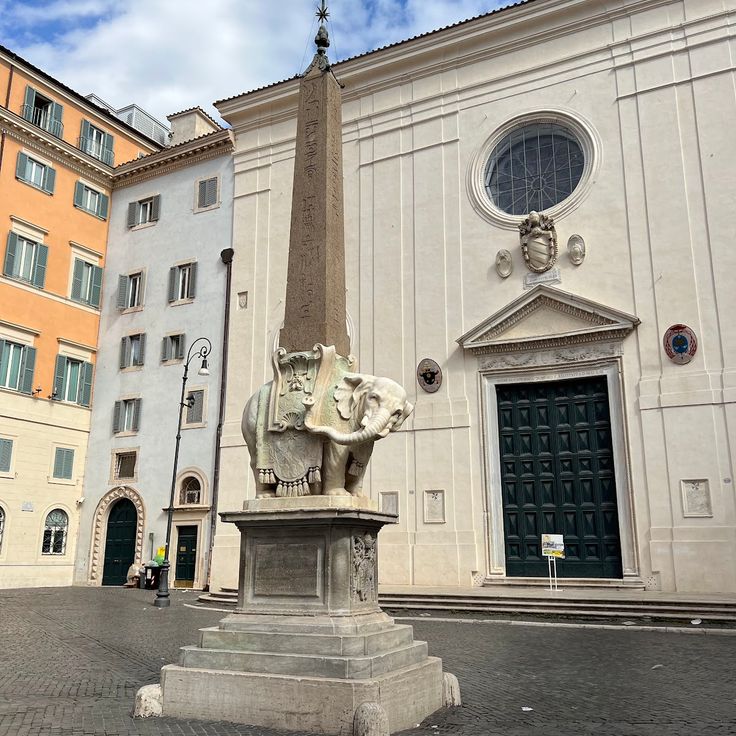
Santa Maria sopra Minerva stands on the foundations of an ancient temple of Minerva and represents Rome's only Gothic church, featuring pointed ribbed vaults from the 13th century. The nave contains 15th-century frescoes by Filippino Lippi in the Carafa Chapel and Michelangelo's Risen Christ from 1521. Blue star vaults in the choir were added during the 19th century. The body of Saint Catherine of Siena rests beneath the high altar. In front of the facade stands an elephant by Gian Lorenzo Bernini from 1667, carrying a 6th-century BC Egyptian obelisk.
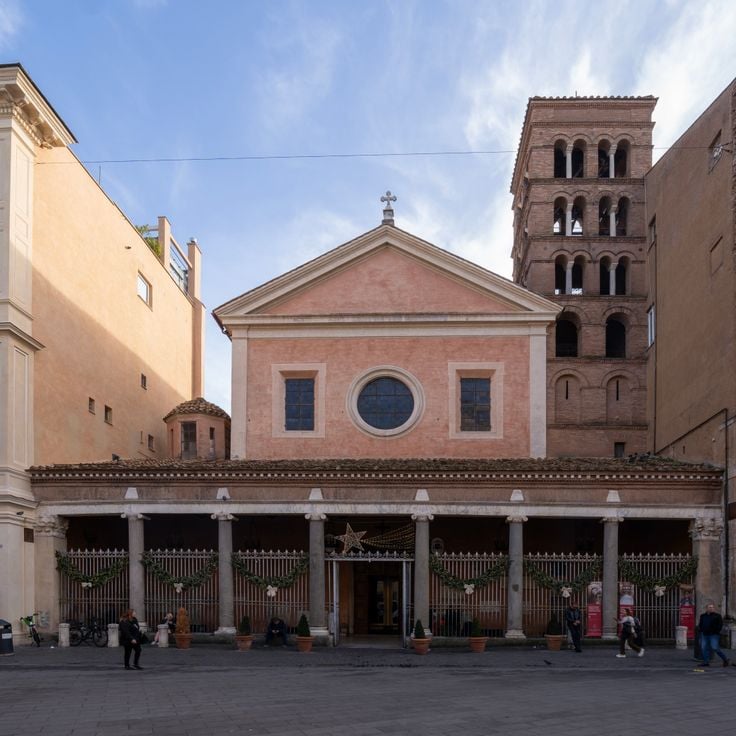
The Basilica of San Lorenzo in Lucina is one of the oldest churches in Rome. Built in the fifth century on an early Christian foundation tied to Pope Sixtus III, it took on its current form in the twelfth century, when it received a Romanesque bell tower and a front portico. Inside, the ancient granite columns from the original structure still stand and separate the arcades. This church is a good example of how builders in the Middle Ages reused Roman materials and raised new places of worship over much older foundations.
San Gregorio Magno al Celio dates back to the 6th century and was built on the site of a former Roman estate. This church complex shows how private Roman homes were gradually turned into religious spaces. The three chapels hold frescoes and architectural elements from different periods, ranging from early Christianity to the Middle Ages. Walking through the cloister and garden, you get a sense of the many layers of history that shaped this place over fifteen centuries.
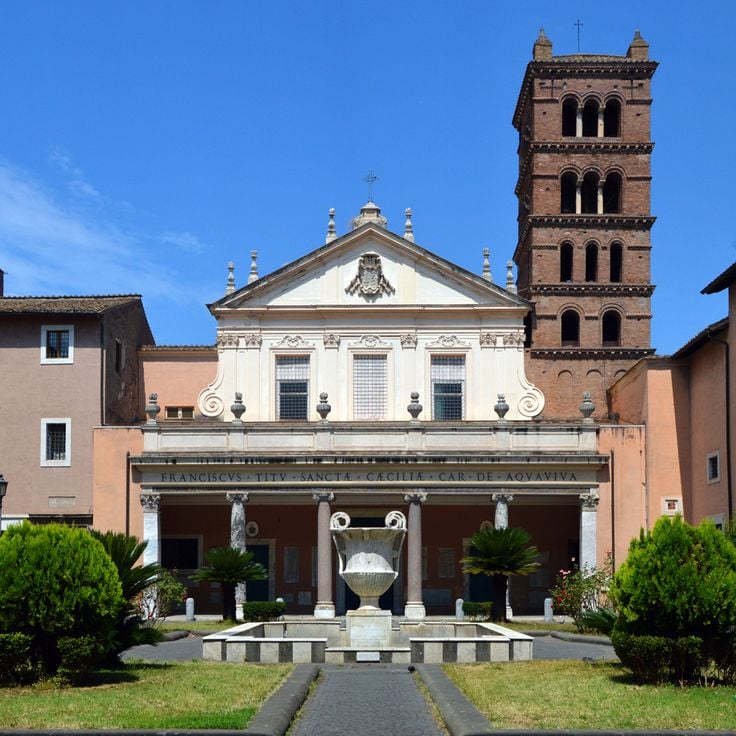
Santa Cecilia in Trastevere stands above the remains of a Roman house from the 3rd century, traditionally said to have belonged to Saint Cecilia. The apse holds a Byzantine mosaic from the 9th century showing Christ with saints. The crypt contains Roman walls and medieval frescoes. Under the main altar lies a marble statue of Saint Cecilia by Stefano Maderno, made in 1600, showing the martyr in the position her body was found in 1599. On the choir wall, a fresco of the Last Judgment by Pietro Cavallini, painted in the late 13th century, can be seen by appointment.
St. Peter's Basilica stands at the heart of Vatican City and is the principal church of Catholic Christianity. The current building, from the 16th and 17th centuries, replaced a church dating back to the 4th century. Michelangelo designed the dome, while Bernini shaped the forecourt with its sweeping colonnades. Inside, works by Michelangelo, Bernini, and other Renaissance and Baroque artists line the walls and altars. This basilica shows how Rome's religious architecture evolved over many centuries.
The Pantheon is one of the best-preserved buildings from ancient Rome. Built in the 2nd century, it is known above all for its dome made of unreinforced concrete, which measures 142 feet (43 meters) across and remains the largest of its kind ever built. In the 7th century, the building was converted into a Christian church, making it part of Rome's long tradition of sacred architecture. Stepping inside, visitors look straight up through the oculus, a circular opening at the top of the dome that lets in the only natural light. This shift from Roman temple to church gives the Pantheon a central place in any story about how Rome shaped religious architecture over the centuries.
The Basilica di Santa Maria Maggiore dates to the fifth century and is one of the oldest churches in Rome. Its Byzantine mosaics show biblical scenes in detail, while the gilded coffered ceiling above was added in the sixteenth century. Walking through this church, you can see how different periods left their mark on a single sacred space, from early Christian art to Renaissance decoration.
The Basilica of San Clemente in Lateran documents the urban stratification of Rome over 2000 years through its three levels of construction from the 1st, 4th, and 12th centuries. The medieval church building rests on an early Christian basilica from the 4th century, which in turn was built over a Roman residence from the 1st century. This layering makes the church an exceptional archaeological witness to the development of religious architecture in Rome, from antiquity to the High Middle Ages. The threefold construction stratification allows the study of building techniques and artistic expressions from different periods within a single sacred complex.
The Basilica of Saint John Lateran is the cathedral of Rome and has served as the official seat of the Pope since the 4th century. Its 18th-century facade carries 15 large statues of Christ, John the Baptist, and Doctors of the Church. Inside, a medieval cloister from the 13th century stands with decorated columns, and the papal altar where only the Pope may celebrate Mass. This church traces the full arc of Roman sacred architecture, from its Constantinian origins through the Baroque transformations of the 17th century.
Santa Maria in Trastevere is one of the oldest churches in Rome, dating back to the 4th century. The facade displays a medieval mosaic showing the Virgin Mary and ten female figures. Inside, golden mosaics from the 12th and 13th centuries cover the apse and show scenes from the life of Mary. The 21 granite columns were taken from Roman baths and reused here. The floor features 13th-century Cosmatesque work, and the gilded coffered ceiling was added in the 17th century. This church traces the story of religious art in Rome across more than ten centuries.
The Basilica of Santa Maria in Ara Coeli stands on the Capitoline Hill at the site of an ancient Roman temple. The 13th-century church features a simple medieval brick facade and houses a Renaissance coffered ceiling with gilded decorations. The interior divides into three naves by 22 ancient columns salvaged from various Roman buildings, displaying different styles and materials. The church preserves frescoes by Pinturicchio from the late 15th century, along with several tombs and sculptures from different periods. A 14th-century staircase of 124 steps connects the basilica to the Piazza del Campidoglio.
The Basilica of San Pietro in Vincoli in Rome holds two things that draw visitors from all over: the chains said to have bound Saint Peter during his time in prison in Jerusalem and Rome, and Michelangelo's Moses. This statue, carved in the 16th century, was meant for the grand tomb of Pope Julius II. The prophet is shown with horns, the result of a medieval mistranslation of the Hebrew text. The church itself dates to the 5th century and was rebuilt in the 15th century, keeping its three-nave layout. Frescoes from the 17th century and the reduced version of Julius II's tomb complete the interior.
The Basilica of Saint Augustine in Campo Marzio combines Renaissance architecture with significant artworks that document the evolution of religious art in Rome. Built between 1479 and 1483, this church features a travertine facade sourced from the Colosseum. Inside, the basilica preserves Caravaggio's Madonna of the Pilgrims from 1604, a work that marks a decisive moment in the transition from Mannerism to Baroque. The church also contains Raphael's fresco of the Prophet Isaiah and Jacopo Sansovino's marble sculpture of the Madonna and Child. This combination of architectural elements and artworks illustrates how Roman churches functioned as centers of artistic innovation during the 15th and 16th centuries.
Santa Prassede is a minor basilica tucked into the Monti neighborhood, close to the Esquiline Hill. Built in the 9th century, it is home to some of the finest Byzantine mosaics in Rome outside of Ravenna. Inside, gold backgrounds and colorful figures cover the apse and the triumphal arch. The Chapel of Saint Zeno is one of the rare chapels in the Western world entirely lined with mosaics. It gives a strong sense of what early medieval Christian art looked like in Rome.
The Church of San Luigi dei Francesi in central Rome serves the French community and is home to three paintings by Caravaggio from the early 17th century. They hang in the Contarelli Chapel and depict the life of Saint Matthew: The Calling of Saint Matthew, Saint Matthew and the Angel, and The Martyrdom of Saint Matthew. The church was built between 1518 and 1589, with a facade by Giacomo della Porta. Inside, the Chapel of Saint Cecilia holds frescoes by Domenichino. This church shows how strong the French presence in Rome was during the Counter-Reformation.
The Basilica of Santa Sabina, built in the 5th century, represents one of the best preserved early Christian church structures in Rome. Pope Celestine I commissioned its construction between 422 and 432 on the Aventine Hill, incorporating columns salvaged from an ancient Temple of Juno. The three-nave layout preserves its original spatial configuration with 24 Corinthian columns of Parian marble and windows made from alabaster rather than glass. The main door, crafted from cypress wood, displays 18 surviving wooden panels depicting biblical scenes, including one of the earliest representations of Christ's crucifixion. This basilica demonstrates the transition from Roman secular architecture to Christian sacred buildings and has served as the conventual church of the Dominican Order since 1220.
Sant'Ivo alla Sapienza was built between 1642 and 1660 by Francesco Borromini as the chapel of La Sapienza University. The church displays Borromini's characteristic architecture with a star-shaped floor plan combining two interlocking equilateral triangles. The dome rises above this geometric scheme and is crowned by a spiral lantern extending 59 feet (18 meters). The interior develops vertically with white stucco and uses natural light entering through the dome's windows. This church documents the experimental construction methods of Roman baroque and its influence on 17th-century religious architecture.
The church of Santa Maria della Vittoria houses one of Rome's most significant Baroque sculptural groups: the Ecstasy of Saint Teresa by Gian Lorenzo Bernini. Created between 1647 and 1652 for the Cornaro Chapel, this marble composition depicts the Spanish mystic in a moment of spiritual rapture. Bernini combined sculpture, architecture, and natural light to create a theatrical setting that represents a high point of Baroque sacred art. The church itself was built between 1608 and 1620 following designs by Carlo Maderno.
Santa Maria sopra Minerva stands on the foundations of an ancient temple of Minerva and represents Rome's only Gothic church, featuring pointed ribbed vaults from the 13th century. The nave contains 15th-century frescoes by Filippino Lippi in the Carafa Chapel and Michelangelo's Risen Christ from 1521. Blue star vaults in the choir were added during the 19th century. The body of Saint Catherine of Siena rests beneath the high altar. In front of the facade stands an elephant by Gian Lorenzo Bernini from 1667, carrying a 6th-century BC Egyptian obelisk.
The Basilica of San Lorenzo in Lucina is one of the oldest churches in Rome. Built in the fifth century on an early Christian foundation tied to Pope Sixtus III, it took on its current form in the twelfth century, when it received a Romanesque bell tower and a front portico. Inside, the ancient granite columns from the original structure still stand and separate the arcades. This church is a good example of how builders in the Middle Ages reused Roman materials and raised new places of worship over much older foundations.
San Gregorio Magno al Celio dates back to the 6th century and was built on the site of a former Roman estate. This church complex shows how private Roman homes were gradually turned into religious spaces. The three chapels hold frescoes and architectural elements from different periods, ranging from early Christianity to the Middle Ages. Walking through the cloister and garden, you get a sense of the many layers of history that shaped this place over fifteen centuries.
Santa Cecilia in Trastevere stands above the remains of a Roman house from the 3rd century, traditionally said to have belonged to Saint Cecilia. The apse holds a Byzantine mosaic from the 9th century showing Christ with saints. The crypt contains Roman walls and medieval frescoes. Under the main altar lies a marble statue of Saint Cecilia by Stefano Maderno, made in 1600, showing the martyr in the position her body was found in 1599. On the choir wall, a fresco of the Last Judgment by Pietro Cavallini, painted in the late 13th century, can be seen by appointment.
St. Peter's Basilica stands at the heart of Vatican City and is the principal church of Catholic Christianity. The current building, from the 16th and 17th centuries, replaced a church dating back to the 4th century. Michelangelo designed the dome, while Bernini shaped the forecourt with its sweeping colonnades. Inside, works by Michelangelo, Bernini, and other Renaissance and Baroque artists line the walls and altars. This basilica shows how Rome's religious architecture evolved over many centuries.
The Pantheon is one of the best-preserved buildings from ancient Rome. Built in the 2nd century, it is known above all for its dome made of unreinforced concrete, which measures 142 feet (43 meters) across and remains the largest of its kind ever built. In the 7th century, the building was converted into a Christian church, making it part of Rome's long tradition of sacred architecture. Stepping inside, visitors look straight up through the oculus, a circular opening at the top of the dome that lets in the only natural light. This shift from Roman temple to church gives the Pantheon a central place in any story about how Rome shaped religious architecture over the centuries.
The Basilica di Santa Maria Maggiore dates to the fifth century and is one of the oldest churches in Rome. Its Byzantine mosaics show biblical scenes in detail, while the gilded coffered ceiling above was added in the sixteenth century. Walking through this church, you can see how different periods left their mark on a single sacred space, from early Christian art to Renaissance decoration.
The Basilica of San Clemente in Lateran documents the urban stratification of Rome over 2000 years through its three levels of construction from the 1st, 4th, and 12th centuries. The medieval church building rests on an early Christian basilica from the 4th century, which in turn was built over a Roman residence from the 1st century. This layering makes the church an exceptional archaeological witness to the development of religious architecture in Rome, from antiquity to the High Middle Ages. The threefold construction stratification allows the study of building techniques and artistic expressions from different periods within a single sacred complex.
The Basilica of Saint John Lateran is the cathedral of Rome and has served as the official seat of the Pope since the 4th century. Its 18th-century facade carries 15 large statues of Christ, John the Baptist, and Doctors of the Church. Inside, a medieval cloister from the 13th century stands with decorated columns, and the papal altar where only the Pope may celebrate Mass. This church traces the full arc of Roman sacred architecture, from its Constantinian origins through the Baroque transformations of the 17th century.
Santa Maria in Trastevere is one of the oldest churches in Rome, dating back to the 4th century. The facade displays a medieval mosaic showing the Virgin Mary and ten female figures. Inside, golden mosaics from the 12th and 13th centuries cover the apse and show scenes from the life of Mary. The 21 granite columns were taken from Roman baths and reused here. The floor features 13th-century Cosmatesque work, and the gilded coffered ceiling was added in the 17th century. This church traces the story of religious art in Rome across more than ten centuries.
The Basilica of Santa Maria in Ara Coeli stands on the Capitoline Hill at the site of an ancient Roman temple. The 13th-century church features a simple medieval brick facade and houses a Renaissance coffered ceiling with gilded decorations. The interior divides into three naves by 22 ancient columns salvaged from various Roman buildings, displaying different styles and materials. The church preserves frescoes by Pinturicchio from the late 15th century, along with several tombs and sculptures from different periods. A 14th-century staircase of 124 steps connects the basilica to the Piazza del Campidoglio.
The Basilica of San Pietro in Vincoli in Rome holds two things that draw visitors from all over: the chains said to have bound Saint Peter during his time in prison in Jerusalem and Rome, and Michelangelo's Moses. This statue, carved in the 16th century, was meant for the grand tomb of Pope Julius II. The prophet is shown with horns, the result of a medieval mistranslation of the Hebrew text. The church itself dates to the 5th century and was rebuilt in the 15th century, keeping its three-nave layout. Frescoes from the 17th century and the reduced version of Julius II's tomb complete the interior.
The Basilica of Saint Augustine in Campo Marzio combines Renaissance architecture with significant artworks that document the evolution of religious art in Rome. Built between 1479 and 1483, this church features a travertine facade sourced from the Colosseum. Inside, the basilica preserves Caravaggio's Madonna of the Pilgrims from 1604, a work that marks a decisive moment in the transition from Mannerism to Baroque. The church also contains Raphael's fresco of the Prophet Isaiah and Jacopo Sansovino's marble sculpture of the Madonna and Child. This combination of architectural elements and artworks illustrates how Roman churches functioned as centers of artistic innovation during the 15th and 16th centuries.
Santa Prassede is a minor basilica tucked into the Monti neighborhood, close to the Esquiline Hill. Built in the 9th century, it is home to some of the finest Byzantine mosaics in Rome outside of Ravenna. Inside, gold backgrounds and colorful figures cover the apse and the triumphal arch. The Chapel of Saint Zeno is one of the rare chapels in the Western world entirely lined with mosaics. It gives a strong sense of what early medieval Christian art looked like in Rome.
The Church of San Luigi dei Francesi in central Rome serves the French community and is home to three paintings by Caravaggio from the early 17th century. They hang in the Contarelli Chapel and depict the life of Saint Matthew: The Calling of Saint Matthew, Saint Matthew and the Angel, and The Martyrdom of Saint Matthew. The church was built between 1518 and 1589, with a facade by Giacomo della Porta. Inside, the Chapel of Saint Cecilia holds frescoes by Domenichino. This church shows how strong the French presence in Rome was during the Counter-Reformation.
The Basilica of Santa Sabina, built in the 5th century, represents one of the best preserved early Christian church structures in Rome. Pope Celestine I commissioned its construction between 422 and 432 on the Aventine Hill, incorporating columns salvaged from an ancient Temple of Juno. The three-nave layout preserves its original spatial configuration with 24 Corinthian columns of Parian marble and windows made from alabaster rather than glass. The main door, crafted from cypress wood, displays 18 surviving wooden panels depicting biblical scenes, including one of the earliest representations of Christ's crucifixion. This basilica demonstrates the transition from Roman secular architecture to Christian sacred buildings and has served as the conventual church of the Dominican Order since 1220.
Sant'Ivo alla Sapienza was built between 1642 and 1660 by Francesco Borromini as the chapel of La Sapienza University. The church displays Borromini's characteristic architecture with a star-shaped floor plan combining two interlocking equilateral triangles. The dome rises above this geometric scheme and is crowned by a spiral lantern extending 59 feet (18 meters). The interior develops vertically with white stucco and uses natural light entering through the dome's windows. This church documents the experimental construction methods of Roman baroque and its influence on 17th-century religious architecture.
The church of Santa Maria della Vittoria houses one of Rome's most significant Baroque sculptural groups: the Ecstasy of Saint Teresa by Gian Lorenzo Bernini. Created between 1647 and 1652 for the Cornaro Chapel, this marble composition depicts the Spanish mystic in a moment of spiritual rapture. Bernini combined sculpture, architecture, and natural light to create a theatrical setting that represents a high point of Baroque sacred art. The church itself was built between 1608 and 1620 following designs by Carlo Maderno.
Santa Maria sopra Minerva stands on the foundations of an ancient temple of Minerva and represents Rome's only Gothic church, featuring pointed ribbed vaults from the 13th century. The nave contains 15th-century frescoes by Filippino Lippi in the Carafa Chapel and Michelangelo's Risen Christ from 1521. Blue star vaults in the choir were added during the 19th century. The body of Saint Catherine of Siena rests beneath the high altar. In front of the facade stands an elephant by Gian Lorenzo Bernini from 1667, carrying a 6th-century BC Egyptian obelisk.
The Basilica of San Lorenzo in Lucina is one of the oldest churches in Rome. Built in the fifth century on an early Christian foundation tied to Pope Sixtus III, it took on its current form in the twelfth century, when it received a Romanesque bell tower and a front portico. Inside, the ancient granite columns from the original structure still stand and separate the arcades. This church is a good example of how builders in the Middle Ages reused Roman materials and raised new places of worship over much older foundations.
San Gregorio Magno al Celio dates back to the 6th century and was built on the site of a former Roman estate. This church complex shows how private Roman homes were gradually turned into religious spaces. The three chapels hold frescoes and architectural elements from different periods, ranging from early Christianity to the Middle Ages. Walking through the cloister and garden, you get a sense of the many layers of history that shaped this place over fifteen centuries.
Santa Cecilia in Trastevere stands above the remains of a Roman house from the 3rd century, traditionally said to have belonged to Saint Cecilia. The apse holds a Byzantine mosaic from the 9th century showing Christ with saints. The crypt contains Roman walls and medieval frescoes. Under the main altar lies a marble statue of Saint Cecilia by Stefano Maderno, made in 1600, showing the martyr in the position her body was found in 1599. On the choir wall, a fresco of the Last Judgment by Pietro Cavallini, painted in the late 13th century, can be seen by appointment.
A practical tip: buy a combined ticket if available, as individual entrance fees add up quickly. Some churches are free to enter, while others charge admission. Check ahead online to know what to expect and avoid disappointment at the door.