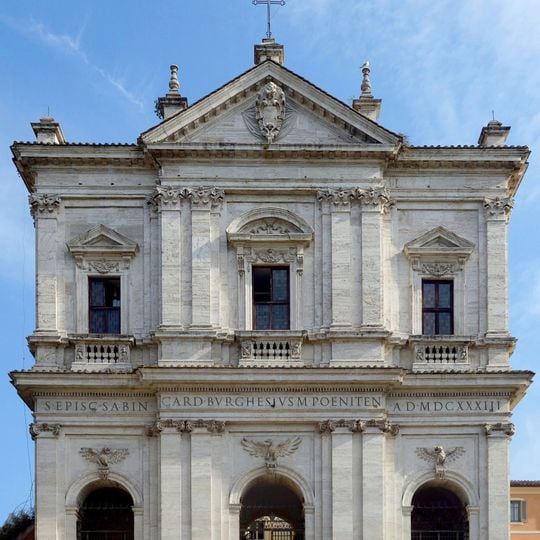
San Gregorio Magno al Celio, Baroque church on Caelian Hill, Rome, Italy
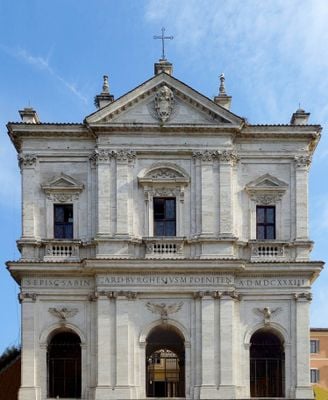
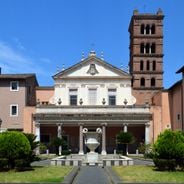
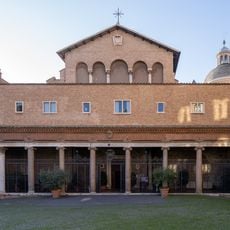
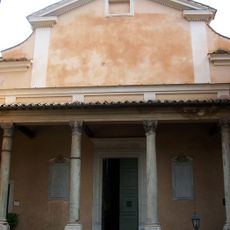
San Gregorio Magno al Celio is a Baroque church on the Caelian Hill in Rome, reached by a broad outdoor staircase and a walled atrium with an arcaded portico. The interior follows a three-nave basilica plan, with sixteen ancient columns and a Cosmatesque floor of geometric marble inlay running the length of the nave.
Pope Gregory the Great is said to have converted his family home on this site into a monastery in the 6th century, which later became the base from which Augustine set out to evangelize England. The current building was completed in the early 17th century after Cardinal Scipione Borghese commissioned Giovanni Battista Soria to rebuild it in the Baroque style.
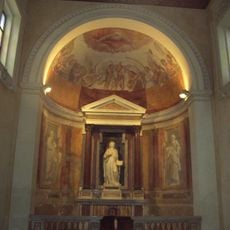
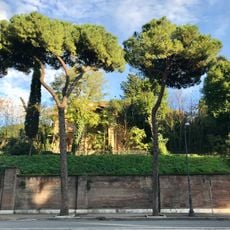
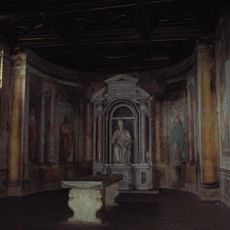
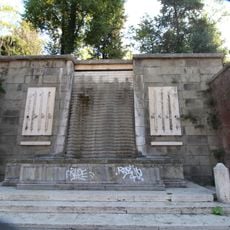
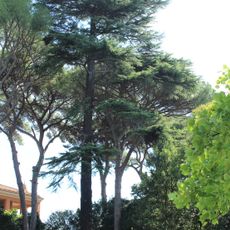
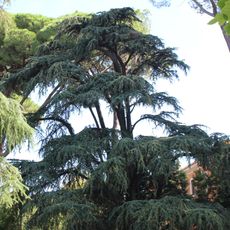
A wide staircase leads up to an open courtyard lined with cypresses before the church entrance, giving the approach a ceremonial feel. Inside, the side chapels are still used for prayer, and the space retains a living religious character rather than feeling like a museum.
Entry is through the side of the atrium rather than the main facade, and visitors usually need to ring a bell to be let in. Opening hours can be irregular, so it is worth arriving with extra time and some patience.
Excavations on the grounds turned up an ancient marble statue of Aphrodite, known as the Aphrodite of Menophantos, which later passed into the collection of the Chigi family. The find points to a layer of pre-Christian use of the site that long predates the monastery.
The community of curious travelers
AroundUs brings together thousands of curated places, local tips, and hidden gems, enriched daily by 91,882 contributors worldwide.