See the monuments around you in AROpen chests in the app
Around Us is built for your phone — point your camera at the streets and discover the monuments and places around you in augmented reality.Around Us is built for your phone — chests unlock when you walk, explore and capture nearby places.
Places to visit in Nice: historic neighborhoods, museums, and seaside walks
Nice reveals much more than its beaches and the famous Promenade des Anglais. This collection invites you to discover the treasures that Niçois cherish daily: the Castle Hill Park overlooking ancient ruins, the Matisse and Marc Chagall museums housing exceptional collections, and the Cimiez Monastery surrounded by gardens. These sites narrate the story of a city shaped by diverse influences, from the Orthodox Saint Nicholas Cathedral to the alleys of the Old Town.
From the flower market at Cours Saleya, where local accents can be heard, to Fort Mont Alban perched on the heights, each location offers a different experience of Nice. Some places, like the Louis Nucéra Library with its modern architecture, showcase the city's contemporary face. Others, more subtle, allow you to grasp the essence of a Mediterranean city where history and daily life blend effortlessly.
Places to visit in Nice: historic neighborhoods, museums, and seaside walks
Nice reveals much more than its beaches and the famous Promenade des Anglais. This collection invites you to discover the treasures that Niçois cherish daily: the Castle Hill Park overlooking ancient ruins, the Matisse and Marc Chagall museums housing exceptional collections, and the Cimiez Monastery surrounded by gardens. These sites narrate the story of a city shaped by diverse influences, from the Orthodox Saint Nicholas Cathedral to the alleys of the Old Town.
From the flower market at Cours Saleya, where local accents can be heard, to Fort Mont Alban perched on the heights, each location offers a different experience of Nice. Some places, like the Louis Nucéra Library with its modern architecture, showcase the city's contemporary face. Others, more subtle, allow you to grasp the essence of a Mediterranean city where history and daily life blend effortlessly.
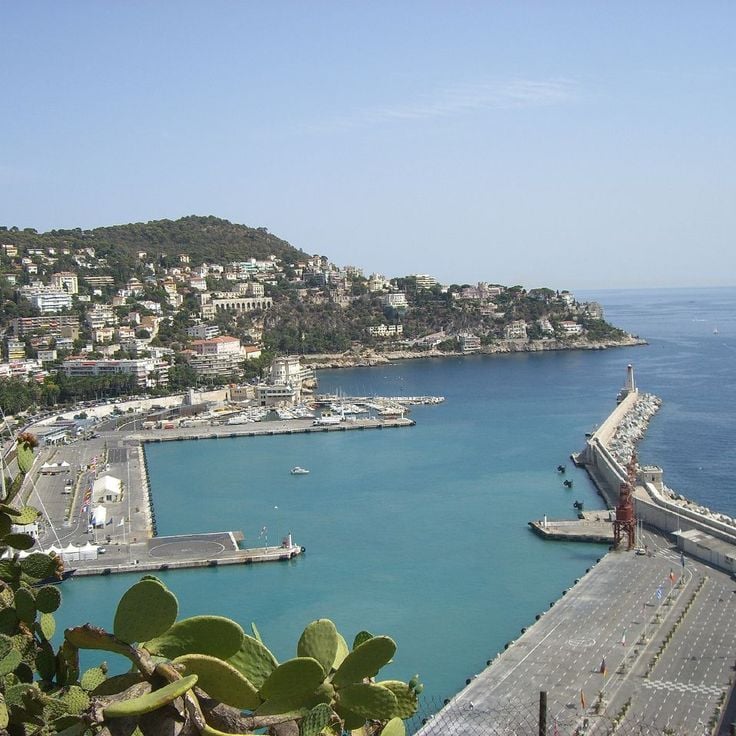
The Parc de la Colline du Château rises above the old town and provides extensive views over the Baie des Anges, the port, and the rooftops of Nice. The remains of the medieval fortress, destroyed in the 18th century, are scattered among Mediterranean vegetation and landscaped gardens. Several staircases and a free elevator lead to this elevated terrain, where an artificial waterfall and shaded pathways invite strolling. The park combines historical traces with green spaces and demonstrates the strategic position that shaped Nice over centuries.
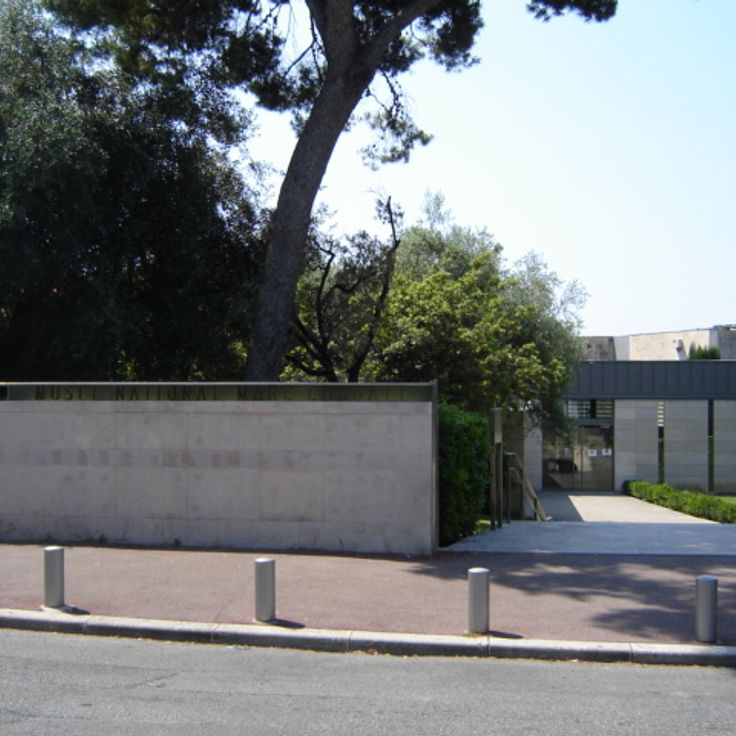
The Musée Marc Chagall houses the largest public collection of works by Russian-French painter Marc Chagall. The museum displays his series of biblical paintings, as well as stained glass windows, mosaics and sculptures. Opened in 1973, the institution was designed by the artist himself and presents his spiritual and religious works in a building specifically created for these pieces.
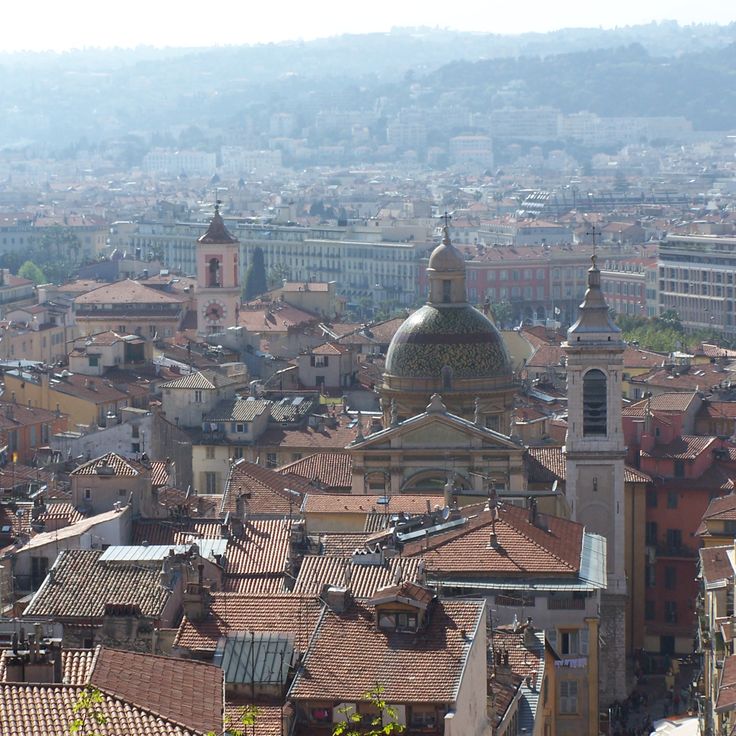
The Old Town of Nice extends between Castle Hill and Place Masséna, forming the historic core of the city. This district preserves the urban structure from the Kingdom of Sardinia period with its narrow streets, multi-story buildings in ochre and yellow tones, and numerous churches and chapels. The Cours Saleya hosts a daily market selling local produce and flowers. The streets connect various squares, including Place Rossetti with its 17th-century Sainte-Réparate Cathedral. The district displays Mediterranean architecture with arcades, tall shutters, and small shops offering traditional Niçois specialties. This Old Town documents the historical development of Nice as a commercial and administrative center.
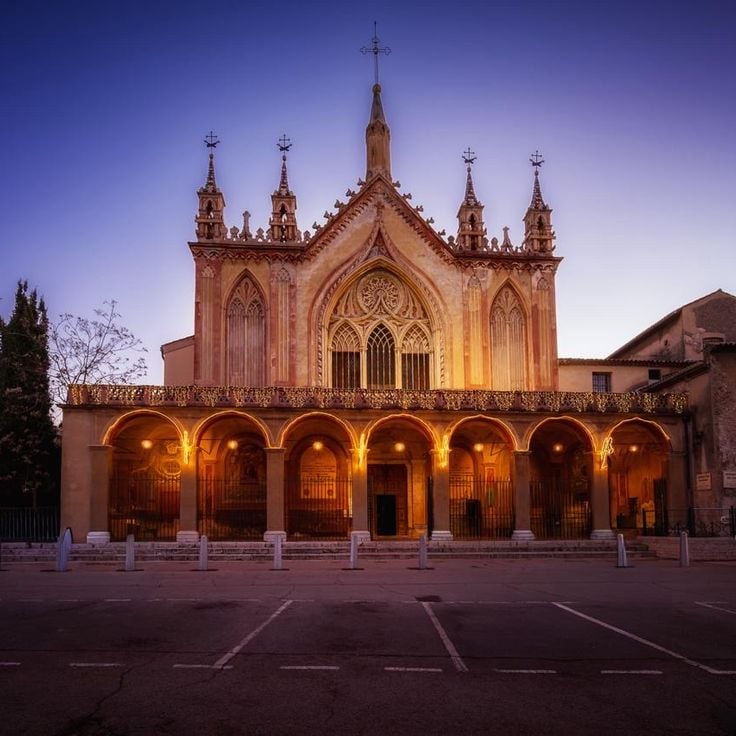
The Monastère de Cimiez is a 16th-century Franciscan monastery built on the remains of a Roman settlement. The complex includes a church with Baroque decoration, a museum of religious art, and extensive Mediterranean gardens with olive trees and rose beds. The monastery houses the tomb of painter Henri Matisse in the adjacent cemetery.
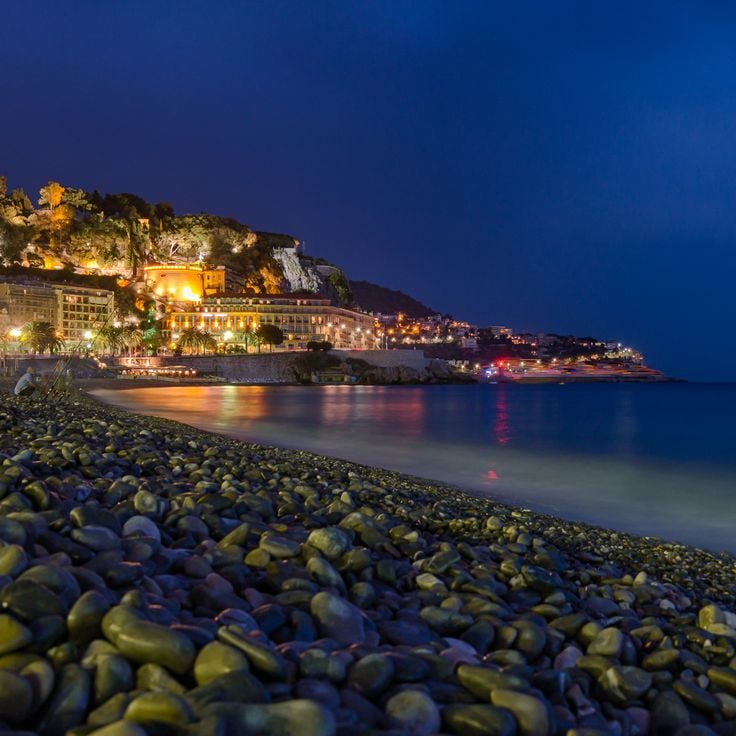
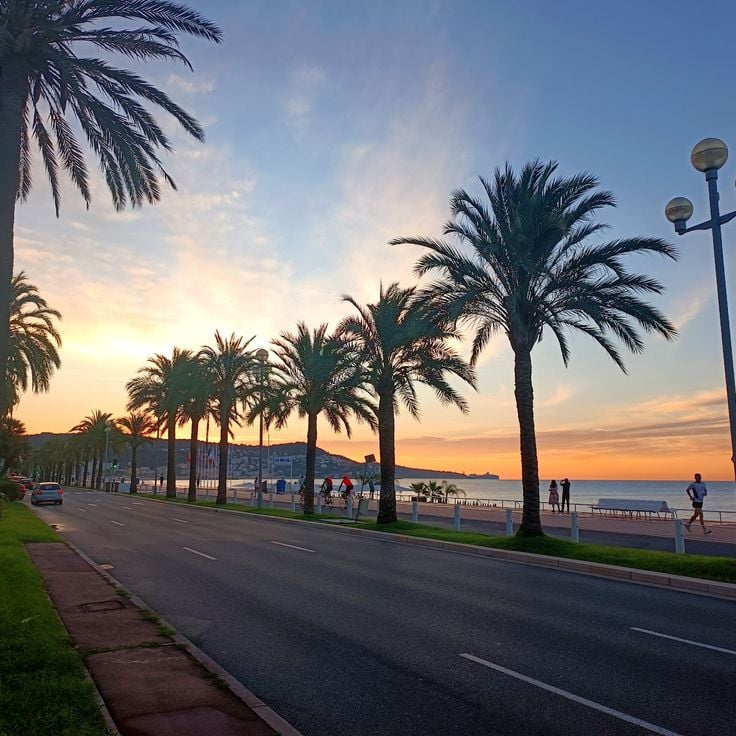
The Promenade des Anglais extends along the Bay of Nice for several miles, connecting the city center with the western neighborhoods. This wide waterfront avenue was financed by the English community in the 19th century and still bears their name. Palm trees line the path, while pebble beaches on the sea side invite swimming. Along the promenade, historic buildings such as the Negresco Hotel stand alongside modern constructions. Bike lanes and pedestrian zones allow visitors and locals to experience the coastline through various activities. The promenade serves as a central axis for city events and remains an important part of daily life in Nice.
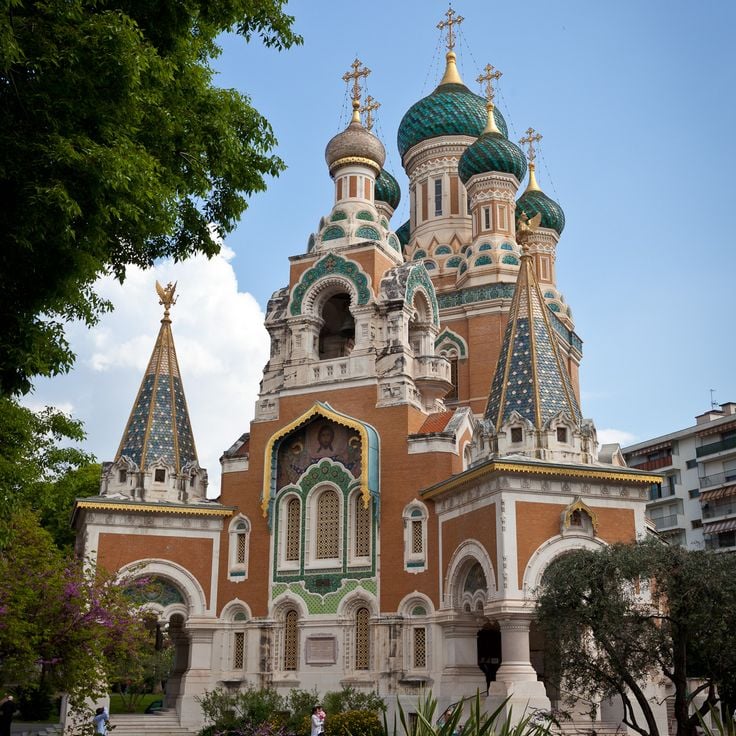
This orthodox cathedral was built between 1902 and 1912 for the Russian community in Nice. The Cathedral Saint-Nicolas follows the model of Saint Basil's Cathedral in Moscow with its six distinctive onion domes in red and blue. Inside, the building displays religious icons, gilded decorations, and frescoes created according to Byzantine and old Russian traditions. The cathedral stands in the neighborhood north of the railway station and documents the historical connections between Nice and the Russian aristocracy who stayed here since the 19th century.
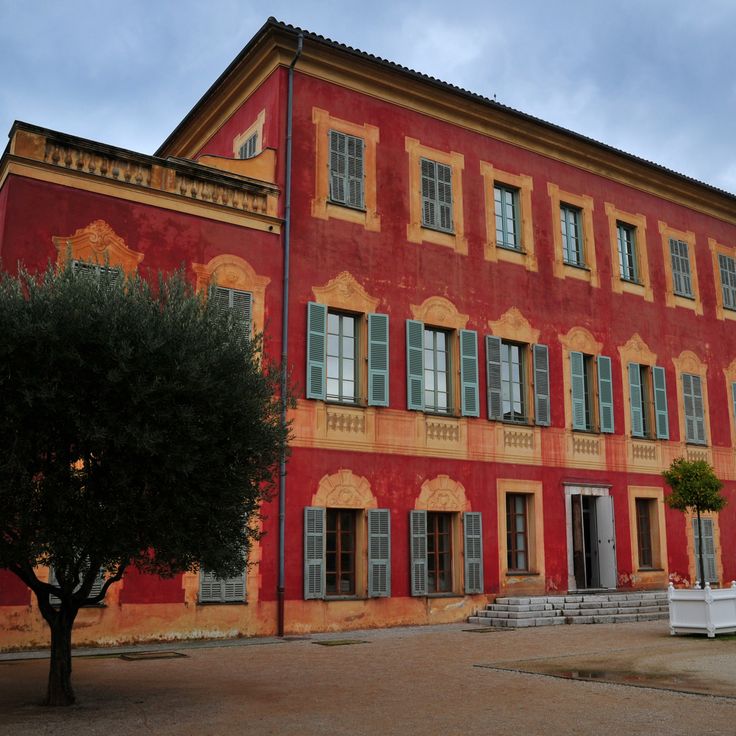
This museum displays the personal collection of Henri Matisse, which the artist bequeathed to the city of Nice. Housed in a 17th-century Genoese villa in the Cimiez district, the Musée Matisse presents paintings, drawings, sculptures, and paper cutouts documenting different periods of the painter's work. The collections include early works as well as pieces from his time on the Côte d'Azur, where Matisse lived from 1917 until his death in 1954. In addition to permanent exhibitions, the museum offers temporary displays examining different aspects of his artistic career.
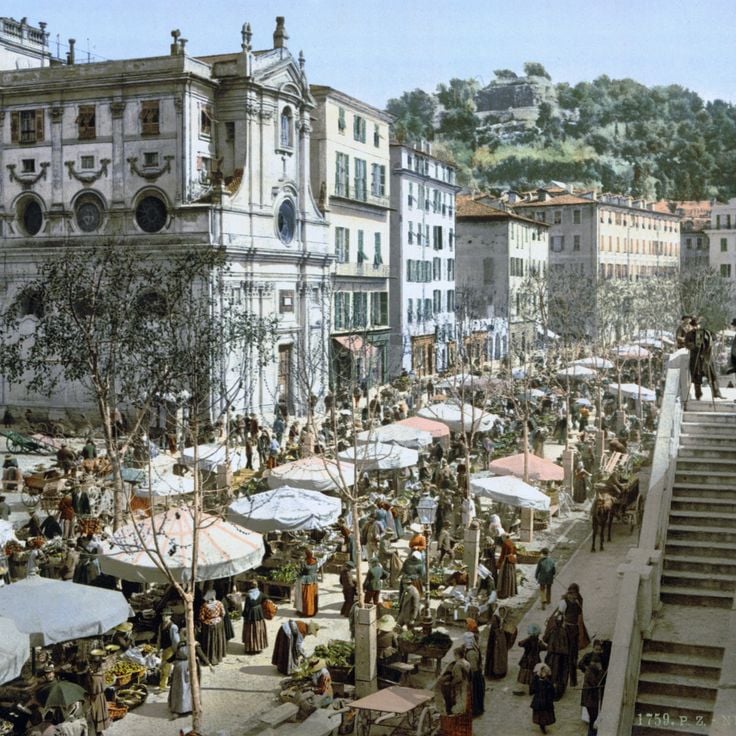
This historic market in the heart of Nice's old town runs along a lively pedestrian street where local vendors sell fresh flowers, regional products, and Provençal specialties daily. The Cours Saleya has connected commerce and urban life for centuries, reflecting the Mediterranean tradition of open-air markets. On weekdays, flower stands featuring mimosas, roses, and lavender dominate the street, while Mondays bring an antiques market. The surrounding ochre-colored facades and proximity to the sea shape the character of this historic commercial street, which draws both locals and visitors to experience Nice's market culture and the daily rhythms of the old town.
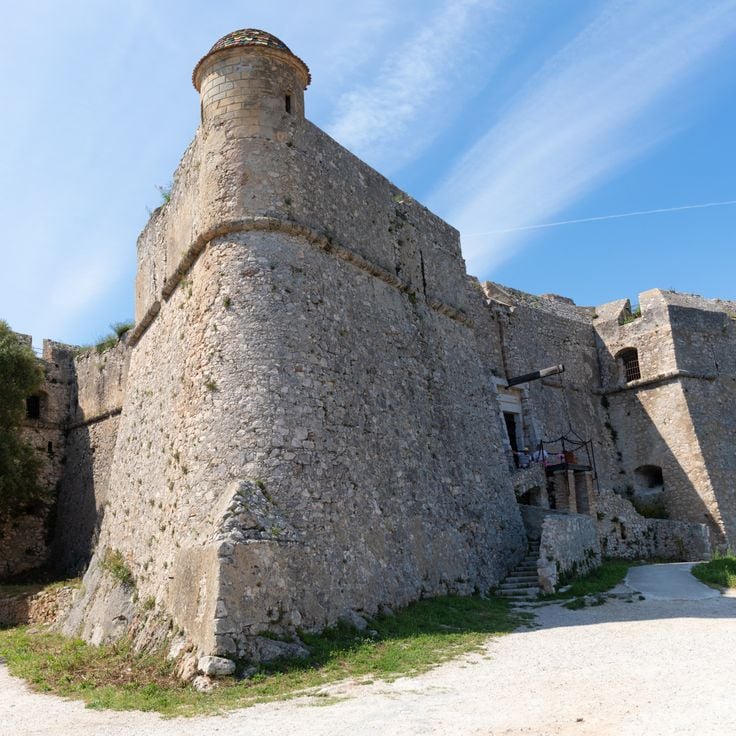
Fort du Mont Alban is a 16th-century fortress perched on a hill between Nice and Villefranche-sur-Mer. Built by Duke Emmanuel Philibert of Savoy, this military structure was designed to defend the County of Nice. The fort displays a characteristic star-shaped architecture with thick walls, bastions, and a central tower. From its ramparts, the fort provides expansive views over the Bay of Nice, the Baie des Anges, the Mediterranean Sea, and the surrounding hills. Today, Fort du Mont Alban stands as a historical monument visited by hikers and history enthusiasts who reach it via a forest trail.
The Bibliothèque Louis Nucéra serves as the main public library in the city and features contemporary architecture with its distinctive cubic design in glass and concrete. Opened in 2002, the building was designed by architect Yves Bayard and contains multiple levels with reading rooms, an extensive collection of books and media, and exhibition spaces. The complex is located at Place Yves Klein in the Arènes district and provides access to over 300,000 documents, including a significant collection on local history and culture of the Nice region.
The MAMAC brings together works by French Nouveaux Réalistes and American Pop Art artists under one roof. Opened in 1990, this museum displays pieces by Yves Klein, Niki de Saint Phalle, and Andy Warhol across its nine exhibition rooms. The building connects two structures through glass walkways and offers views over the city from its rooftop terrace. The collection documents artistic developments of the second half of the 20th century, with particular focus on the École de Nice. The museum stands near Place Garibaldi and organizes regular temporary exhibitions of contemporary art.
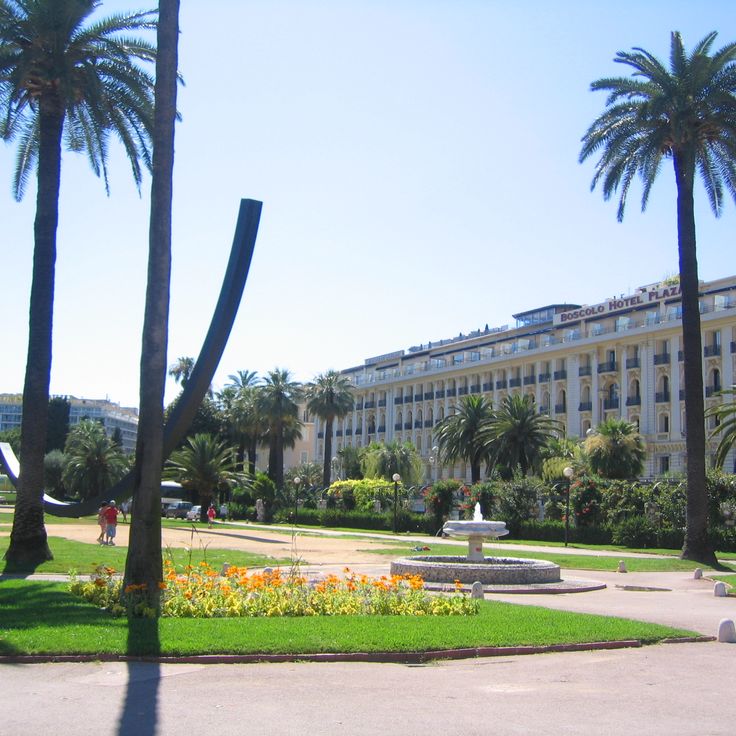
This public garden stretches along the Promenade des Anglais and has served as a green retreat in the heart of Nice since the 19th century. Le Jardin Albert 1er combines French garden design with Mediterranean vegetation and features a music pavilion, sculptures by contemporary artists, and the Arc de Venet, a distinctive metal arch. The tree-lined paths with palms and fountains provide a calm space between the beach and the city center, while the lawns are enjoyed by locals and visitors alike. This garden demonstrates how Nice integrates nature and urban life.
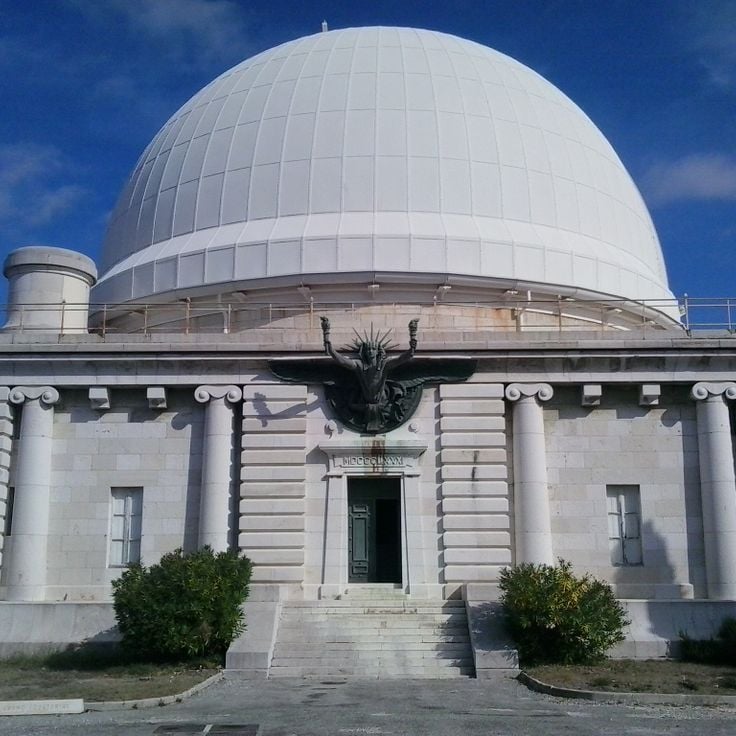
The Observatoire de la Côte d'Azur is a research institution for astronomy and earth sciences that spans multiple sites. The main campus on Mont Gros above Nice includes historic buildings from the late 19th century along with modern telescopes and instruments for celestial observation. The facility offers public tours of the observatories and exhibitions on astronomical topics. Visitors can explore the domes housing telescopes and learn about scientific work studying space. The observatory connects scientific research with public understanding of astronomy.
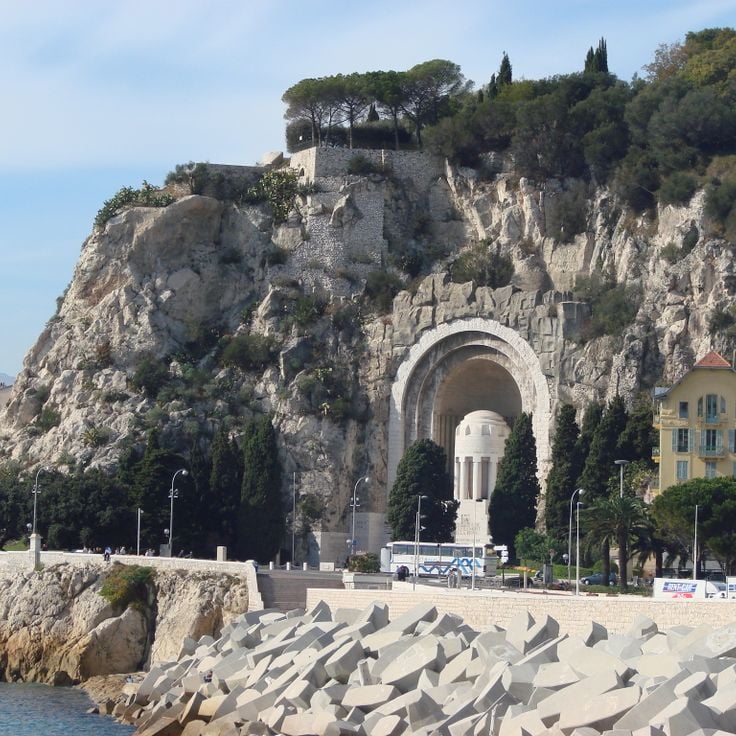
The Monument aux morts de Rauba Capeù commemorates soldiers from Nice who died in World War I. This memorial stands along the coastal promenade and marks a place of remembrance for local casualties of the conflict. Located between the port and the city center, the monument is part of Nice's historical commemorative sites. This memorial reflects the city's history during the early 20th century and its connection to the national events of that period.
This restaurant combines refined dining with a distinctive location in the harbor of Nice. Le Plongeoir occupies a former diving platform from the 1930s and offers tables directly above the water, where guests enjoy seafood and Mediterranean dishes. The menu emphasizes local ingredients and follows the seasons, while the building itself represents a piece of the city's maritime history. Access is via a walkway extending from Quai des États-Unis, leading to a setting where architecture and sea meet.
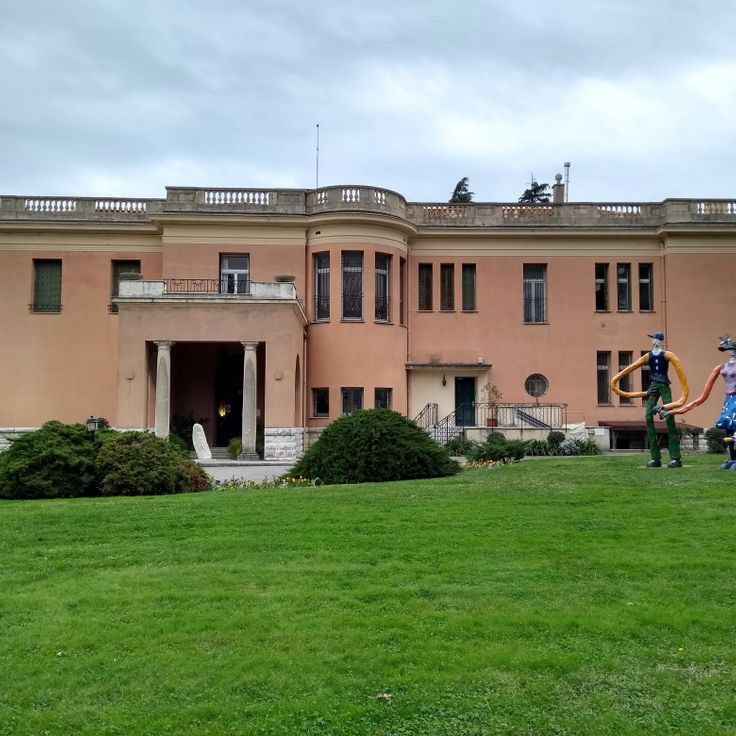
The Musée International d'Art Naïf Anatole Jakovsky houses an extensive collection of naive art from various countries and periods. The museum was named after French art critic and collector Anatole Jakovsky, who was instrumental in promoting this art movement. The exhibition displays paintings, sculptures, and decorative objects by self-taught artists who worked outside academic traditions. The museum occupies a villa in the western part of Nice and presents works from Europe, the Americas, Africa, and Asia. The collection includes several thousand objects and documents the development of naive art from the 19th century to the present.
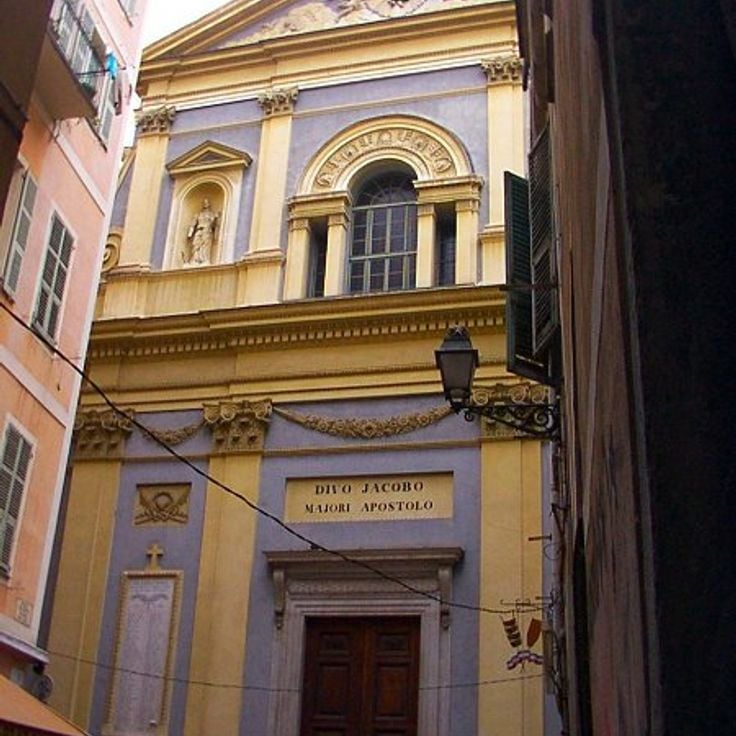
This baroque church in the heart of the Old Town of Nice was built in the 17th century for the Jesuit community. The Church of Saint-Jacques-le-Majeur displays an ornate baroque facade and houses richly decorated altars, paintings, and stucco work characteristic of Jesuit religious buildings from that period. The building originally served as a place of worship for the Jesuits before becoming a parish church.
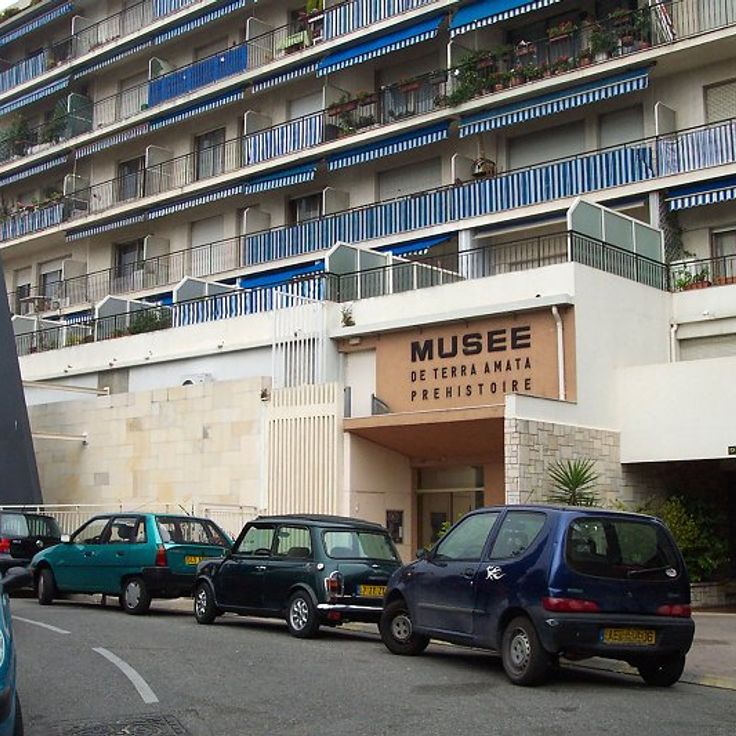
The Musée Terra Amata documents prehistoric life through archaeological finds from one of the oldest known human settlements in Europe. The museum was built at the original excavation site, where people camped approximately 400,000 years ago. The exhibition displays stone tools, remains of hunted animals, and traces of hearths that provide insight into the daily lives of early hunters and gatherers. Reconstructions illustrate how these early coastal inhabitants built shelters and used their environment. This museum adds to the historical dimensions of Nice by examining the earliest human presence in the region.
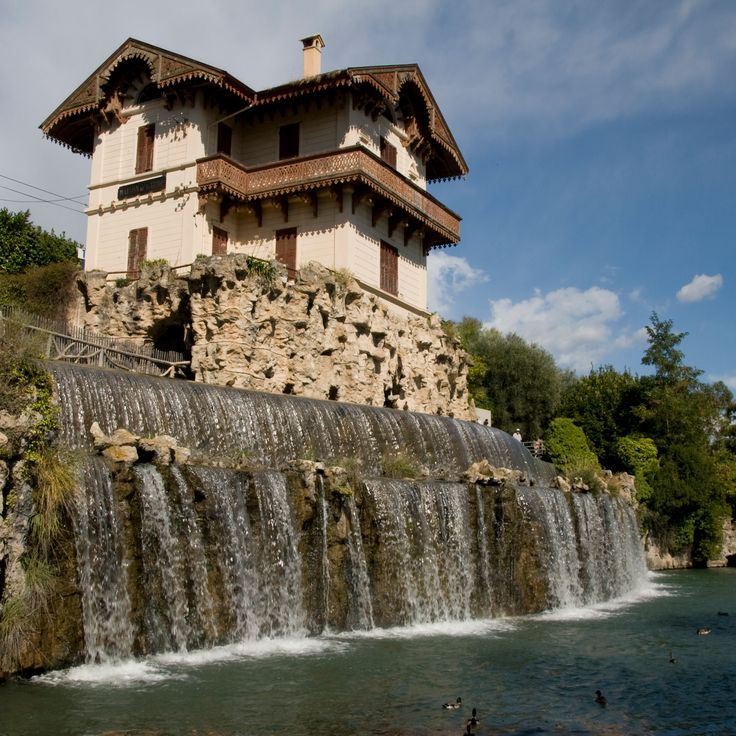
The Cascade de Gairaut is an artificial waterfall located in the northern hills of Nice, originally part of the city's water supply system. Built in the late 19th century, this waterfall uses water from the Canal de la Vésubie, which flows down multiple levels. The surrounding park provides viewpoints offering views of Nice and the Mediterranean Sea. The grounds include maintained gardens suitable for relaxation, and the site is frequented by locals for walks in a quiet setting. Access is via Route de Gairaut, which runs through residential neighborhoods.
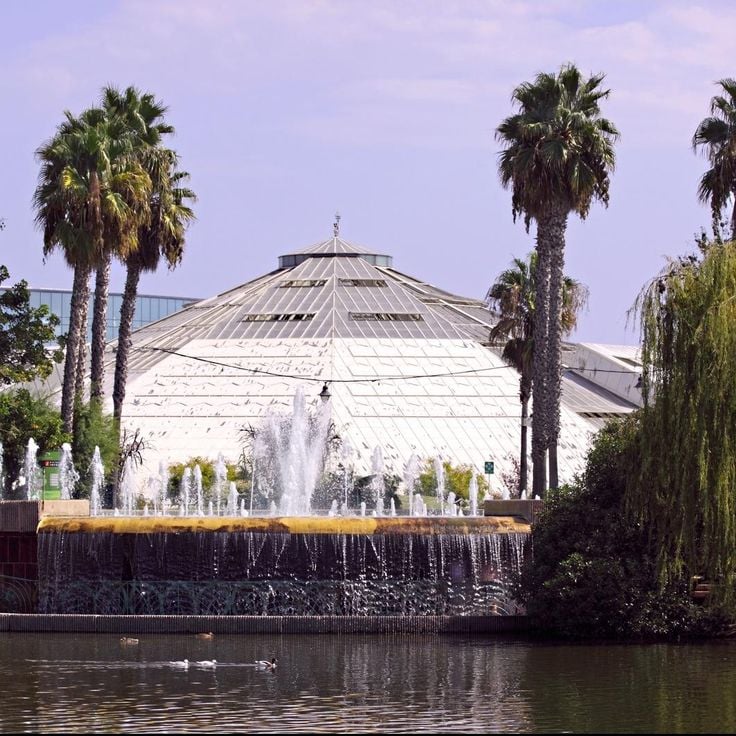
Parc Phoenix spans seven hectares in western Nice and combines a botanical garden with zoological facilities. The park houses over two thousand plant species from different climate zones and numerous animal species in naturalistic enclosures. The pyramid-shaped greenhouse presents tropical flora and fauna across multiple levels.
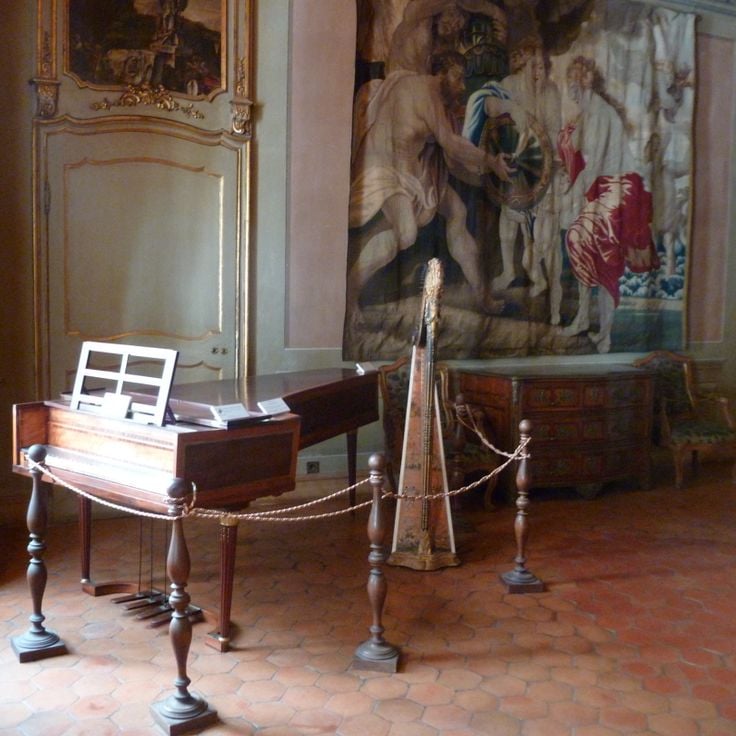
The Palais Lascaris is a 17th-century baroque townhouse located in the historic center of Nice. This former noble residence of the Lascaris-Vintimille family now houses a museum dedicated to local history and musical instruments. The interior features original ceiling frescoes, Flemish tapestries, and period furniture. The collection also includes numerous instruments from different eras and regions.
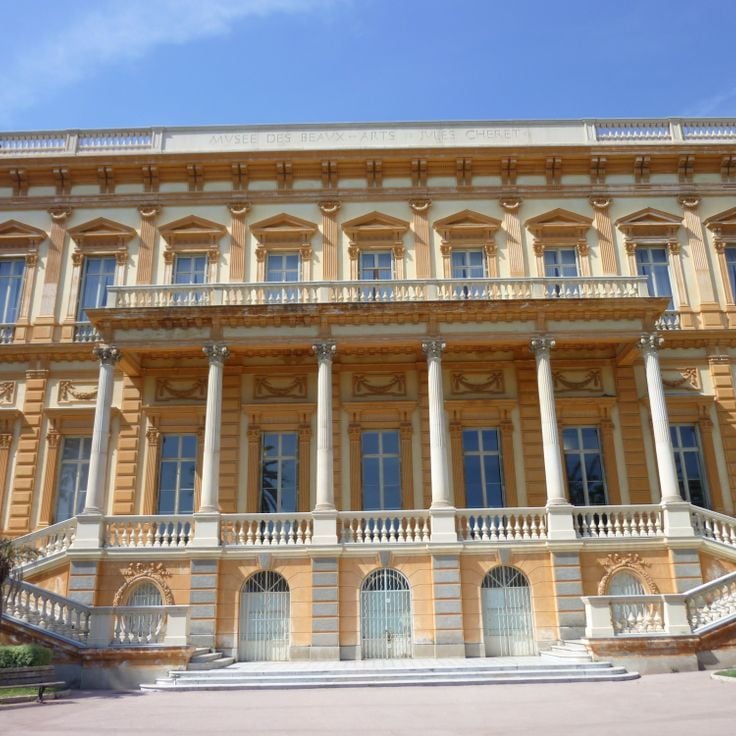
The Musée des Beaux-Arts Jules Chéret presents a significant collection of paintings and sculptures from the 19th and 20th centuries. This 1878 villa houses works by artists such as Monet, Sisley, Dufy and Chéret. The museum also displays an important collection of ceramics and offers temporary exhibitions exploring the development of modern art in southern France.
Avenue Jean Médecin forms the main shopping street of Nice, connecting the train station to Place Masséna. This wide pedestrian area houses international retail chains, local stores, and the modern tram line that runs through the city center. Named after a former mayor, the street serves as a vital north-south axis for urban traffic and the daily life of residents.
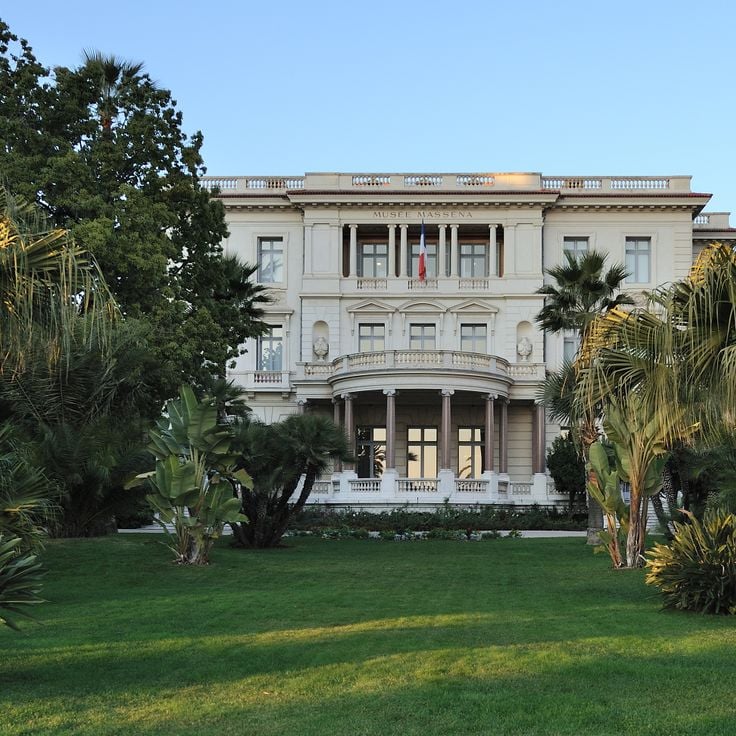
The Villa Masséna was built in the 19th century in neoclassical style and now houses a museum dedicated to the history of Nice and the Côte d'Azur. The collections present artworks, historical documents and objects that illustrate the social and cultural life of the region from the First Empire to the early 20th century.
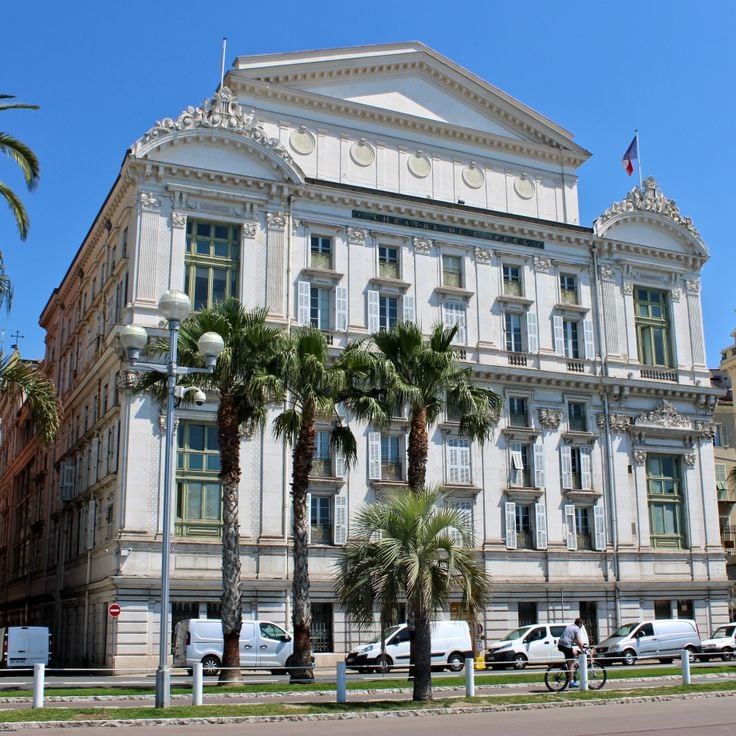
The Opéra de Nice is a traditional opera house in the center of the city that has presented ballet performances, symphonic concerts, and opera productions since its inauguration in the 19th century. The auditorium features Italian-inspired architecture with multiple tiers and offers a varied program that includes both classical and contemporary works. The Opéra de Nice contributes to the cultural life of the city and welcomes national and international artists.
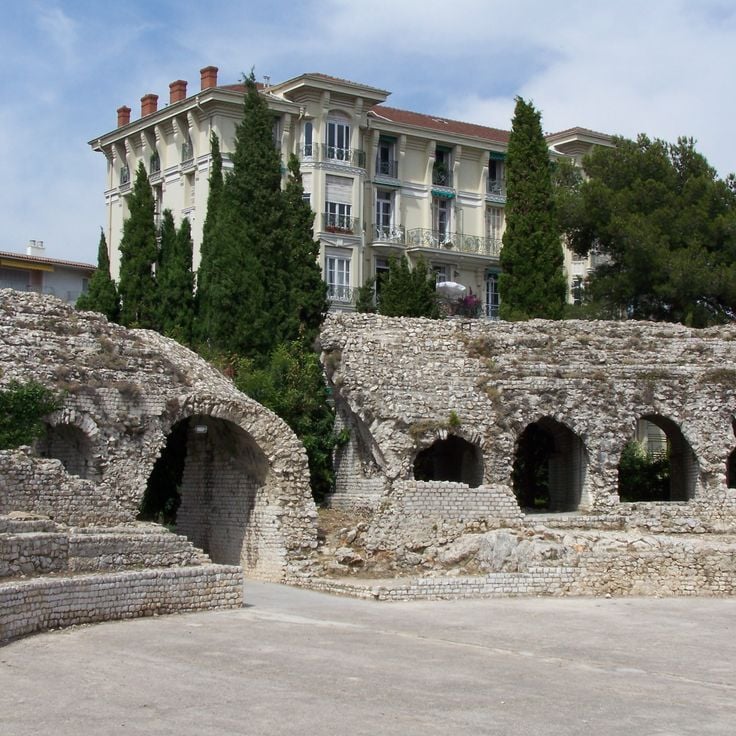
The Cimiez Arenas are a Roman amphitheater dating from the 1st century AD, surrounded by olive groves and gardens. This archaeological site is located in the Cimiez neighborhood on a hillside and features remains of the ancient city of Cemenelum. The complex also includes an archaeological museum displaying Roman artifacts, while the gardens with centuries-old olive trees provide a place for walking and relaxation.
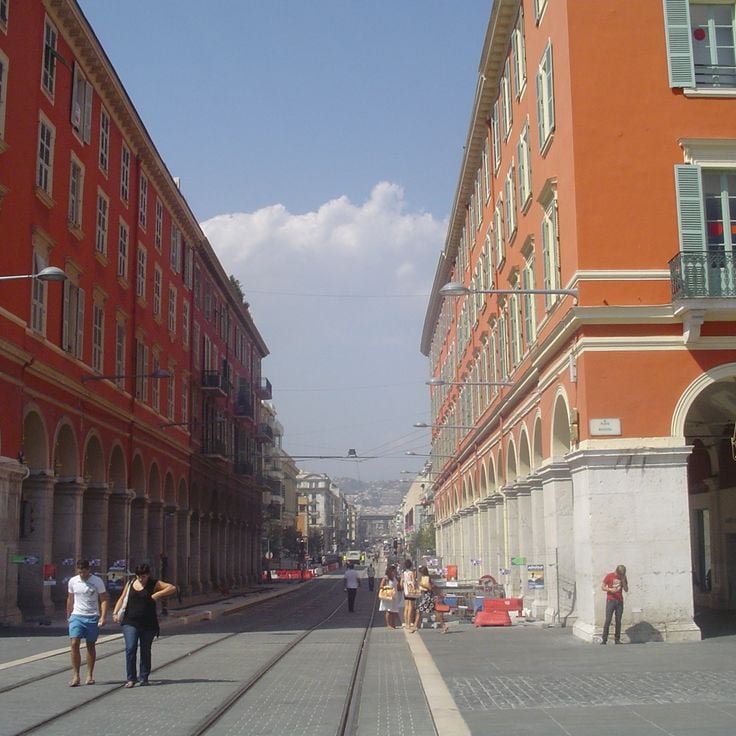
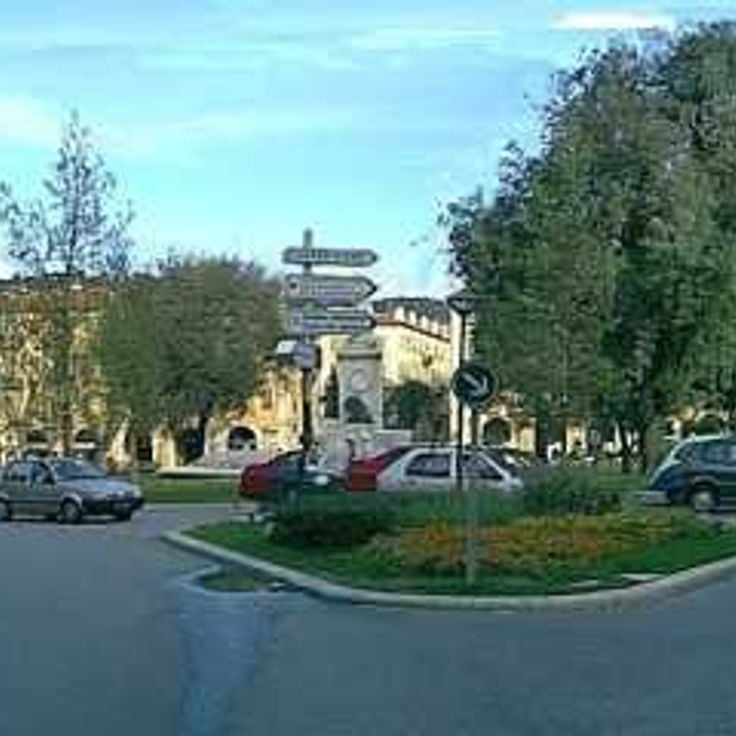
Place Garibaldi is located in the historic center of Nice and was built in the 18th century following the designs of architect Antoine Spinelli. This rectangular square displays homogeneous baroque architecture with ochre-colored facades and arcades that reflect the Piedmontese building tradition. The square is named after Giuseppe Garibaldi, whose statue stands in the center, and marks the northern entrance to the Old Town.
Mont Boron Park is a natural reserve located on the eastern hills of Nice, covering the promontory of the same name. This park features several walking trails through Mediterranean vegetation, including pine and holm oak trees. Visitors will find designated picnic areas and multiple viewpoints offering views over the Bay of Nice, the port, and the surrounding coastline.
The Parc de la Colline du Château rises above the old town and provides extensive views over the Baie des Anges, the port, and the rooftops of Nice. The remains of the medieval fortress, destroyed in the 18th century, are scattered among Mediterranean vegetation and landscaped gardens. Several staircases and a free elevator lead to this elevated terrain, where an artificial waterfall and shaded pathways invite strolling. The park combines historical traces with green spaces and demonstrates the strategic position that shaped Nice over centuries.
The Musée Marc Chagall houses the largest public collection of works by Russian-French painter Marc Chagall. The museum displays his series of biblical paintings, as well as stained glass windows, mosaics and sculptures. Opened in 1973, the institution was designed by the artist himself and presents his spiritual and religious works in a building specifically created for these pieces.
The Old Town of Nice extends between Castle Hill and Place Masséna, forming the historic core of the city. This district preserves the urban structure from the Kingdom of Sardinia period with its narrow streets, multi-story buildings in ochre and yellow tones, and numerous churches and chapels. The Cours Saleya hosts a daily market selling local produce and flowers. The streets connect various squares, including Place Rossetti with its 17th-century Sainte-Réparate Cathedral. The district displays Mediterranean architecture with arcades, tall shutters, and small shops offering traditional Niçois specialties. This Old Town documents the historical development of Nice as a commercial and administrative center.
The Monastère de Cimiez is a 16th-century Franciscan monastery built on the remains of a Roman settlement. The complex includes a church with Baroque decoration, a museum of religious art, and extensive Mediterranean gardens with olive trees and rose beds. The monastery houses the tomb of painter Henri Matisse in the adjacent cemetery.
The Promenade des Anglais extends along the Bay of Nice for several miles, connecting the city center with the western neighborhoods. This wide waterfront avenue was financed by the English community in the 19th century and still bears their name. Palm trees line the path, while pebble beaches on the sea side invite swimming. Along the promenade, historic buildings such as the Negresco Hotel stand alongside modern constructions. Bike lanes and pedestrian zones allow visitors and locals to experience the coastline through various activities. The promenade serves as a central axis for city events and remains an important part of daily life in Nice.
This orthodox cathedral was built between 1902 and 1912 for the Russian community in Nice. The Cathedral Saint-Nicolas follows the model of Saint Basil's Cathedral in Moscow with its six distinctive onion domes in red and blue. Inside, the building displays religious icons, gilded decorations, and frescoes created according to Byzantine and old Russian traditions. The cathedral stands in the neighborhood north of the railway station and documents the historical connections between Nice and the Russian aristocracy who stayed here since the 19th century.
This museum displays the personal collection of Henri Matisse, which the artist bequeathed to the city of Nice. Housed in a 17th-century Genoese villa in the Cimiez district, the Musée Matisse presents paintings, drawings, sculptures, and paper cutouts documenting different periods of the painter's work. The collections include early works as well as pieces from his time on the Côte d'Azur, where Matisse lived from 1917 until his death in 1954. In addition to permanent exhibitions, the museum offers temporary displays examining different aspects of his artistic career.
This historic market in the heart of Nice's old town runs along a lively pedestrian street where local vendors sell fresh flowers, regional products, and Provençal specialties daily. The Cours Saleya has connected commerce and urban life for centuries, reflecting the Mediterranean tradition of open-air markets. On weekdays, flower stands featuring mimosas, roses, and lavender dominate the street, while Mondays bring an antiques market. The surrounding ochre-colored facades and proximity to the sea shape the character of this historic commercial street, which draws both locals and visitors to experience Nice's market culture and the daily rhythms of the old town.
Fort du Mont Alban is a 16th-century fortress perched on a hill between Nice and Villefranche-sur-Mer. Built by Duke Emmanuel Philibert of Savoy, this military structure was designed to defend the County of Nice. The fort displays a characteristic star-shaped architecture with thick walls, bastions, and a central tower. From its ramparts, the fort provides expansive views over the Bay of Nice, the Baie des Anges, the Mediterranean Sea, and the surrounding hills. Today, Fort du Mont Alban stands as a historical monument visited by hikers and history enthusiasts who reach it via a forest trail.
The Bibliothèque Louis Nucéra serves as the main public library in the city and features contemporary architecture with its distinctive cubic design in glass and concrete. Opened in 2002, the building was designed by architect Yves Bayard and contains multiple levels with reading rooms, an extensive collection of books and media, and exhibition spaces. The complex is located at Place Yves Klein in the Arènes district and provides access to over 300,000 documents, including a significant collection on local history and culture of the Nice region.
The MAMAC brings together works by French Nouveaux Réalistes and American Pop Art artists under one roof. Opened in 1990, this museum displays pieces by Yves Klein, Niki de Saint Phalle, and Andy Warhol across its nine exhibition rooms. The building connects two structures through glass walkways and offers views over the city from its rooftop terrace. The collection documents artistic developments of the second half of the 20th century, with particular focus on the École de Nice. The museum stands near Place Garibaldi and organizes regular temporary exhibitions of contemporary art.
This public garden stretches along the Promenade des Anglais and has served as a green retreat in the heart of Nice since the 19th century. Le Jardin Albert 1er combines French garden design with Mediterranean vegetation and features a music pavilion, sculptures by contemporary artists, and the Arc de Venet, a distinctive metal arch. The tree-lined paths with palms and fountains provide a calm space between the beach and the city center, while the lawns are enjoyed by locals and visitors alike. This garden demonstrates how Nice integrates nature and urban life.
The Observatoire de la Côte d'Azur is a research institution for astronomy and earth sciences that spans multiple sites. The main campus on Mont Gros above Nice includes historic buildings from the late 19th century along with modern telescopes and instruments for celestial observation. The facility offers public tours of the observatories and exhibitions on astronomical topics. Visitors can explore the domes housing telescopes and learn about scientific work studying space. The observatory connects scientific research with public understanding of astronomy.
The Monument aux morts de Rauba Capeù commemorates soldiers from Nice who died in World War I. This memorial stands along the coastal promenade and marks a place of remembrance for local casualties of the conflict. Located between the port and the city center, the monument is part of Nice's historical commemorative sites. This memorial reflects the city's history during the early 20th century and its connection to the national events of that period.
This restaurant combines refined dining with a distinctive location in the harbor of Nice. Le Plongeoir occupies a former diving platform from the 1930s and offers tables directly above the water, where guests enjoy seafood and Mediterranean dishes. The menu emphasizes local ingredients and follows the seasons, while the building itself represents a piece of the city's maritime history. Access is via a walkway extending from Quai des États-Unis, leading to a setting where architecture and sea meet.
The Musée International d'Art Naïf Anatole Jakovsky houses an extensive collection of naive art from various countries and periods. The museum was named after French art critic and collector Anatole Jakovsky, who was instrumental in promoting this art movement. The exhibition displays paintings, sculptures, and decorative objects by self-taught artists who worked outside academic traditions. The museum occupies a villa in the western part of Nice and presents works from Europe, the Americas, Africa, and Asia. The collection includes several thousand objects and documents the development of naive art from the 19th century to the present.
This baroque church in the heart of the Old Town of Nice was built in the 17th century for the Jesuit community. The Church of Saint-Jacques-le-Majeur displays an ornate baroque facade and houses richly decorated altars, paintings, and stucco work characteristic of Jesuit religious buildings from that period. The building originally served as a place of worship for the Jesuits before becoming a parish church.
The Musée Terra Amata documents prehistoric life through archaeological finds from one of the oldest known human settlements in Europe. The museum was built at the original excavation site, where people camped approximately 400,000 years ago. The exhibition displays stone tools, remains of hunted animals, and traces of hearths that provide insight into the daily lives of early hunters and gatherers. Reconstructions illustrate how these early coastal inhabitants built shelters and used their environment. This museum adds to the historical dimensions of Nice by examining the earliest human presence in the region.
The Cascade de Gairaut is an artificial waterfall located in the northern hills of Nice, originally part of the city's water supply system. Built in the late 19th century, this waterfall uses water from the Canal de la Vésubie, which flows down multiple levels. The surrounding park provides viewpoints offering views of Nice and the Mediterranean Sea. The grounds include maintained gardens suitable for relaxation, and the site is frequented by locals for walks in a quiet setting. Access is via Route de Gairaut, which runs through residential neighborhoods.
Parc Phoenix spans seven hectares in western Nice and combines a botanical garden with zoological facilities. The park houses over two thousand plant species from different climate zones and numerous animal species in naturalistic enclosures. The pyramid-shaped greenhouse presents tropical flora and fauna across multiple levels.
The Palais Lascaris is a 17th-century baroque townhouse located in the historic center of Nice. This former noble residence of the Lascaris-Vintimille family now houses a museum dedicated to local history and musical instruments. The interior features original ceiling frescoes, Flemish tapestries, and period furniture. The collection also includes numerous instruments from different eras and regions.
The Musée des Beaux-Arts Jules Chéret presents a significant collection of paintings and sculptures from the 19th and 20th centuries. This 1878 villa houses works by artists such as Monet, Sisley, Dufy and Chéret. The museum also displays an important collection of ceramics and offers temporary exhibitions exploring the development of modern art in southern France.
Avenue Jean Médecin forms the main shopping street of Nice, connecting the train station to Place Masséna. This wide pedestrian area houses international retail chains, local stores, and the modern tram line that runs through the city center. Named after a former mayor, the street serves as a vital north-south axis for urban traffic and the daily life of residents.
The Villa Masséna was built in the 19th century in neoclassical style and now houses a museum dedicated to the history of Nice and the Côte d'Azur. The collections present artworks, historical documents and objects that illustrate the social and cultural life of the region from the First Empire to the early 20th century.
The Opéra de Nice is a traditional opera house in the center of the city that has presented ballet performances, symphonic concerts, and opera productions since its inauguration in the 19th century. The auditorium features Italian-inspired architecture with multiple tiers and offers a varied program that includes both classical and contemporary works. The Opéra de Nice contributes to the cultural life of the city and welcomes national and international artists.
The Cimiez Arenas are a Roman amphitheater dating from the 1st century AD, surrounded by olive groves and gardens. This archaeological site is located in the Cimiez neighborhood on a hillside and features remains of the ancient city of Cemenelum. The complex also includes an archaeological museum displaying Roman artifacts, while the gardens with centuries-old olive trees provide a place for walking and relaxation.
Place Garibaldi is located in the historic center of Nice and was built in the 18th century following the designs of architect Antoine Spinelli. This rectangular square displays homogeneous baroque architecture with ochre-colored facades and arcades that reflect the Piedmontese building tradition. The square is named after Giuseppe Garibaldi, whose statue stands in the center, and marks the northern entrance to the Old Town.
Mont Boron Park is a natural reserve located on the eastern hills of Nice, covering the promontory of the same name. This park features several walking trails through Mediterranean vegetation, including pine and holm oak trees. Visitors will find designated picnic areas and multiple viewpoints offering views over the Bay of Nice, the port, and the surrounding coastline.
The Parc de la Colline du Château rises above the old town and provides extensive views over the Baie des Anges, the port, and the rooftops of Nice. The remains of the medieval fortress, destroyed in the 18th century, are scattered among Mediterranean vegetation and landscaped gardens. Several staircases and a free elevator lead to this elevated terrain, where an artificial waterfall and shaded pathways invite strolling. The park combines historical traces with green spaces and demonstrates the strategic position that shaped Nice over centuries.
The Musée Marc Chagall houses the largest public collection of works by Russian-French painter Marc Chagall. The museum displays his series of biblical paintings, as well as stained glass windows, mosaics and sculptures. Opened in 1973, the institution was designed by the artist himself and presents his spiritual and religious works in a building specifically created for these pieces.
The Old Town of Nice extends between Castle Hill and Place Masséna, forming the historic core of the city. This district preserves the urban structure from the Kingdom of Sardinia period with its narrow streets, multi-story buildings in ochre and yellow tones, and numerous churches and chapels. The Cours Saleya hosts a daily market selling local produce and flowers. The streets connect various squares, including Place Rossetti with its 17th-century Sainte-Réparate Cathedral. The district displays Mediterranean architecture with arcades, tall shutters, and small shops offering traditional Niçois specialties. This Old Town documents the historical development of Nice as a commercial and administrative center.
The Monastère de Cimiez is a 16th-century Franciscan monastery built on the remains of a Roman settlement. The complex includes a church with Baroque decoration, a museum of religious art, and extensive Mediterranean gardens with olive trees and rose beds. The monastery houses the tomb of painter Henri Matisse in the adjacent cemetery.
The Promenade des Anglais extends along the Bay of Nice for several miles, connecting the city center with the western neighborhoods. This wide waterfront avenue was financed by the English community in the 19th century and still bears their name. Palm trees line the path, while pebble beaches on the sea side invite swimming. Along the promenade, historic buildings such as the Negresco Hotel stand alongside modern constructions. Bike lanes and pedestrian zones allow visitors and locals to experience the coastline through various activities. The promenade serves as a central axis for city events and remains an important part of daily life in Nice.
This orthodox cathedral was built between 1902 and 1912 for the Russian community in Nice. The Cathedral Saint-Nicolas follows the model of Saint Basil's Cathedral in Moscow with its six distinctive onion domes in red and blue. Inside, the building displays religious icons, gilded decorations, and frescoes created according to Byzantine and old Russian traditions. The cathedral stands in the neighborhood north of the railway station and documents the historical connections between Nice and the Russian aristocracy who stayed here since the 19th century.
This museum displays the personal collection of Henri Matisse, which the artist bequeathed to the city of Nice. Housed in a 17th-century Genoese villa in the Cimiez district, the Musée Matisse presents paintings, drawings, sculptures, and paper cutouts documenting different periods of the painter's work. The collections include early works as well as pieces from his time on the Côte d'Azur, where Matisse lived from 1917 until his death in 1954. In addition to permanent exhibitions, the museum offers temporary displays examining different aspects of his artistic career.
This historic market in the heart of Nice's old town runs along a lively pedestrian street where local vendors sell fresh flowers, regional products, and Provençal specialties daily. The Cours Saleya has connected commerce and urban life for centuries, reflecting the Mediterranean tradition of open-air markets. On weekdays, flower stands featuring mimosas, roses, and lavender dominate the street, while Mondays bring an antiques market. The surrounding ochre-colored facades and proximity to the sea shape the character of this historic commercial street, which draws both locals and visitors to experience Nice's market culture and the daily rhythms of the old town.
Fort du Mont Alban is a 16th-century fortress perched on a hill between Nice and Villefranche-sur-Mer. Built by Duke Emmanuel Philibert of Savoy, this military structure was designed to defend the County of Nice. The fort displays a characteristic star-shaped architecture with thick walls, bastions, and a central tower. From its ramparts, the fort provides expansive views over the Bay of Nice, the Baie des Anges, the Mediterranean Sea, and the surrounding hills. Today, Fort du Mont Alban stands as a historical monument visited by hikers and history enthusiasts who reach it via a forest trail.
The Bibliothèque Louis Nucéra serves as the main public library in the city and features contemporary architecture with its distinctive cubic design in glass and concrete. Opened in 2002, the building was designed by architect Yves Bayard and contains multiple levels with reading rooms, an extensive collection of books and media, and exhibition spaces. The complex is located at Place Yves Klein in the Arènes district and provides access to over 300,000 documents, including a significant collection on local history and culture of the Nice region.
The MAMAC brings together works by French Nouveaux Réalistes and American Pop Art artists under one roof. Opened in 1990, this museum displays pieces by Yves Klein, Niki de Saint Phalle, and Andy Warhol across its nine exhibition rooms. The building connects two structures through glass walkways and offers views over the city from its rooftop terrace. The collection documents artistic developments of the second half of the 20th century, with particular focus on the École de Nice. The museum stands near Place Garibaldi and organizes regular temporary exhibitions of contemporary art.
This public garden stretches along the Promenade des Anglais and has served as a green retreat in the heart of Nice since the 19th century. Le Jardin Albert 1er combines French garden design with Mediterranean vegetation and features a music pavilion, sculptures by contemporary artists, and the Arc de Venet, a distinctive metal arch. The tree-lined paths with palms and fountains provide a calm space between the beach and the city center, while the lawns are enjoyed by locals and visitors alike. This garden demonstrates how Nice integrates nature and urban life.
The Observatoire de la Côte d'Azur is a research institution for astronomy and earth sciences that spans multiple sites. The main campus on Mont Gros above Nice includes historic buildings from the late 19th century along with modern telescopes and instruments for celestial observation. The facility offers public tours of the observatories and exhibitions on astronomical topics. Visitors can explore the domes housing telescopes and learn about scientific work studying space. The observatory connects scientific research with public understanding of astronomy.
The Monument aux morts de Rauba Capeù commemorates soldiers from Nice who died in World War I. This memorial stands along the coastal promenade and marks a place of remembrance for local casualties of the conflict. Located between the port and the city center, the monument is part of Nice's historical commemorative sites. This memorial reflects the city's history during the early 20th century and its connection to the national events of that period.
This restaurant combines refined dining with a distinctive location in the harbor of Nice. Le Plongeoir occupies a former diving platform from the 1930s and offers tables directly above the water, where guests enjoy seafood and Mediterranean dishes. The menu emphasizes local ingredients and follows the seasons, while the building itself represents a piece of the city's maritime history. Access is via a walkway extending from Quai des États-Unis, leading to a setting where architecture and sea meet.
The Musée International d'Art Naïf Anatole Jakovsky houses an extensive collection of naive art from various countries and periods. The museum was named after French art critic and collector Anatole Jakovsky, who was instrumental in promoting this art movement. The exhibition displays paintings, sculptures, and decorative objects by self-taught artists who worked outside academic traditions. The museum occupies a villa in the western part of Nice and presents works from Europe, the Americas, Africa, and Asia. The collection includes several thousand objects and documents the development of naive art from the 19th century to the present.
This baroque church in the heart of the Old Town of Nice was built in the 17th century for the Jesuit community. The Church of Saint-Jacques-le-Majeur displays an ornate baroque facade and houses richly decorated altars, paintings, and stucco work characteristic of Jesuit religious buildings from that period. The building originally served as a place of worship for the Jesuits before becoming a parish church.
The Musée Terra Amata documents prehistoric life through archaeological finds from one of the oldest known human settlements in Europe. The museum was built at the original excavation site, where people camped approximately 400,000 years ago. The exhibition displays stone tools, remains of hunted animals, and traces of hearths that provide insight into the daily lives of early hunters and gatherers. Reconstructions illustrate how these early coastal inhabitants built shelters and used their environment. This museum adds to the historical dimensions of Nice by examining the earliest human presence in the region.
The Cascade de Gairaut is an artificial waterfall located in the northern hills of Nice, originally part of the city's water supply system. Built in the late 19th century, this waterfall uses water from the Canal de la Vésubie, which flows down multiple levels. The surrounding park provides viewpoints offering views of Nice and the Mediterranean Sea. The grounds include maintained gardens suitable for relaxation, and the site is frequented by locals for walks in a quiet setting. Access is via Route de Gairaut, which runs through residential neighborhoods.
Parc Phoenix spans seven hectares in western Nice and combines a botanical garden with zoological facilities. The park houses over two thousand plant species from different climate zones and numerous animal species in naturalistic enclosures. The pyramid-shaped greenhouse presents tropical flora and fauna across multiple levels.
The Palais Lascaris is a 17th-century baroque townhouse located in the historic center of Nice. This former noble residence of the Lascaris-Vintimille family now houses a museum dedicated to local history and musical instruments. The interior features original ceiling frescoes, Flemish tapestries, and period furniture. The collection also includes numerous instruments from different eras and regions.
The Musée des Beaux-Arts Jules Chéret presents a significant collection of paintings and sculptures from the 19th and 20th centuries. This 1878 villa houses works by artists such as Monet, Sisley, Dufy and Chéret. The museum also displays an important collection of ceramics and offers temporary exhibitions exploring the development of modern art in southern France.
Avenue Jean Médecin forms the main shopping street of Nice, connecting the train station to Place Masséna. This wide pedestrian area houses international retail chains, local stores, and the modern tram line that runs through the city center. Named after a former mayor, the street serves as a vital north-south axis for urban traffic and the daily life of residents.
The Villa Masséna was built in the 19th century in neoclassical style and now houses a museum dedicated to the history of Nice and the Côte d'Azur. The collections present artworks, historical documents and objects that illustrate the social and cultural life of the region from the First Empire to the early 20th century.
The Opéra de Nice is a traditional opera house in the center of the city that has presented ballet performances, symphonic concerts, and opera productions since its inauguration in the 19th century. The auditorium features Italian-inspired architecture with multiple tiers and offers a varied program that includes both classical and contemporary works. The Opéra de Nice contributes to the cultural life of the city and welcomes national and international artists.
The Cimiez Arenas are a Roman amphitheater dating from the 1st century AD, surrounded by olive groves and gardens. This archaeological site is located in the Cimiez neighborhood on a hillside and features remains of the ancient city of Cemenelum. The complex also includes an archaeological museum displaying Roman artifacts, while the gardens with centuries-old olive trees provide a place for walking and relaxation.
Place Garibaldi is located in the historic center of Nice and was built in the 18th century following the designs of architect Antoine Spinelli. This rectangular square displays homogeneous baroque architecture with ochre-colored facades and arcades that reflect the Piedmontese building tradition. The square is named after Giuseppe Garibaldi, whose statue stands in the center, and marks the northern entrance to the Old Town.
Mont Boron Park is a natural reserve located on the eastern hills of Nice, covering the promontory of the same name. This park features several walking trails through Mediterranean vegetation, including pine and holm oak trees. Visitors will find designated picnic areas and multiple viewpoints offering views over the Bay of Nice, the port, and the surrounding coastline.