See the monuments around you in AROpen chests in the app
Around Us is built for your phone — point your camera at the streets and discover the monuments and places around you in augmented reality.Around Us is built for your phone — chests unlock when you walk, explore and capture nearby places.
The story by Jules Verne comes to life through the train stations, ports, and cities that inspired Phileas Fogg's impossible journey around the world.
Discover the real stops of Phileas Fogg's famous journey in the novel by Jules Verne. From London to New York, passing through Paris, Suez, India, Hong Kong, Shanghai, and Japan, this route crosses three continents and tells the story of a race against time around the world. See the historic train stations, major ports, and key cities where this adventure takes place.
The story by Jules Verne comes to life through the train stations, ports, and cities that inspired Phileas Fogg's impossible journey around the world.
Discover the real stops of Phileas Fogg's famous journey in the novel by Jules Verne. From London to New York, passing through Paris, Suez, India, Hong Kong, Shanghai, and Japan, this route crosses three continents and tells the story of a race against time around the world. See the historic train stations, major ports, and key cities where this adventure takes place.
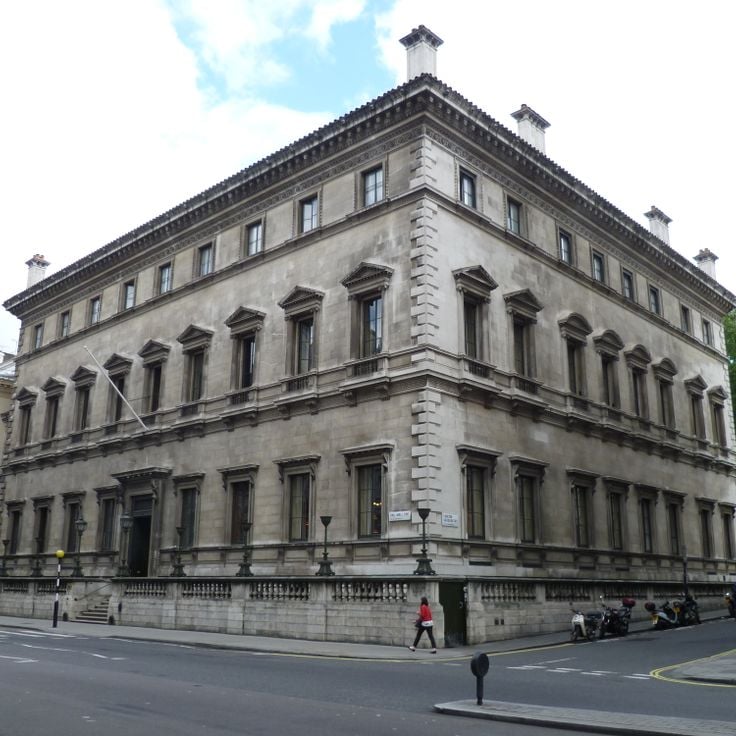
The Reform Club in London is where Phileas Fogg's journey begins. It is here, in this private club on Pall Mall, that Fogg makes his famous bet with fellow members, claiming he can travel around the world in 80 days. The building dates back to the 19th century and still stands today as a working private club. It is also the finish line of the whole adventure: Fogg must return here on time to win his wager.
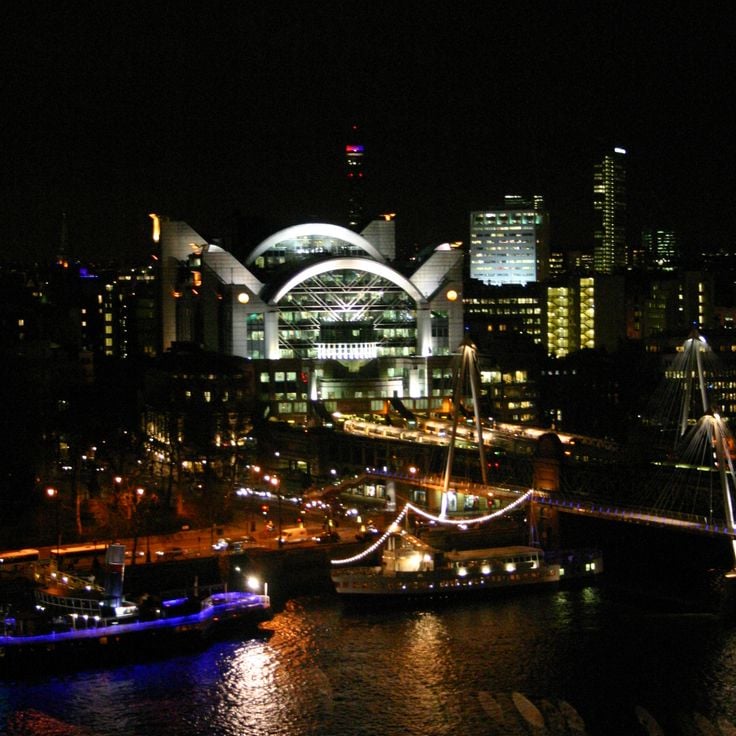
Charing Cross station sits in the heart of London, right along the Thames. In Jules Verne's novel, this is where Phileas Fogg begins his race around the world. The 19th-century building welcomes travelers from across southern England every day, and its walls still carry the feel of its long past.
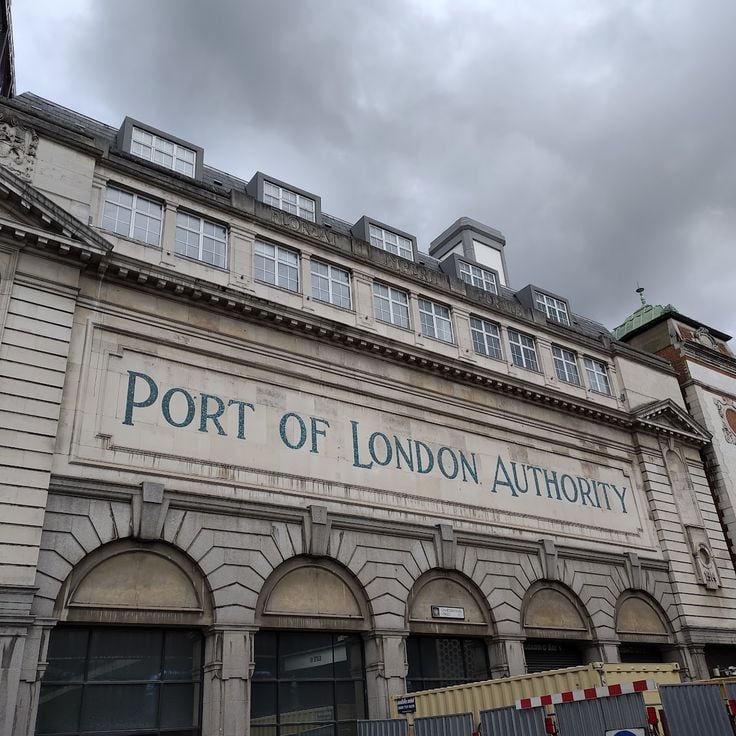
The Port of London sits along the Thames and was one of the busiest trading ports in the world during the 19th century. In Jules Verne's novel, this is where Phileas Fogg begins his journey around the world in 80 days. Walking along the riverbank today, you can still feel the weight of that era, when ships from every corner of the globe docked here.
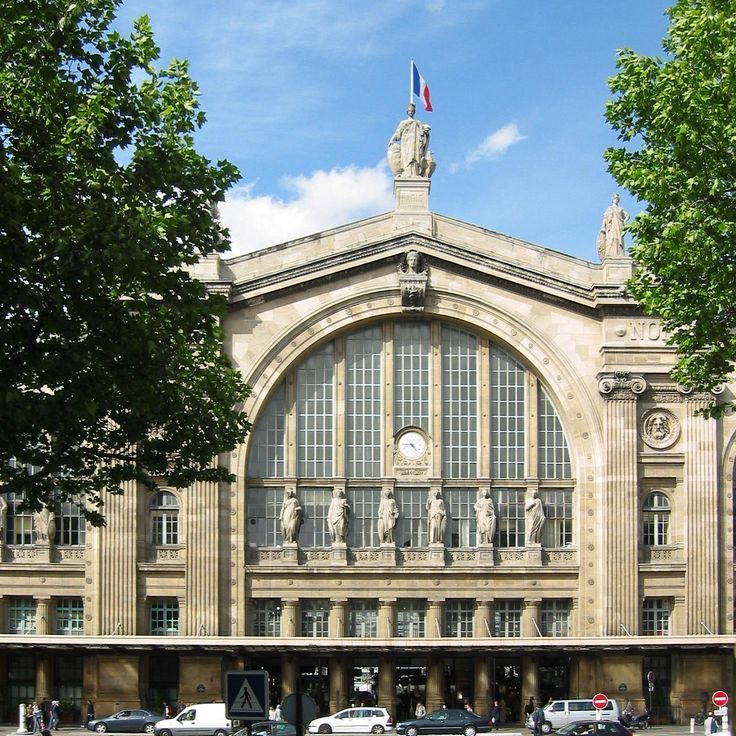
Gare du Nord is one of the busiest train stations in Europe and sits in the northern part of Paris. In Jules Verne's novel, it marks the first stop on French soil: Phileas Fogg passes through here on his way from London toward Suez, aware that every minute counts. Today, trains to northern Europe depart from its platforms, and the grand hall with its tall windows still feels like the start of a long journey.
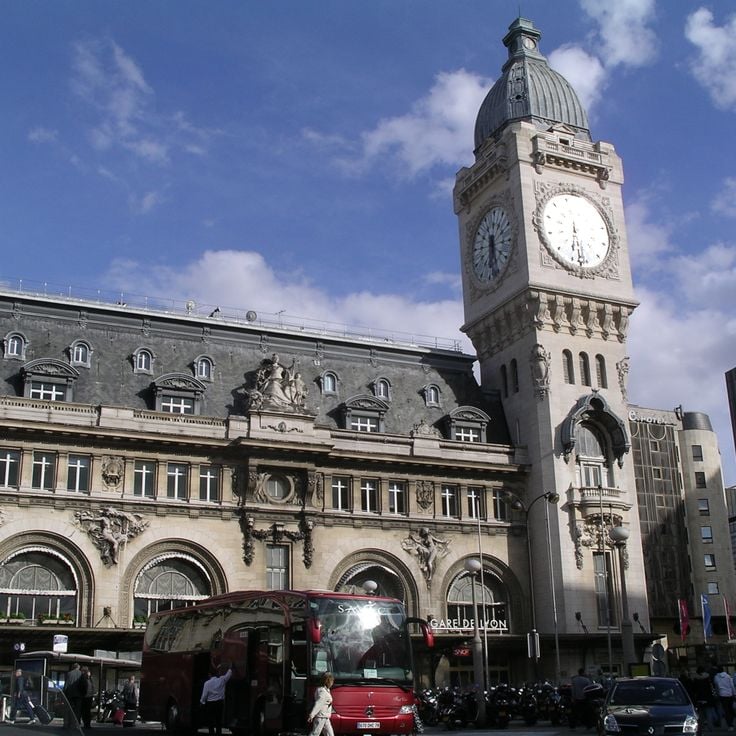
The Gare de Lyon is one of the main train stations in Paris, located in the 12th arrondissement. In Jules Verne's novel, it marks a key stop on Phileas Fogg's race across Europe. From here, trains depart toward the south of France, Italy, and Switzerland. The large clock tower stands out above the station entrance and gives the square in front of it a recognizable look.
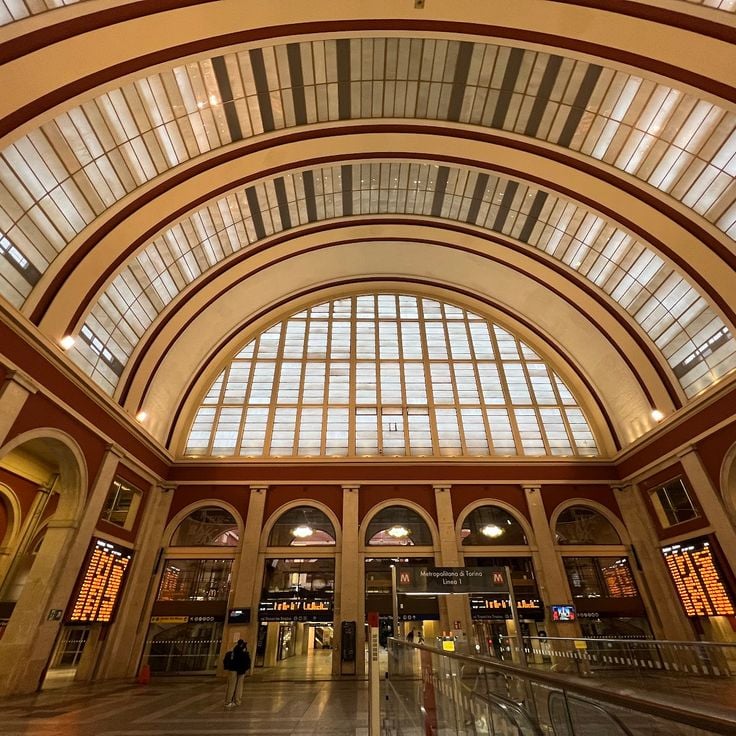
Turin Porta Nuova station is the main train station in Turin. In Jules Verne's novel Around the World in 80 Days, Phileas Fogg passes through Italy on his way from Paris to Brindisi, where he boards his ship to Suez. The station greets travelers with a long 19th-century facade and a large hall filled with natural light.
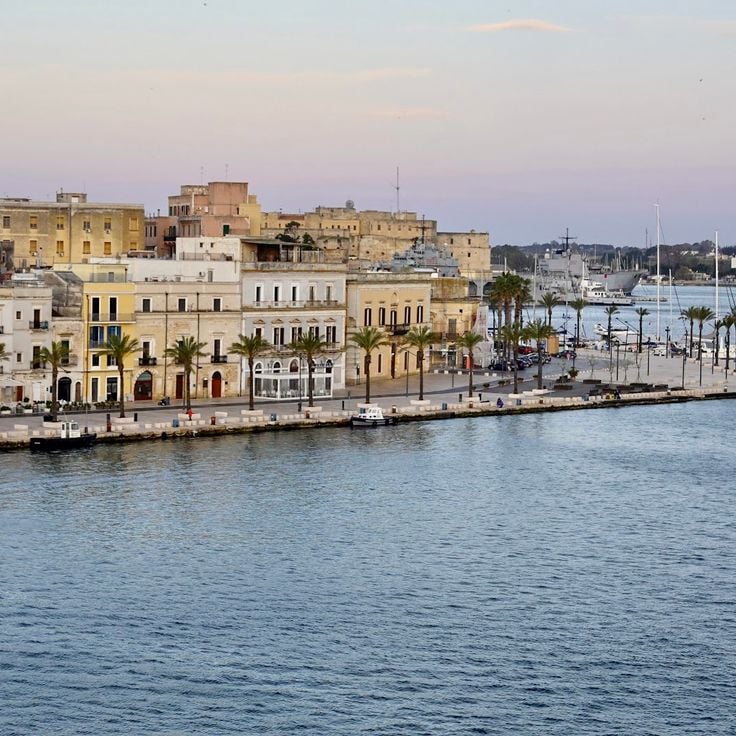
The port of Brindisi sits on the southeastern tip of Italy, where the Adriatic Sea meets the routes leading east. In Jules Verne's novel, it is from this very dock that Phileas Fogg boards a ship bound for Suez, marking one of the first major stops on his race around the world. The harbor still handles regular ferry traffic today, with boats heading toward Greece and beyond. Walking along the waterfront, you can feel that this has long been a place of departure, a point where Europe ends and the journey truly begins.
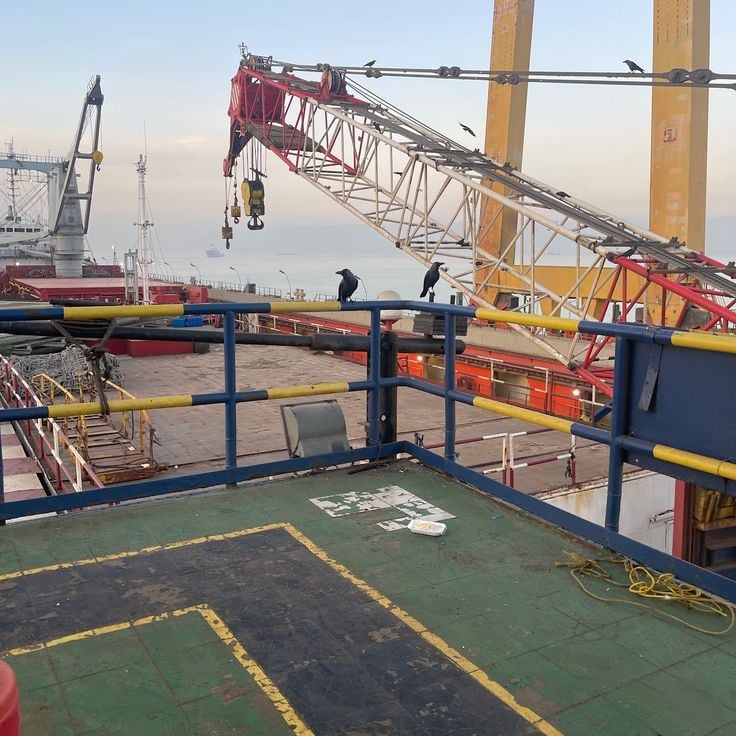
The port of Suez sits at the southern end of the Suez Canal, where ships pass from the Red Sea toward the Mediterranean. When Phileas Fogg arrived here, the canal had only been open for a few years, and this stop marked his first major landing outside Europe. The docks were busy with travelers, merchants, and sailors from many different places. Walking along the waterfront today, you can still feel how this port once served as a crossing point between two worlds.
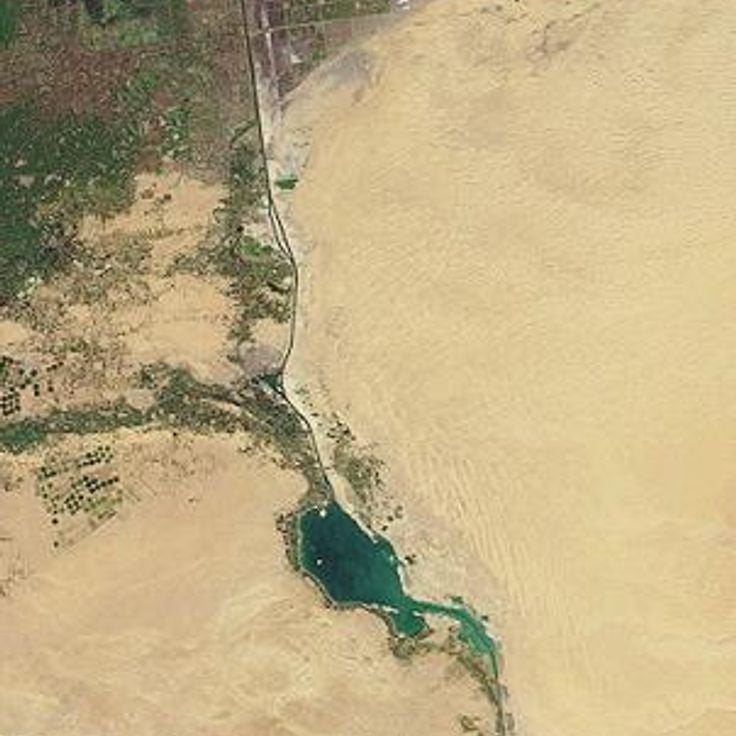
The Suez Canal cuts through Egypt to connect the Mediterranean Sea with the Red Sea, covering a distance of about 120 miles (193 kilometers). When Phileas Fogg passed through here, the canal had only recently opened, in 1869, just a few years before his fictional journey. This stop was one of the first key stages in his race around the world. Standing on the banks today, you can watch enormous ships glide slowly through the desert, which is a strange and memorable sight.
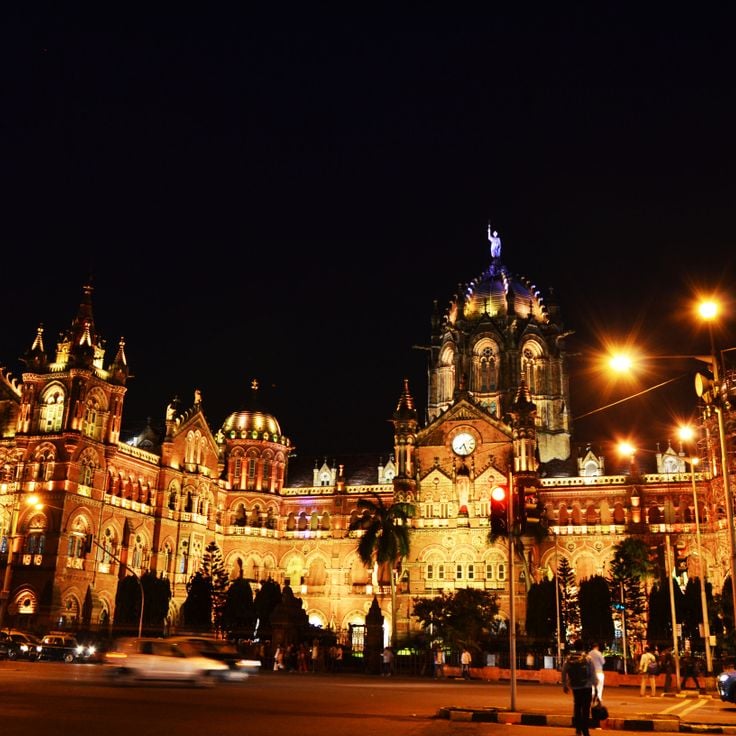
Victoria Terminus is one of Mumbai's most recognizable train stations. Built in the Victorian Gothic style, the building mixes European design with local decorative details. It was already a busy rail hub during Jules Verne's era, and walking through its arched halls today still feels like stepping into another century.
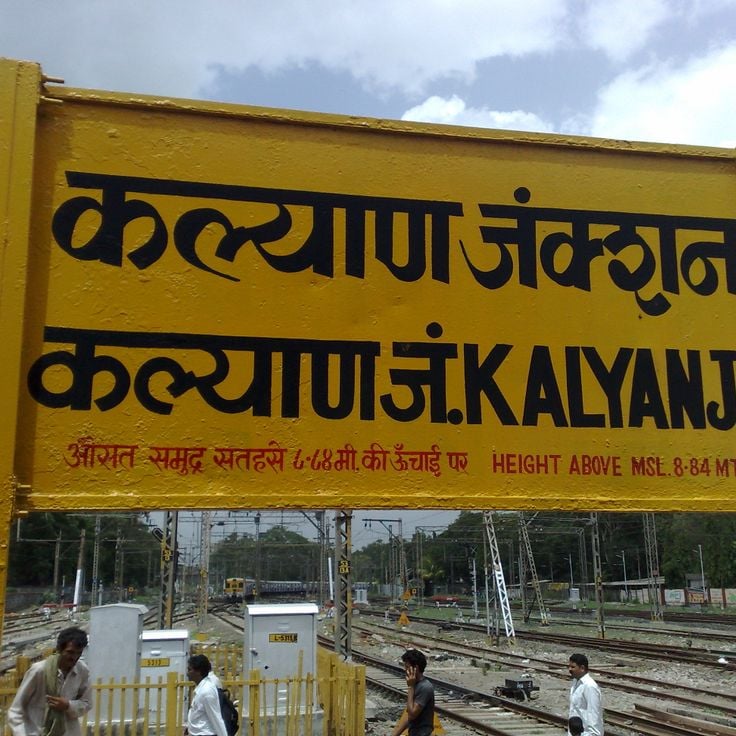
Kalyan station sits in the state of Maharashtra and was a key stop on Phileas Fogg's train journey across India. In Jules Verne's novel, the train passes through here on its way east. Today, the station is one of the busiest rail junctions in the region, where long-distance and commuter trains meet, giving a clear sense of how central Indian railways were to travel in that era.
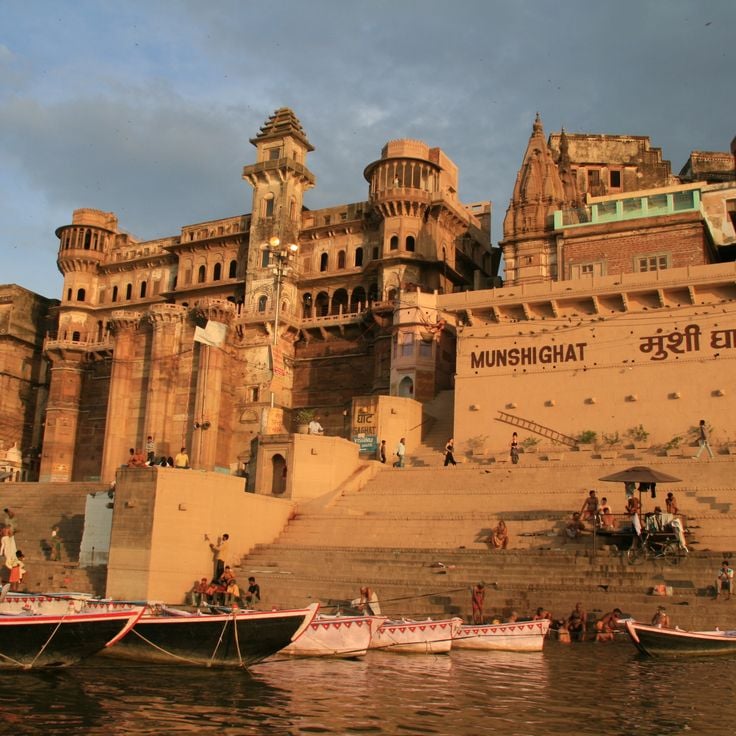
Varanasi sits on the banks of the Ganges and is one of the holiest cities in India. In Jules Verne's novel, it is one of the stops on Phileas Fogg's journey around the world. The ghats, the wide stone steps leading down to the river, are where daily life and religious rituals come together. Pilgrims arrive from across the country to bathe in the river, and ceremonies take place at dawn and dusk.
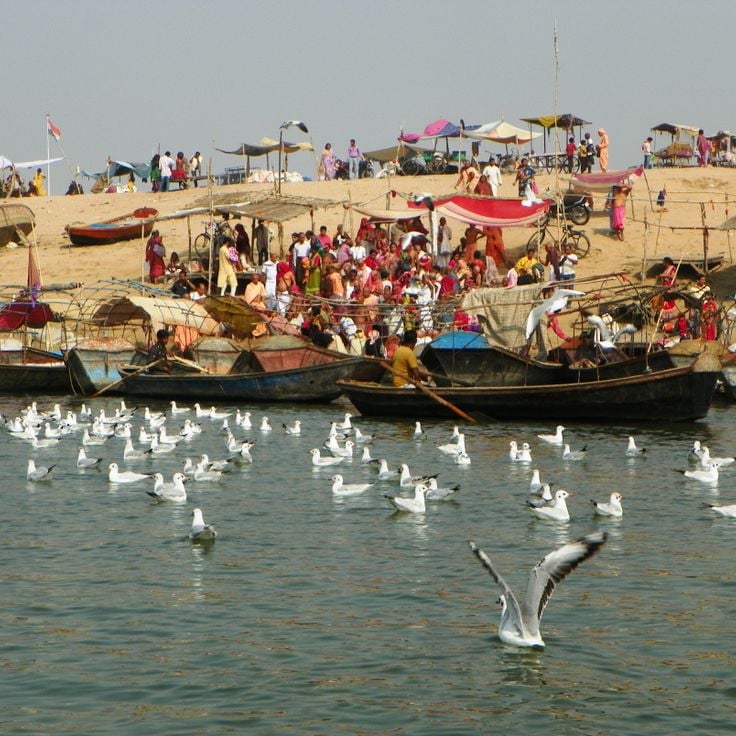
Allahabad sits where the Ganges and Yamuna rivers meet, a place considered sacred in India for centuries. In Jules Verne's novel, Phileas Fogg passes through here during his journey across India. The city serves as a crossing point between northern and eastern India, with a railway station that already played a key role in Verne's time. Travelers passing through sense the weight of a city that has long been a stop for both pilgrims and those simply moving on.
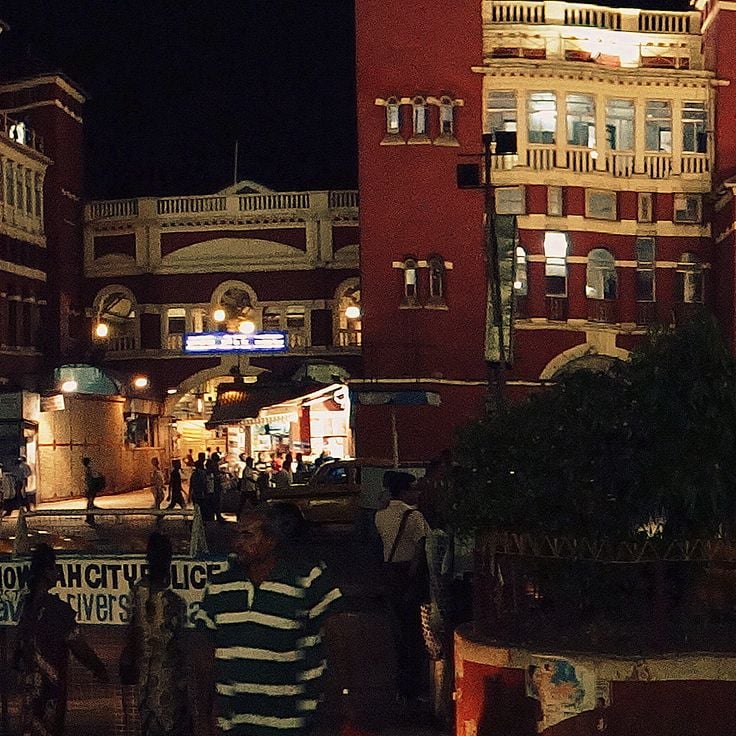
Howrah Station in Kolkata is one of the oldest rail terminals in India. When Phileas Fogg crossed India on his race around the world, this link between Bombay and Calcutta was a key stop on his journey. Today, Howrah Station connects Kolkata to the rest of the country and still carries the look of its colonial past.
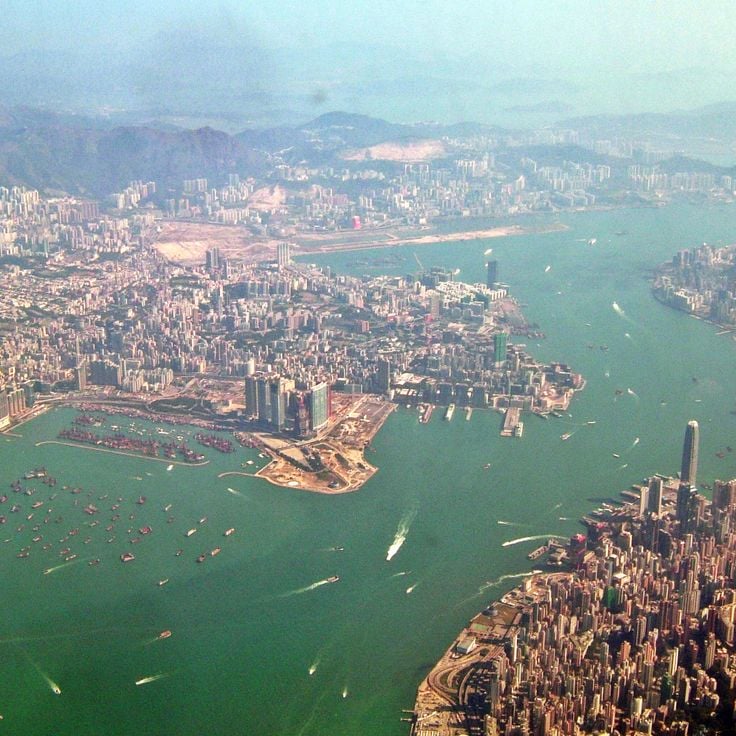
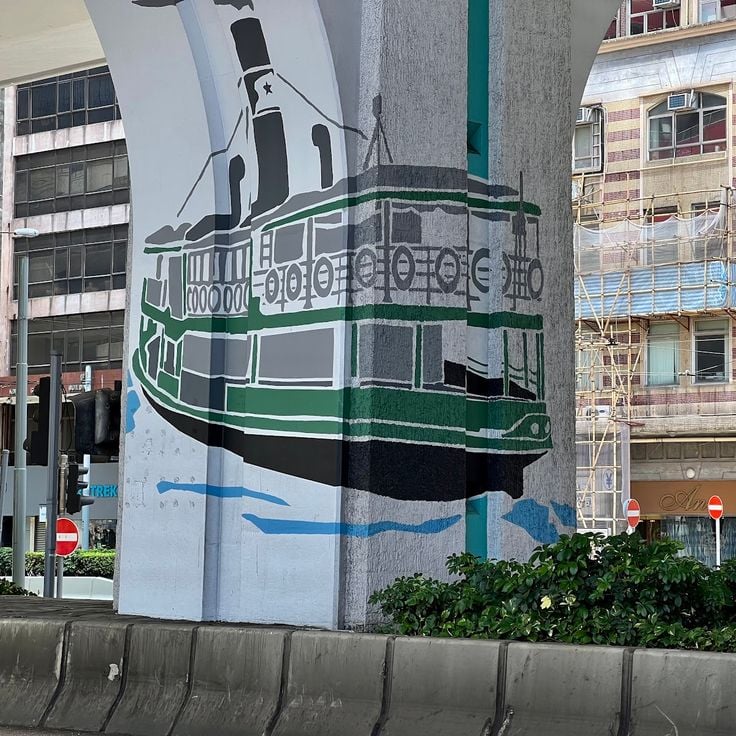
Victoria Harbour is the natural harbour of Hong Kong, where Phileas Fogg and his companions arrive in Jules Verne's novel. It is here that Passepartout gets lost among the docks and narrow streets near the waterfront, putting the whole race against time at risk. The stretch of water between Hong Kong Island and Kowloon has long been a place of constant movement, with ships coming and going and traders filling the quays with noise and activity.
Central District is the heart of Hong Kong. In the novel, this is where Phileas Fogg and Passepartout arrive by steamer and rush through the city to find a connection to Yokohama. The streets are dense with activity, lined with old colonial buildings alongside glass towers. Trams run along the waterfront, ferries cross the harbor, and the steep lanes leading uphill give the place a character that feels both historic and fast-moving.
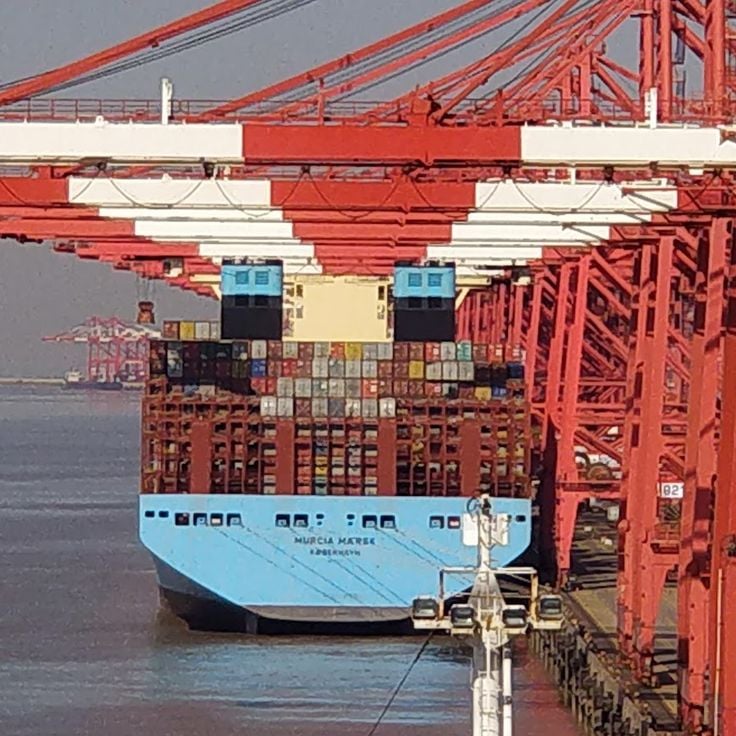
The port of Shanghai was one of the main stops for ships traveling between Europe and the Far East in the 19th century. In Jules Verne's novel, Phileas Fogg passes through here on his way from Calcutta to Yokohama. At the time, the docks were full of cargo ships and traders from all over the world, making the port a natural stop on any race around the globe.
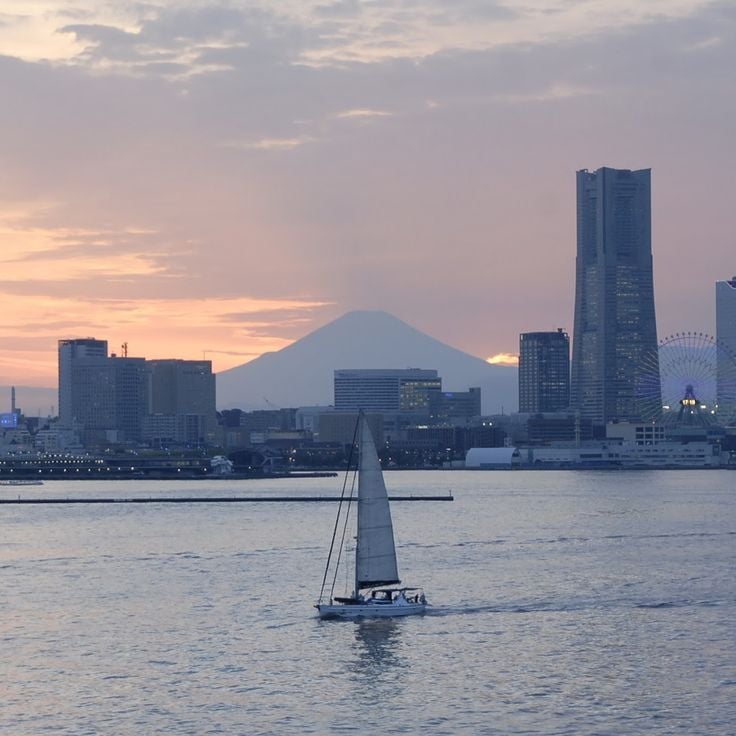
The Port of Yokohama is the last stop in Asia before Phileas Fogg boards a ship to cross the Pacific and reach the United States. In Jules Verne's novel, it is from this harbor that Fogg leaves the Asian continent behind. At the time of the story, Yokohama was one of the main gateways to Japan for international trade and travel, a busy port where ships from many countries came and went.
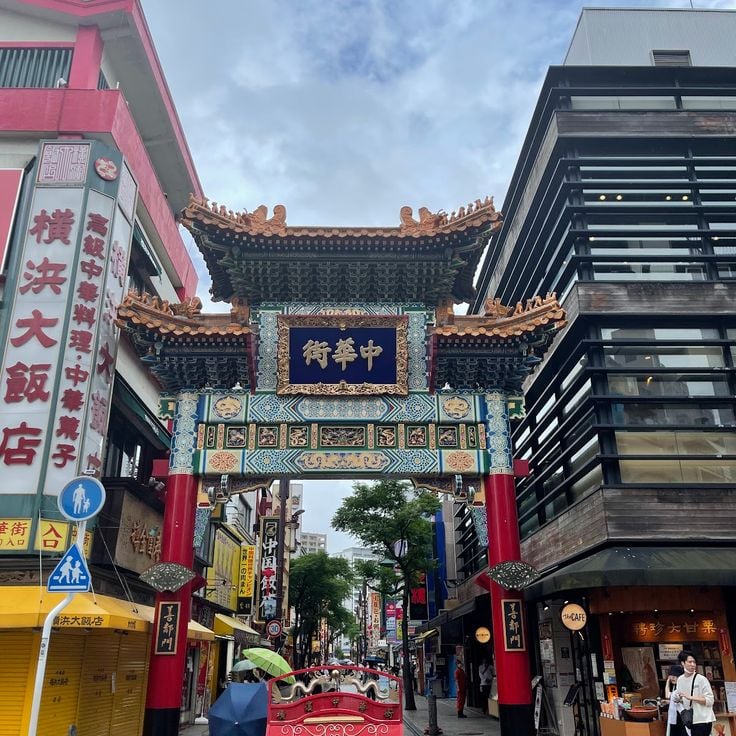
Kannai is the old port district of Yokohama, where Japan first opened to foreign trade in the mid-19th century. The streets here still carry the memory of that era, with old merchant buildings and wide avenues that once welcomed ships from around the world. When Phileas Fogg passed through Japan, Yokohama was the main gateway, and Kannai was its beating heart.
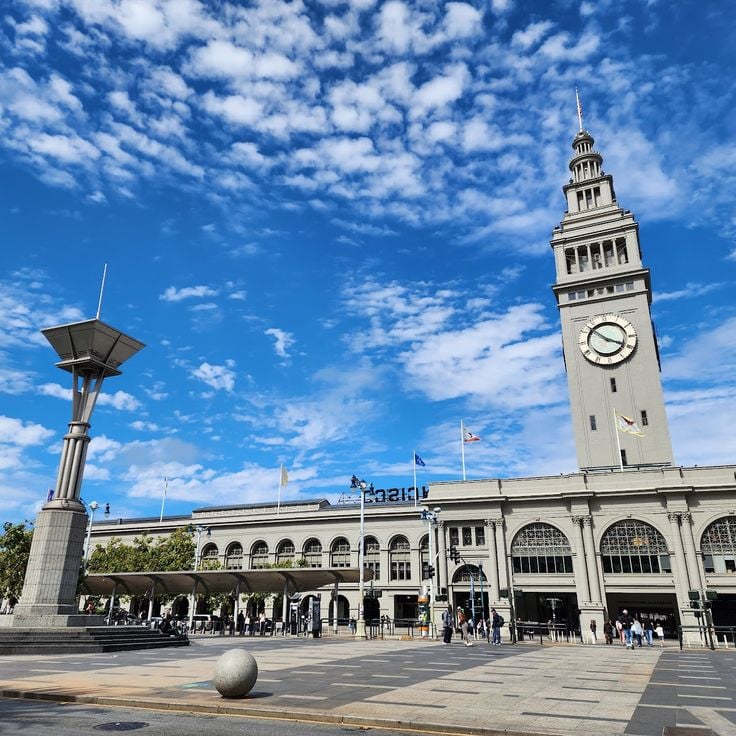
The port of San Francisco is the first American stop in Phileas Fogg's journey around the world. After crossing the Pacific Ocean, his ship docks here, and Fogg sets foot on American soil for the first time. From this harbor, the final leg of the journey begins: a race across the United States by train toward New York, with London still waiting at the finish line.
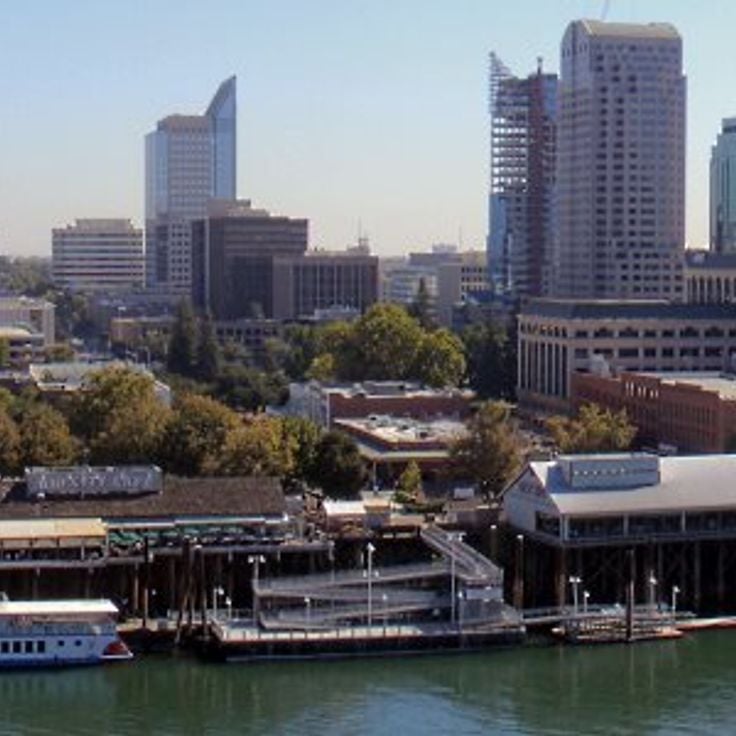
The Sacramento Valley runs through northern California and is one of the great farming regions of the West Coast. When Phileas Fogg crossed it by transcontinental train, the journey offered long views over flat, open land lined with rivers and distant hills. The valley sits between the Sierra Nevada to the east and the coastal ranges to the west. The railway followed its natural path through the lowlands, giving travelers a sense of the sheer scale of the American continent as they raced toward San Francisco.
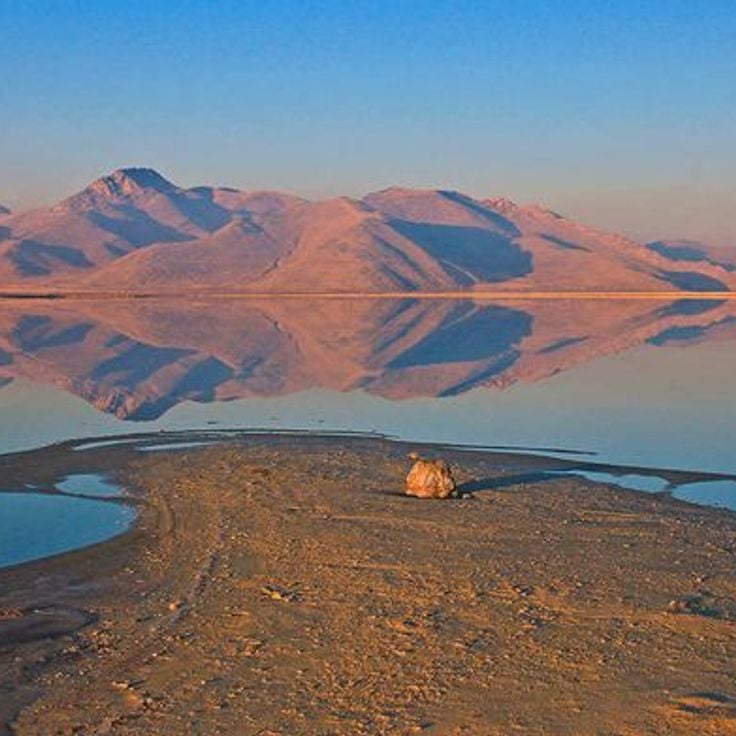
The Great Salt Lake sits in northern Utah, and Phileas Fogg passes near it during his train journey across the American West. The lake is one of the largest saltwater bodies in the Western Hemisphere. Its water is far too salty for most living things, and the shoreline is often coated in a white crust of salt. Jules Verne uses this landscape to give readers a sense of the raw, open terrain that Fogg crosses at speed during his race around the world.
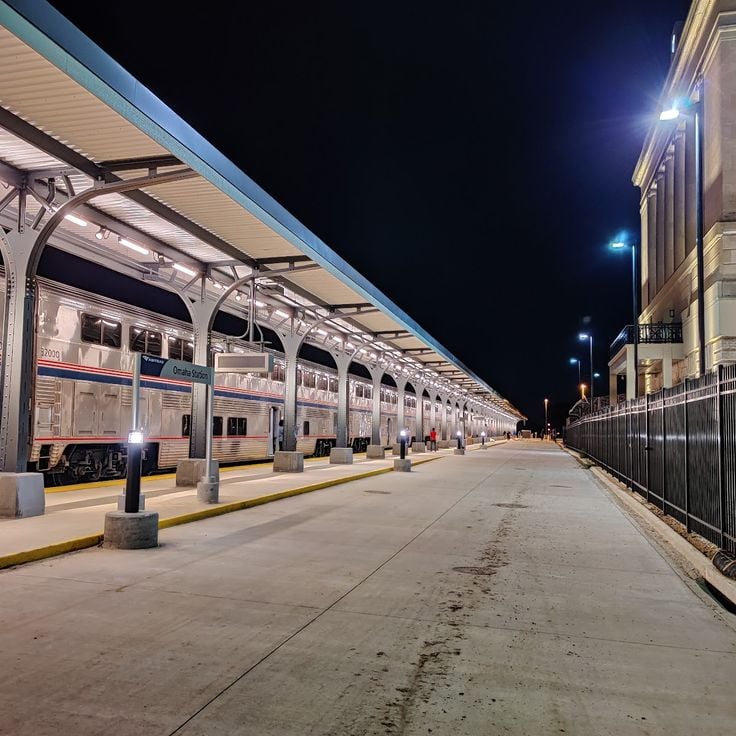
Omaha Union Station is a historic train station in downtown Omaha, Nebraska. In Jules Verne's novel, Phileas Fogg crosses the United States by rail from San Francisco to New York. Omaha sits right along that route and was a key stop on the transcontinental line. The building dates from the early 20th century and reflects the grand style of American railroad terminals from that era.
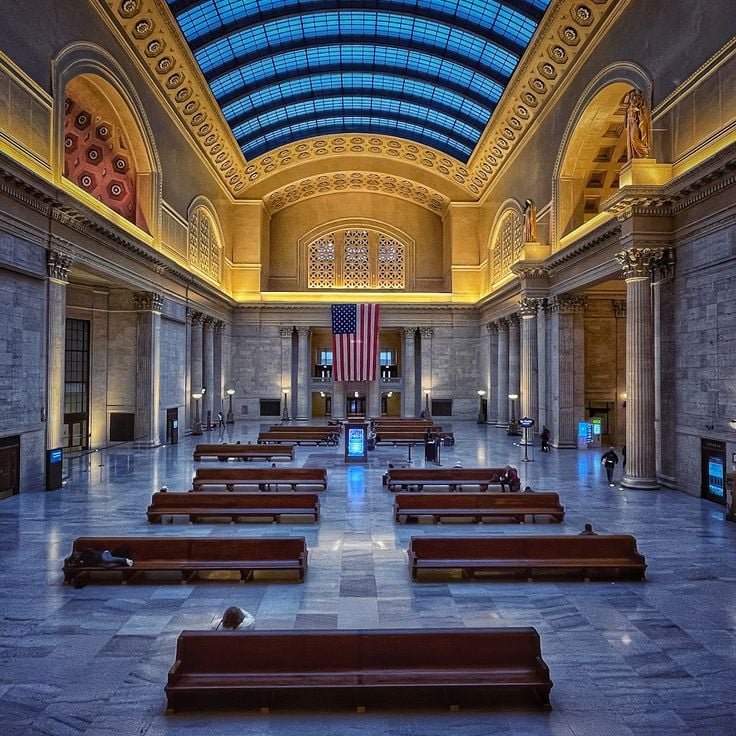
Chicago Union Station is the main train station in Chicago and one of the busiest rail hubs in the United States. Its grand waiting room, with tall columns and a marble floor, feels like stepping back in time. In Jules Verne's novel, Phileas Fogg would have passed through here on his way from San Francisco to New York, the last leg of his race around the world.
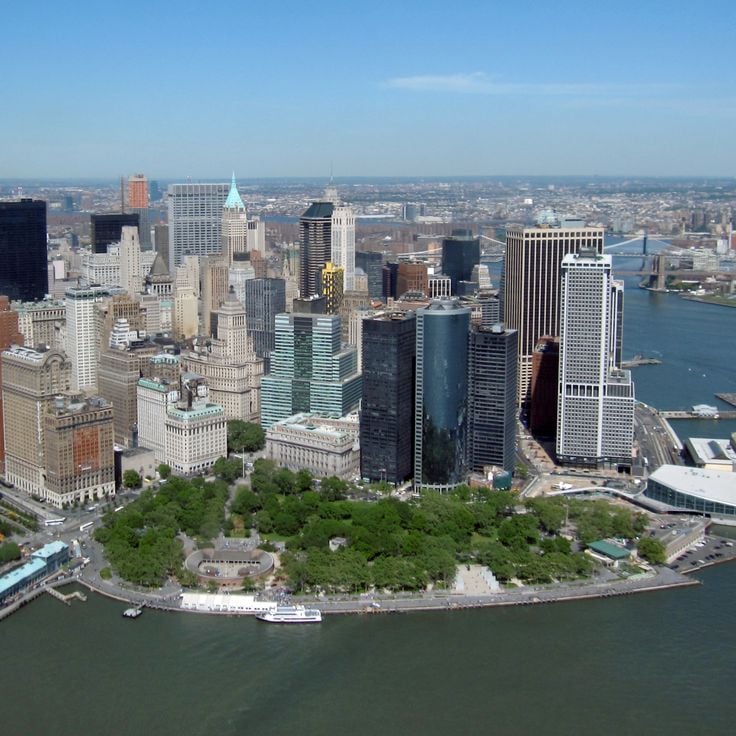
Battery Park sits at the southern tip of Manhattan, where travelers once arrived before crossing the Atlantic. In Jules Verne's story, this is where Phileas Fogg reaches New York at the end of his long journey around the world. The park faces the harbor and gives a clear view of the water. It is one of those places where the city and the sea meet in a simple and direct way.
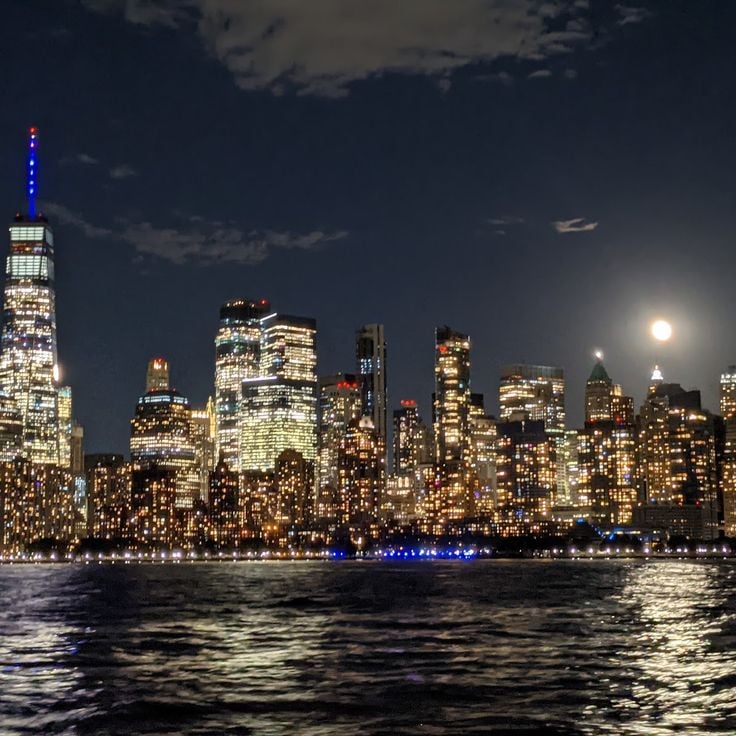
The Port of New York sits at the southern tip of Manhattan, where the Hudson River meets the Atlantic. In Jules Verne's novel, Phileas Fogg boards a ship here bound for Liverpool, setting off on the final leg of his journey around the world. This is the moment when everything is at stake and every hour counts.
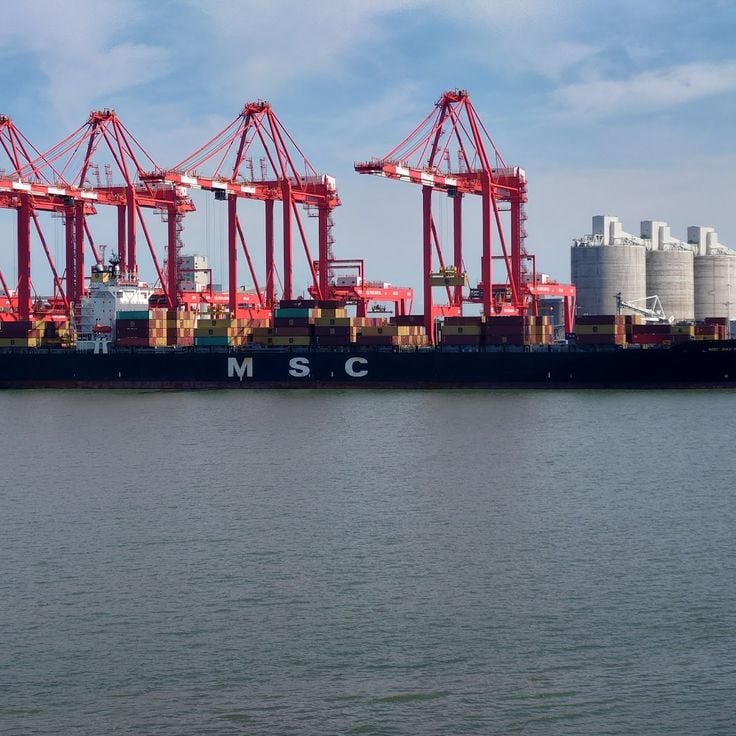
The Port of Liverpool is the final stop of the Atlantic crossing in Jules Verne's novel. After traveling through three continents, Phileas Fogg arrives here before heading back to London. In the 19th century, this port was one of the busiest in Britain, and a key point of departure for ships crossing to and from North America.
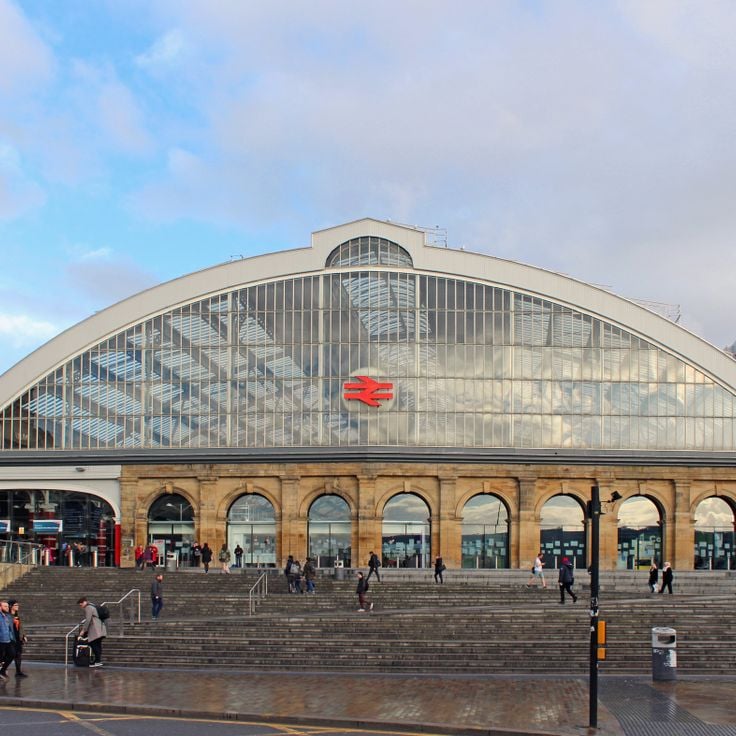
Liverpool Lime Street is the main train station in Liverpool. In Jules Verne's novel, it is the last stop before the return to London. Walking through the grand glass-and-steel hall today, you get a real sense of a station that has been at the heart of the city since the 19th century. The train shed is one of the oldest of its kind in England, and the building still carries the weight of that history.
The Reform Club in London is where Phileas Fogg's journey begins. It is here, in this private club on Pall Mall, that Fogg makes his famous bet with fellow members, claiming he can travel around the world in 80 days. The building dates back to the 19th century and still stands today as a working private club. It is also the finish line of the whole adventure: Fogg must return here on time to win his wager.
Charing Cross station sits in the heart of London, right along the Thames. In Jules Verne's novel, this is where Phileas Fogg begins his race around the world. The 19th-century building welcomes travelers from across southern England every day, and its walls still carry the feel of its long past.
The Port of London sits along the Thames and was one of the busiest trading ports in the world during the 19th century. In Jules Verne's novel, this is where Phileas Fogg begins his journey around the world in 80 days. Walking along the riverbank today, you can still feel the weight of that era, when ships from every corner of the globe docked here.
Gare du Nord is one of the busiest train stations in Europe and sits in the northern part of Paris. In Jules Verne's novel, it marks the first stop on French soil: Phileas Fogg passes through here on his way from London toward Suez, aware that every minute counts. Today, trains to northern Europe depart from its platforms, and the grand hall with its tall windows still feels like the start of a long journey.
The Gare de Lyon is one of the main train stations in Paris, located in the 12th arrondissement. In Jules Verne's novel, it marks a key stop on Phileas Fogg's race across Europe. From here, trains depart toward the south of France, Italy, and Switzerland. The large clock tower stands out above the station entrance and gives the square in front of it a recognizable look.
Turin Porta Nuova station is the main train station in Turin. In Jules Verne's novel Around the World in 80 Days, Phileas Fogg passes through Italy on his way from Paris to Brindisi, where he boards his ship to Suez. The station greets travelers with a long 19th-century facade and a large hall filled with natural light.
The port of Brindisi sits on the southeastern tip of Italy, where the Adriatic Sea meets the routes leading east. In Jules Verne's novel, it is from this very dock that Phileas Fogg boards a ship bound for Suez, marking one of the first major stops on his race around the world. The harbor still handles regular ferry traffic today, with boats heading toward Greece and beyond. Walking along the waterfront, you can feel that this has long been a place of departure, a point where Europe ends and the journey truly begins.
The port of Suez sits at the southern end of the Suez Canal, where ships pass from the Red Sea toward the Mediterranean. When Phileas Fogg arrived here, the canal had only been open for a few years, and this stop marked his first major landing outside Europe. The docks were busy with travelers, merchants, and sailors from many different places. Walking along the waterfront today, you can still feel how this port once served as a crossing point between two worlds.
The Suez Canal cuts through Egypt to connect the Mediterranean Sea with the Red Sea, covering a distance of about 120 miles (193 kilometers). When Phileas Fogg passed through here, the canal had only recently opened, in 1869, just a few years before his fictional journey. This stop was one of the first key stages in his race around the world. Standing on the banks today, you can watch enormous ships glide slowly through the desert, which is a strange and memorable sight.
Victoria Terminus is one of Mumbai's most recognizable train stations. Built in the Victorian Gothic style, the building mixes European design with local decorative details. It was already a busy rail hub during Jules Verne's era, and walking through its arched halls today still feels like stepping into another century.
Kalyan station sits in the state of Maharashtra and was a key stop on Phileas Fogg's train journey across India. In Jules Verne's novel, the train passes through here on its way east. Today, the station is one of the busiest rail junctions in the region, where long-distance and commuter trains meet, giving a clear sense of how central Indian railways were to travel in that era.
Varanasi sits on the banks of the Ganges and is one of the holiest cities in India. In Jules Verne's novel, it is one of the stops on Phileas Fogg's journey around the world. The ghats, the wide stone steps leading down to the river, are where daily life and religious rituals come together. Pilgrims arrive from across the country to bathe in the river, and ceremonies take place at dawn and dusk.
Allahabad sits where the Ganges and Yamuna rivers meet, a place considered sacred in India for centuries. In Jules Verne's novel, Phileas Fogg passes through here during his journey across India. The city serves as a crossing point between northern and eastern India, with a railway station that already played a key role in Verne's time. Travelers passing through sense the weight of a city that has long been a stop for both pilgrims and those simply moving on.
Howrah Station in Kolkata is one of the oldest rail terminals in India. When Phileas Fogg crossed India on his race around the world, this link between Bombay and Calcutta was a key stop on his journey. Today, Howrah Station connects Kolkata to the rest of the country and still carries the look of its colonial past.
Victoria Harbour is the natural harbour of Hong Kong, where Phileas Fogg and his companions arrive in Jules Verne's novel. It is here that Passepartout gets lost among the docks and narrow streets near the waterfront, putting the whole race against time at risk. The stretch of water between Hong Kong Island and Kowloon has long been a place of constant movement, with ships coming and going and traders filling the quays with noise and activity.
Central District is the heart of Hong Kong. In the novel, this is where Phileas Fogg and Passepartout arrive by steamer and rush through the city to find a connection to Yokohama. The streets are dense with activity, lined with old colonial buildings alongside glass towers. Trams run along the waterfront, ferries cross the harbor, and the steep lanes leading uphill give the place a character that feels both historic and fast-moving.
The port of Shanghai was one of the main stops for ships traveling between Europe and the Far East in the 19th century. In Jules Verne's novel, Phileas Fogg passes through here on his way from Calcutta to Yokohama. At the time, the docks were full of cargo ships and traders from all over the world, making the port a natural stop on any race around the globe.
The Port of Yokohama is the last stop in Asia before Phileas Fogg boards a ship to cross the Pacific and reach the United States. In Jules Verne's novel, it is from this harbor that Fogg leaves the Asian continent behind. At the time of the story, Yokohama was one of the main gateways to Japan for international trade and travel, a busy port where ships from many countries came and went.
Kannai is the old port district of Yokohama, where Japan first opened to foreign trade in the mid-19th century. The streets here still carry the memory of that era, with old merchant buildings and wide avenues that once welcomed ships from around the world. When Phileas Fogg passed through Japan, Yokohama was the main gateway, and Kannai was its beating heart.
The port of San Francisco is the first American stop in Phileas Fogg's journey around the world. After crossing the Pacific Ocean, his ship docks here, and Fogg sets foot on American soil for the first time. From this harbor, the final leg of the journey begins: a race across the United States by train toward New York, with London still waiting at the finish line.
The Sacramento Valley runs through northern California and is one of the great farming regions of the West Coast. When Phileas Fogg crossed it by transcontinental train, the journey offered long views over flat, open land lined with rivers and distant hills. The valley sits between the Sierra Nevada to the east and the coastal ranges to the west. The railway followed its natural path through the lowlands, giving travelers a sense of the sheer scale of the American continent as they raced toward San Francisco.
The Great Salt Lake sits in northern Utah, and Phileas Fogg passes near it during his train journey across the American West. The lake is one of the largest saltwater bodies in the Western Hemisphere. Its water is far too salty for most living things, and the shoreline is often coated in a white crust of salt. Jules Verne uses this landscape to give readers a sense of the raw, open terrain that Fogg crosses at speed during his race around the world.
Omaha Union Station is a historic train station in downtown Omaha, Nebraska. In Jules Verne's novel, Phileas Fogg crosses the United States by rail from San Francisco to New York. Omaha sits right along that route and was a key stop on the transcontinental line. The building dates from the early 20th century and reflects the grand style of American railroad terminals from that era.
Chicago Union Station is the main train station in Chicago and one of the busiest rail hubs in the United States. Its grand waiting room, with tall columns and a marble floor, feels like stepping back in time. In Jules Verne's novel, Phileas Fogg would have passed through here on his way from San Francisco to New York, the last leg of his race around the world.
Battery Park sits at the southern tip of Manhattan, where travelers once arrived before crossing the Atlantic. In Jules Verne's story, this is where Phileas Fogg reaches New York at the end of his long journey around the world. The park faces the harbor and gives a clear view of the water. It is one of those places where the city and the sea meet in a simple and direct way.
The Port of New York sits at the southern tip of Manhattan, where the Hudson River meets the Atlantic. In Jules Verne's novel, Phileas Fogg boards a ship here bound for Liverpool, setting off on the final leg of his journey around the world. This is the moment when everything is at stake and every hour counts.
The Port of Liverpool is the final stop of the Atlantic crossing in Jules Verne's novel. After traveling through three continents, Phileas Fogg arrives here before heading back to London. In the 19th century, this port was one of the busiest in Britain, and a key point of departure for ships crossing to and from North America.
Liverpool Lime Street is the main train station in Liverpool. In Jules Verne's novel, it is the last stop before the return to London. Walking through the grand glass-and-steel hall today, you get a real sense of a station that has been at the heart of the city since the 19th century. The train shed is one of the oldest of its kind in England, and the building still carries the weight of that history.
The Reform Club in London is where Phileas Fogg's journey begins. It is here, in this private club on Pall Mall, that Fogg makes his famous bet with fellow members, claiming he can travel around the world in 80 days. The building dates back to the 19th century and still stands today as a working private club. It is also the finish line of the whole adventure: Fogg must return here on time to win his wager.
Charing Cross station sits in the heart of London, right along the Thames. In Jules Verne's novel, this is where Phileas Fogg begins his race around the world. The 19th-century building welcomes travelers from across southern England every day, and its walls still carry the feel of its long past.
The Port of London sits along the Thames and was one of the busiest trading ports in the world during the 19th century. In Jules Verne's novel, this is where Phileas Fogg begins his journey around the world in 80 days. Walking along the riverbank today, you can still feel the weight of that era, when ships from every corner of the globe docked here.
Gare du Nord is one of the busiest train stations in Europe and sits in the northern part of Paris. In Jules Verne's novel, it marks the first stop on French soil: Phileas Fogg passes through here on his way from London toward Suez, aware that every minute counts. Today, trains to northern Europe depart from its platforms, and the grand hall with its tall windows still feels like the start of a long journey.
The Gare de Lyon is one of the main train stations in Paris, located in the 12th arrondissement. In Jules Verne's novel, it marks a key stop on Phileas Fogg's race across Europe. From here, trains depart toward the south of France, Italy, and Switzerland. The large clock tower stands out above the station entrance and gives the square in front of it a recognizable look.
Turin Porta Nuova station is the main train station in Turin. In Jules Verne's novel Around the World in 80 Days, Phileas Fogg passes through Italy on his way from Paris to Brindisi, where he boards his ship to Suez. The station greets travelers with a long 19th-century facade and a large hall filled with natural light.
The port of Brindisi sits on the southeastern tip of Italy, where the Adriatic Sea meets the routes leading east. In Jules Verne's novel, it is from this very dock that Phileas Fogg boards a ship bound for Suez, marking one of the first major stops on his race around the world. The harbor still handles regular ferry traffic today, with boats heading toward Greece and beyond. Walking along the waterfront, you can feel that this has long been a place of departure, a point where Europe ends and the journey truly begins.
The port of Suez sits at the southern end of the Suez Canal, where ships pass from the Red Sea toward the Mediterranean. When Phileas Fogg arrived here, the canal had only been open for a few years, and this stop marked his first major landing outside Europe. The docks were busy with travelers, merchants, and sailors from many different places. Walking along the waterfront today, you can still feel how this port once served as a crossing point between two worlds.
The Suez Canal cuts through Egypt to connect the Mediterranean Sea with the Red Sea, covering a distance of about 120 miles (193 kilometers). When Phileas Fogg passed through here, the canal had only recently opened, in 1869, just a few years before his fictional journey. This stop was one of the first key stages in his race around the world. Standing on the banks today, you can watch enormous ships glide slowly through the desert, which is a strange and memorable sight.
Victoria Terminus is one of Mumbai's most recognizable train stations. Built in the Victorian Gothic style, the building mixes European design with local decorative details. It was already a busy rail hub during Jules Verne's era, and walking through its arched halls today still feels like stepping into another century.
Kalyan station sits in the state of Maharashtra and was a key stop on Phileas Fogg's train journey across India. In Jules Verne's novel, the train passes through here on its way east. Today, the station is one of the busiest rail junctions in the region, where long-distance and commuter trains meet, giving a clear sense of how central Indian railways were to travel in that era.
Varanasi sits on the banks of the Ganges and is one of the holiest cities in India. In Jules Verne's novel, it is one of the stops on Phileas Fogg's journey around the world. The ghats, the wide stone steps leading down to the river, are where daily life and religious rituals come together. Pilgrims arrive from across the country to bathe in the river, and ceremonies take place at dawn and dusk.
Allahabad sits where the Ganges and Yamuna rivers meet, a place considered sacred in India for centuries. In Jules Verne's novel, Phileas Fogg passes through here during his journey across India. The city serves as a crossing point between northern and eastern India, with a railway station that already played a key role in Verne's time. Travelers passing through sense the weight of a city that has long been a stop for both pilgrims and those simply moving on.
Howrah Station in Kolkata is one of the oldest rail terminals in India. When Phileas Fogg crossed India on his race around the world, this link between Bombay and Calcutta was a key stop on his journey. Today, Howrah Station connects Kolkata to the rest of the country and still carries the look of its colonial past.
Victoria Harbour is the natural harbour of Hong Kong, where Phileas Fogg and his companions arrive in Jules Verne's novel. It is here that Passepartout gets lost among the docks and narrow streets near the waterfront, putting the whole race against time at risk. The stretch of water between Hong Kong Island and Kowloon has long been a place of constant movement, with ships coming and going and traders filling the quays with noise and activity.
Central District is the heart of Hong Kong. In the novel, this is where Phileas Fogg and Passepartout arrive by steamer and rush through the city to find a connection to Yokohama. The streets are dense with activity, lined with old colonial buildings alongside glass towers. Trams run along the waterfront, ferries cross the harbor, and the steep lanes leading uphill give the place a character that feels both historic and fast-moving.
The port of Shanghai was one of the main stops for ships traveling between Europe and the Far East in the 19th century. In Jules Verne's novel, Phileas Fogg passes through here on his way from Calcutta to Yokohama. At the time, the docks were full of cargo ships and traders from all over the world, making the port a natural stop on any race around the globe.
The Port of Yokohama is the last stop in Asia before Phileas Fogg boards a ship to cross the Pacific and reach the United States. In Jules Verne's novel, it is from this harbor that Fogg leaves the Asian continent behind. At the time of the story, Yokohama was one of the main gateways to Japan for international trade and travel, a busy port where ships from many countries came and went.
Kannai is the old port district of Yokohama, where Japan first opened to foreign trade in the mid-19th century. The streets here still carry the memory of that era, with old merchant buildings and wide avenues that once welcomed ships from around the world. When Phileas Fogg passed through Japan, Yokohama was the main gateway, and Kannai was its beating heart.
The port of San Francisco is the first American stop in Phileas Fogg's journey around the world. After crossing the Pacific Ocean, his ship docks here, and Fogg sets foot on American soil for the first time. From this harbor, the final leg of the journey begins: a race across the United States by train toward New York, with London still waiting at the finish line.
The Sacramento Valley runs through northern California and is one of the great farming regions of the West Coast. When Phileas Fogg crossed it by transcontinental train, the journey offered long views over flat, open land lined with rivers and distant hills. The valley sits between the Sierra Nevada to the east and the coastal ranges to the west. The railway followed its natural path through the lowlands, giving travelers a sense of the sheer scale of the American continent as they raced toward San Francisco.
The Great Salt Lake sits in northern Utah, and Phileas Fogg passes near it during his train journey across the American West. The lake is one of the largest saltwater bodies in the Western Hemisphere. Its water is far too salty for most living things, and the shoreline is often coated in a white crust of salt. Jules Verne uses this landscape to give readers a sense of the raw, open terrain that Fogg crosses at speed during his race around the world.
Omaha Union Station is a historic train station in downtown Omaha, Nebraska. In Jules Verne's novel, Phileas Fogg crosses the United States by rail from San Francisco to New York. Omaha sits right along that route and was a key stop on the transcontinental line. The building dates from the early 20th century and reflects the grand style of American railroad terminals from that era.
Chicago Union Station is the main train station in Chicago and one of the busiest rail hubs in the United States. Its grand waiting room, with tall columns and a marble floor, feels like stepping back in time. In Jules Verne's novel, Phileas Fogg would have passed through here on his way from San Francisco to New York, the last leg of his race around the world.
Battery Park sits at the southern tip of Manhattan, where travelers once arrived before crossing the Atlantic. In Jules Verne's story, this is where Phileas Fogg reaches New York at the end of his long journey around the world. The park faces the harbor and gives a clear view of the water. It is one of those places where the city and the sea meet in a simple and direct way.
The Port of New York sits at the southern tip of Manhattan, where the Hudson River meets the Atlantic. In Jules Verne's novel, Phileas Fogg boards a ship here bound for Liverpool, setting off on the final leg of his journey around the world. This is the moment when everything is at stake and every hour counts.
The Port of Liverpool is the final stop of the Atlantic crossing in Jules Verne's novel. After traveling through three continents, Phileas Fogg arrives here before heading back to London. In the 19th century, this port was one of the busiest in Britain, and a key point of departure for ships crossing to and from North America.
Liverpool Lime Street is the main train station in Liverpool. In Jules Verne's novel, it is the last stop before the return to London. Walking through the grand glass-and-steel hall today, you get a real sense of a station that has been at the heart of the city since the 19th century. The train shed is one of the oldest of its kind in England, and the building still carries the weight of that history.
To follow Fogg's route in Europe, start at the Paris train stations Charing Cross and Nord. The difference between the Gare du Nord and Gare de Lyon shows how travelers in the 19th century moved through France. Remember that Turin and Brindisi mark the passage to the Mediterranean east. Tip: buy a train ticket to retrace this route if you have time.