See the monuments around you in AROpen chests in the app
Around Us is built for your phone — point your camera at the streets and discover the monuments and places around you in augmented reality.Around Us is built for your phone — chests unlock when you walk, explore and capture nearby places.
French town halls tell their city stories through stone and building styles of each period.
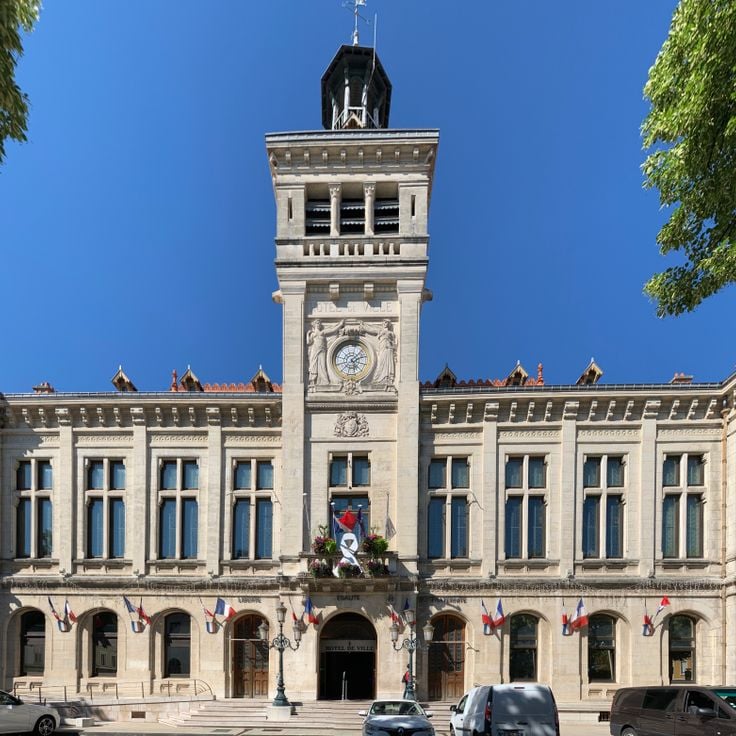
A selection of about twenty town halls and city halls across France, from north to south. This list brings together the most notable government buildings in the country, from major regional capitals to small towns with character. You will see facades from the 19th century, large architectural structures, historic squares, and buildings that tell the story of local history. Each town hall reflects a particular style and offers a view of French urban history.
French town halls tell their city stories through stone and building styles of each period.
A selection of about twenty town halls and city halls across France, from north to south. This list brings together the most notable government buildings in the country, from major regional capitals to small towns with character. You will see facades from the 19th century, large architectural structures, historic squares, and buildings that tell the story of local history. Each town hall reflects a particular style and offers a view of French urban history.
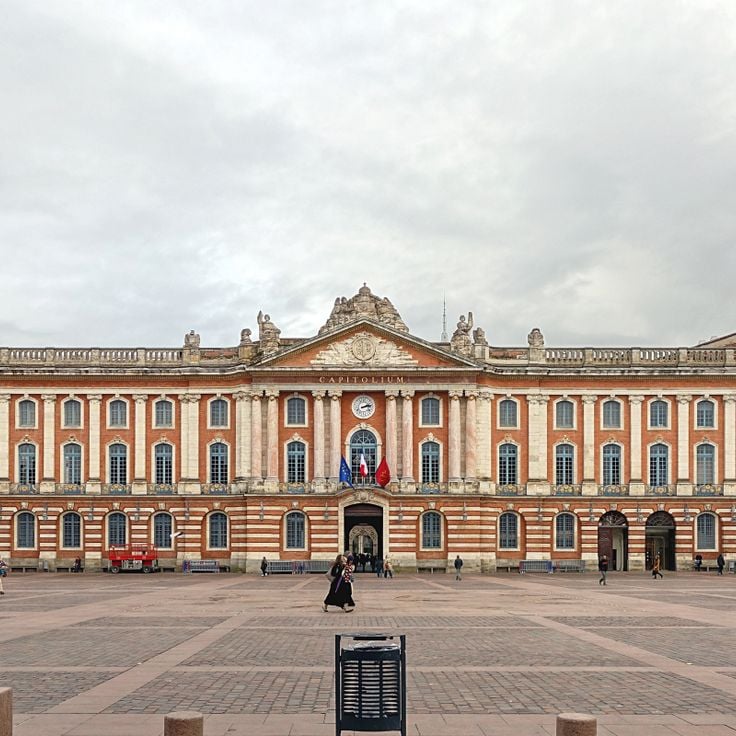
The Capitole de Toulouse is the city hall of the Pink City, standing on one of the most central squares in the downtown area. Its long pink brick facade dates from the 18th century and sets it apart from other French city halls. Inside, large ceremonial rooms are decorated with paintings and gilded details. The Capitole has been the seat of local government in Toulouse for centuries.
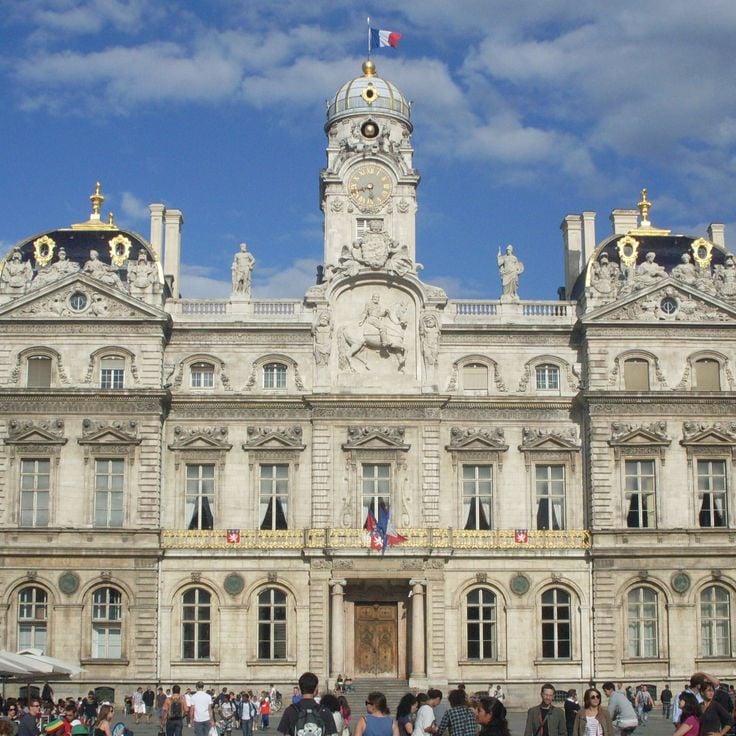
The Hôtel de Ville de Lyon stands on the Place des Terreaux, one of the most well-known squares in the city. Built in the 17th century and rebuilt after a fire, it features a facade with towers and arcades that catch the eye as you pass by. It remains the seat of the city government and is part of daily life in the center of Lyon.
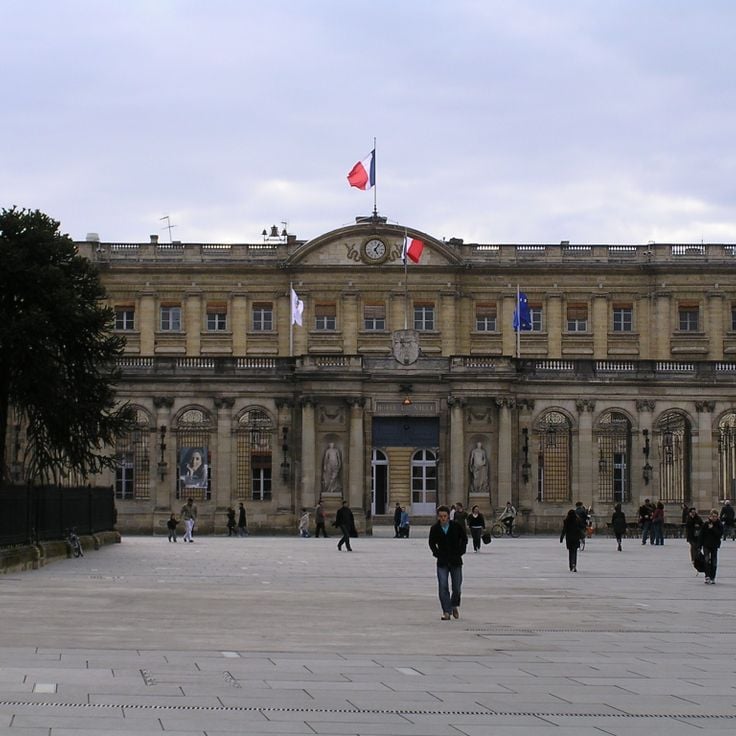
The Hôtel de Ville de Bordeaux, also known as the Palais Rohan, is an 18th-century building in the heart of the city. Its stone facade, with columns and carved ornaments, recalls the wealth that Bordeaux accumulated during its great maritime trade era. Walking through its inner courtyard gives a clear sense of how the city long combined everyday civic life with architecture of great ambition.
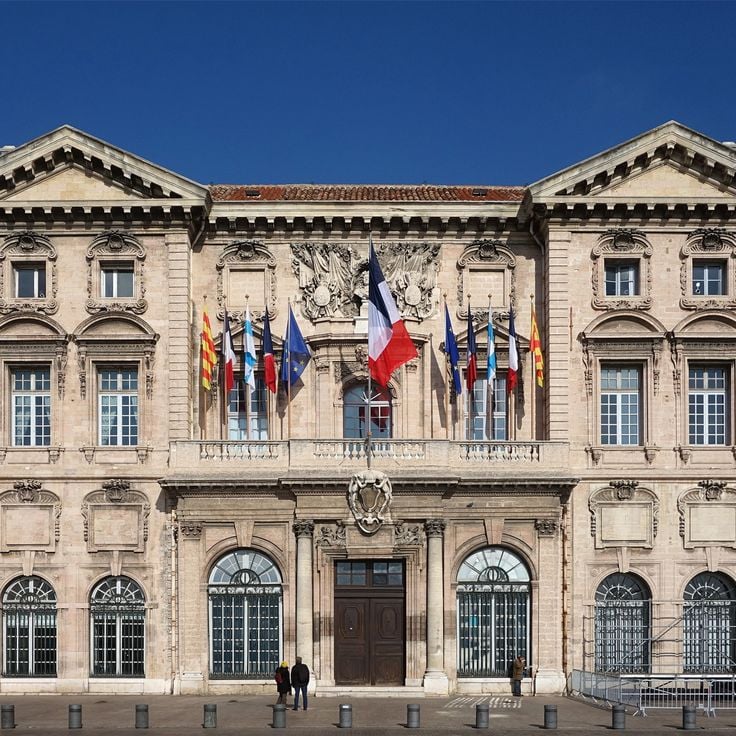
The Hôtel de Ville de Marseille stands at the edge of the Old Port, where it has carried out the city's administrative functions since the 17th century. Its pale stone facade faces the constant coming and going of boats and walkers. For the people of Marseille, it is a familiar landmark along one of the busiest quays in the south of France.
Lille City Hall was built in the 1920s in the heart of the city. Its belfry is listed as a UNESCO World Heritage Site among the belfries of Belgium and France, rising about 220 feet (67 meters) tall. The facade combines Flemish references with northern French architecture, featuring broad lines, pale stone, and a solid mass. Standing in the square in front of it, you quickly sense how much this building shapes the daily life of the city.
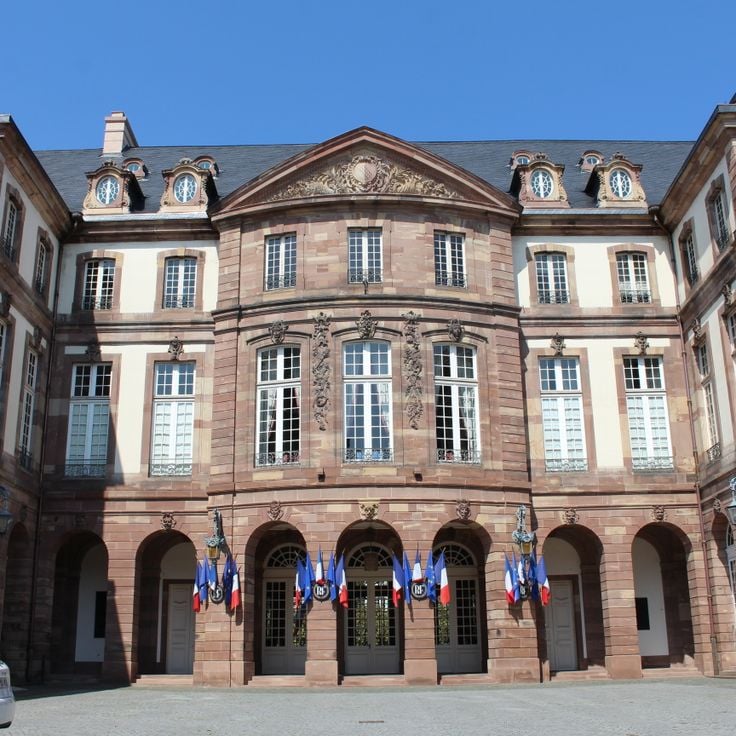
The Hôtel de Ville of Strasbourg stands in the heart of a city shaped by centuries of French and German history. Its facade carries the marks of this past, which gives Alsace its strong regional identity. The building is part of daily life for locals, and walking past it gives a clear sense of how much space civic architecture occupies in this city.
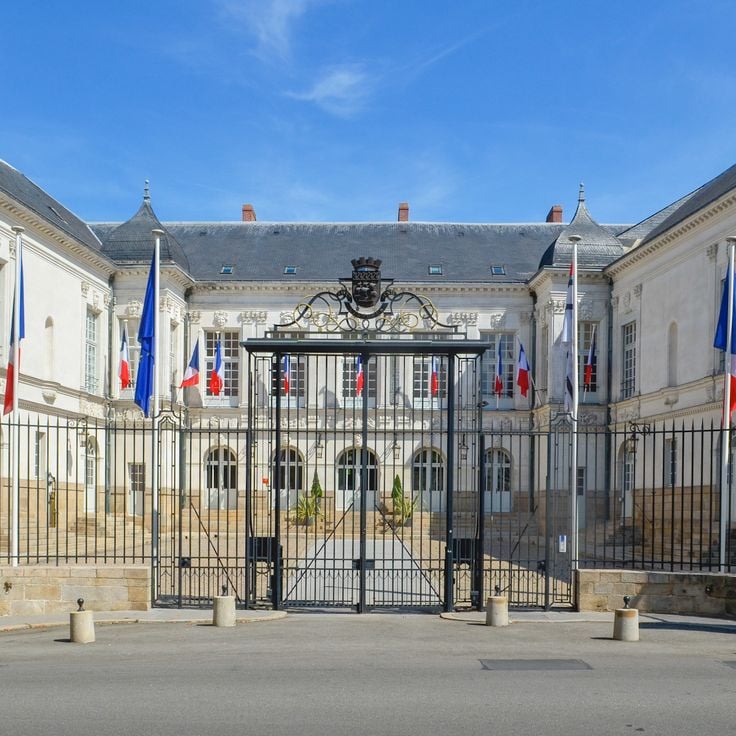
The Hôtel de Ville of Nantes stands at the heart of what was once the capital of Brittany. Its 19th-century facade faces a central square where locals gather on a daily basis. Walking past it, you get a clear sense of how deeply this building is tied to the history and everyday life of the city.
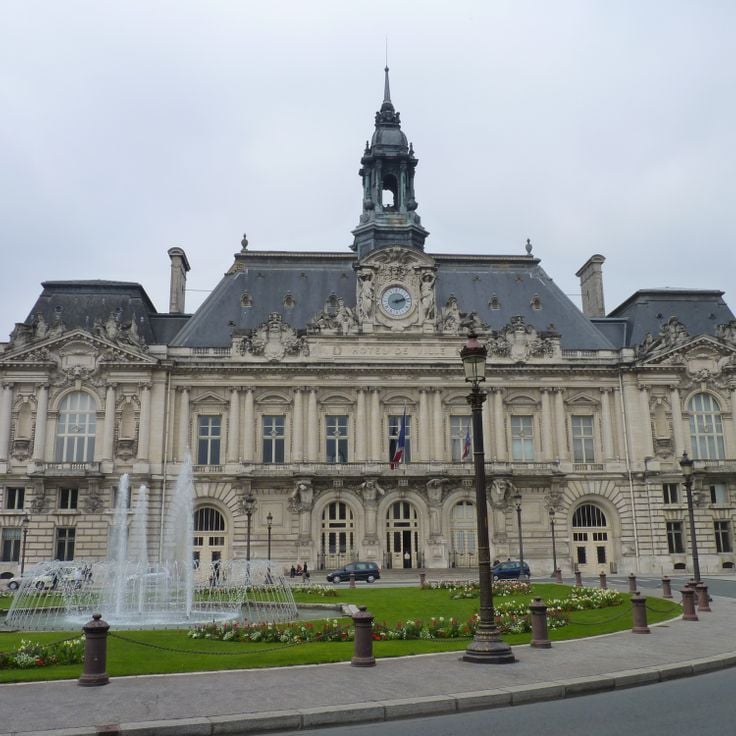
The Hôtel de Ville de Tours was built in the late 19th century and stands at the heart of the city. Its facade shows the Belle Époque style, with symmetrical lines, carved stone ornaments, and an architecture meant to express civic pride. For anyone walking through Tours, this building stands out as one of the most recognizable public landmarks in the Val de Loire region.
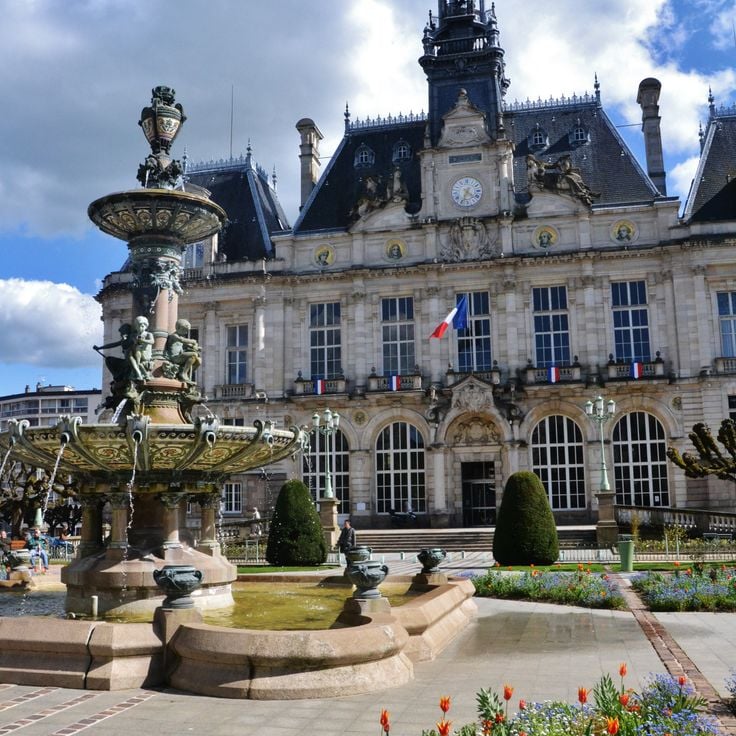
Limoges City Hall stands in the center of a city long known for its porcelain. Built in the 19th century, it displays the stone facade and formal layout typical of French civic buildings from that era. The building opens onto a public square where locals gather throughout the day. Walking through downtown Limoges, you naturally pass by it, as it has served as the center of public life since it first opened.
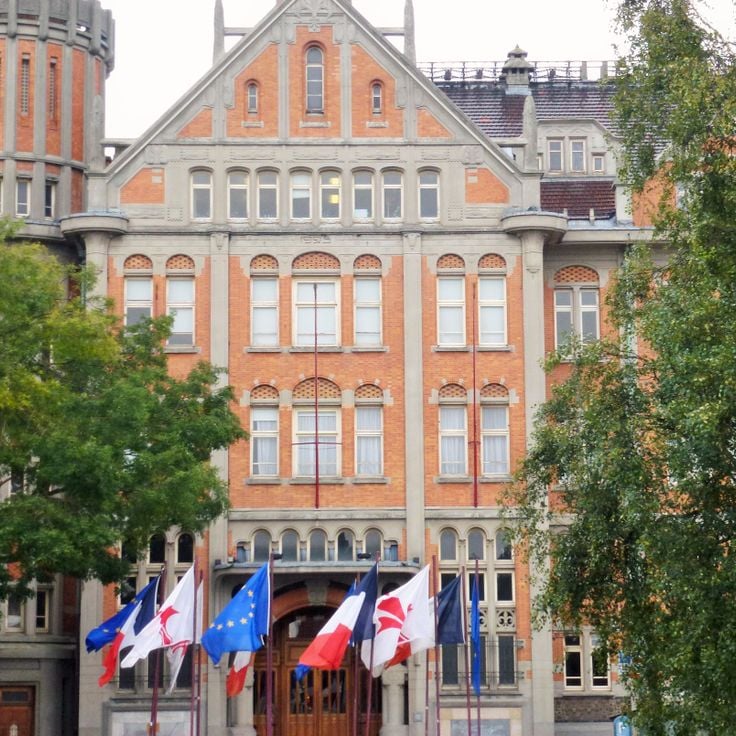
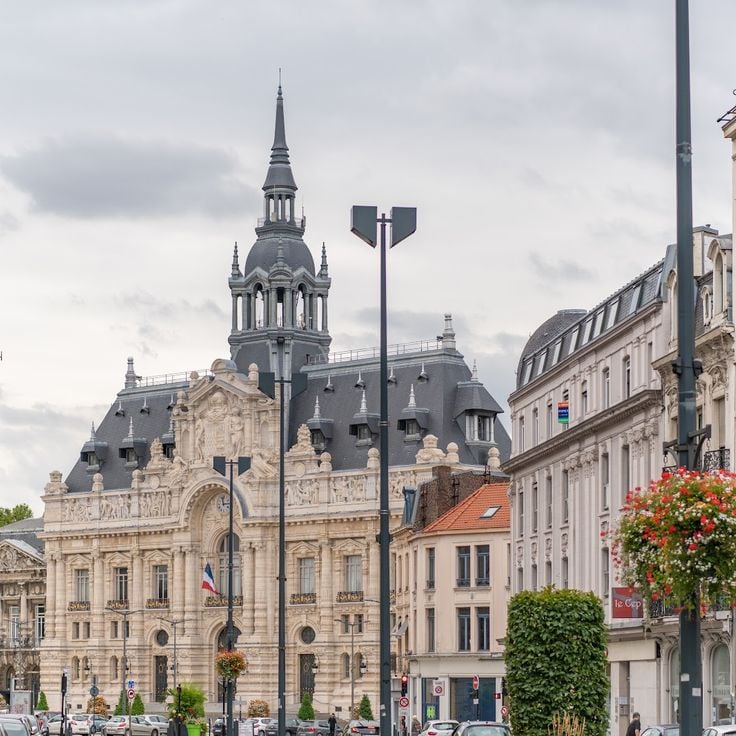
The Hôtel de Ville de Roubaix was built in the Belle Époque style, at a time when Roubaix was one of France's leading textile cities. Its facade reflects the architectural tastes of the late 19th century, with ornate stonework and a formal presence that expressed the city's confidence in its industrial rise. The building stands at the heart of Roubaix and remains a reference point in the urban landscape.
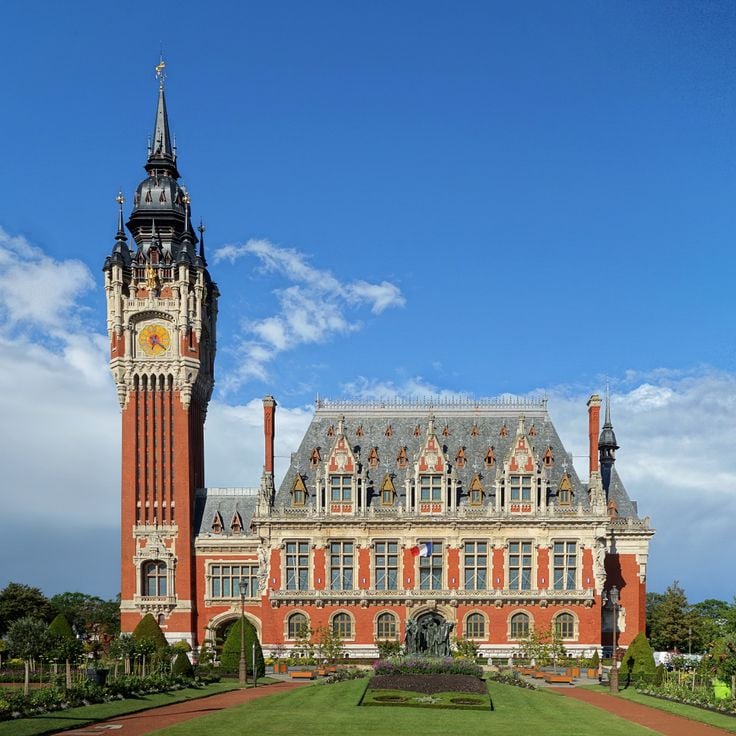
The Hôtel de Ville de Calais stands at the center of this port city on the Pas-de-Calais coast. Built in the late 19th century in a Flemish Gothic style, it features an ornate facade and a slender belfry visible from much of the city center. In front of the main entrance stands the sculpture group of the Burghers of Calais, a work by Auguste Rodin commemorating an episode from the Hundred Years' War. The square around it is a lively part of daily life in Calais.
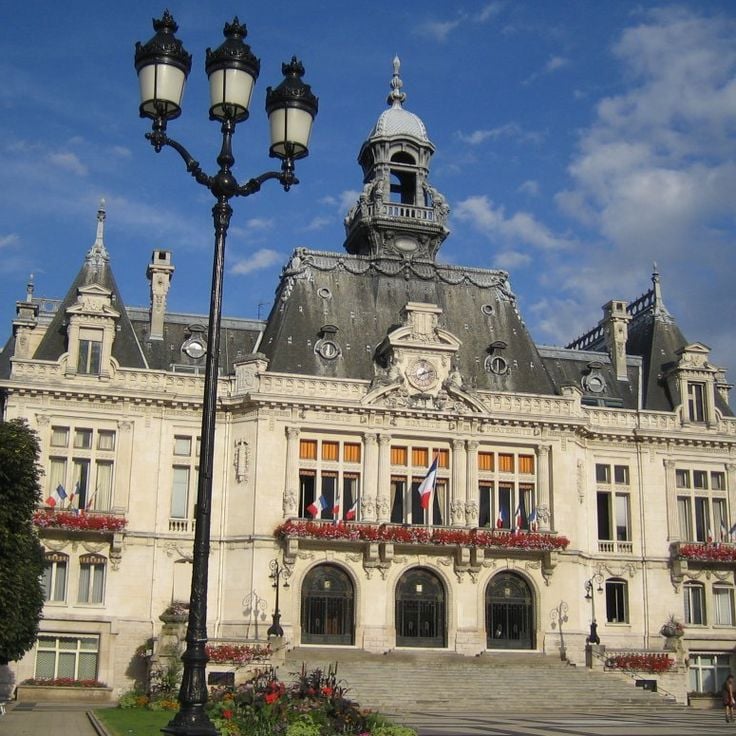
Vichy's Hôtel de Ville was built around the turn of the 20th century, when the city was at the height of its fame as a spa town. The facade shows the style of that era: detailed stonework, ornamental touches, and a solid presence in the city center. The building stands in a city that once drew aristocrats and spa visitors from across Europe.
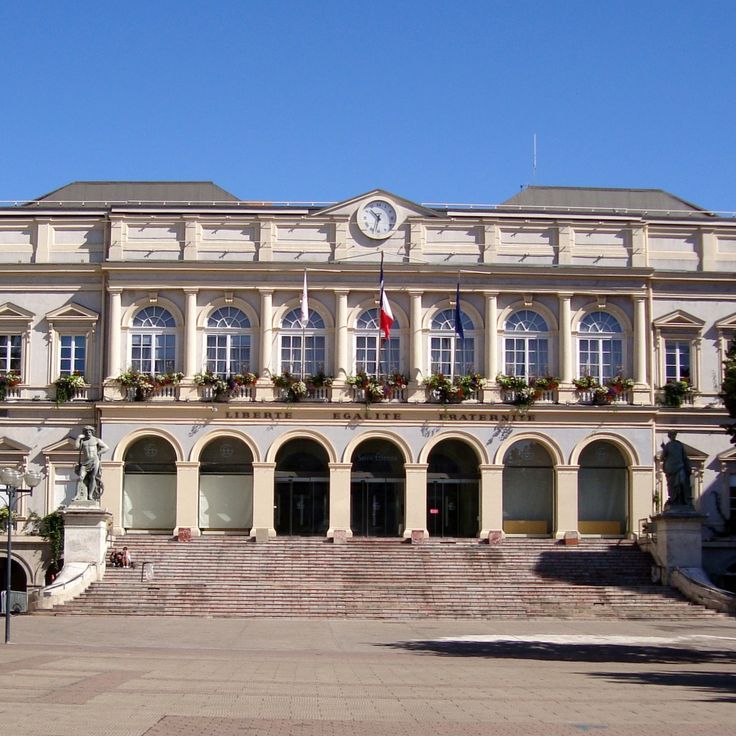
The Hôtel de Ville of Saint-Étienne stands at the heart of a city shaped by coal and steel. This 19th-century building has a classical stone facade that reflects the industrial past of the city. It sits on a central square where daily life flows naturally around it, making it one of the most recognizable landmarks in the urban landscape.
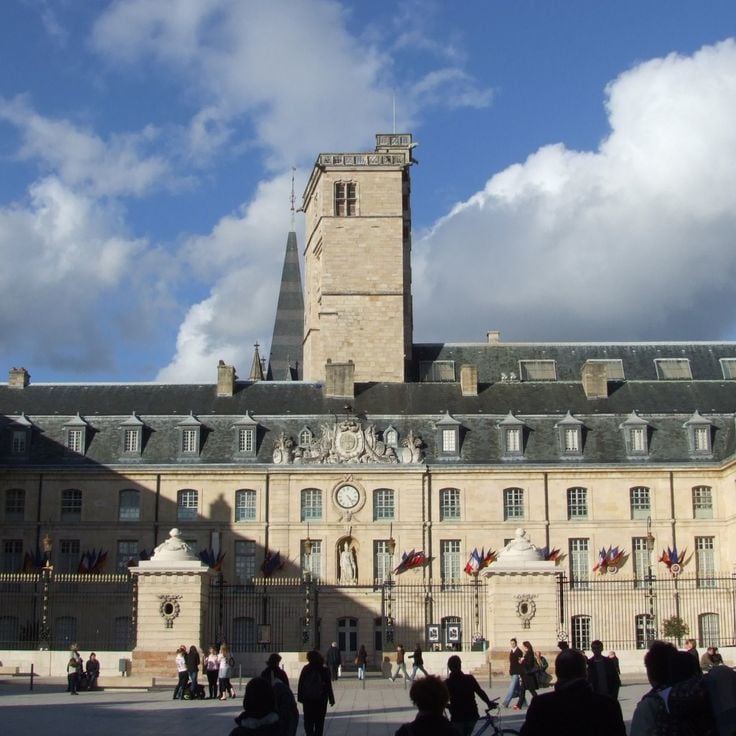
Dijon's City Hall sits at the heart of the city, built into the former palace of the Dukes of Burgundy. The building dates from the 17th century and opens onto a large cobbled courtyard lined with stone arcades. Walking through the city center, you naturally pass by this place, which has shaped daily life in Dijon for centuries. The stone facades and the wide courtyard give the square a sense of history that still feels very much alive.
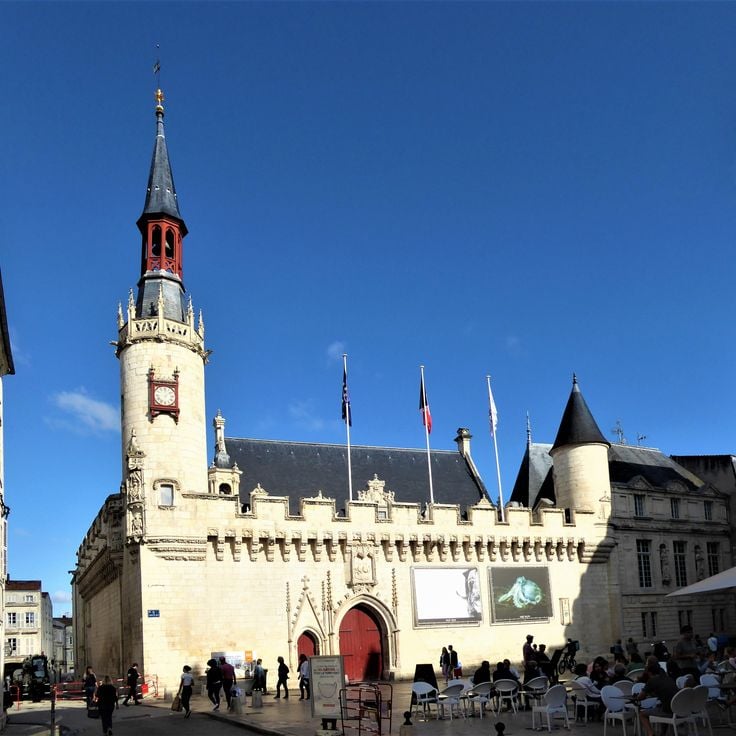
The Hôtel de Ville de La Rochelle stands in the heart of this historic port city on the Atlantic coast. The building combines elements from the 16th and 17th centuries, with a facade dominated by a medieval tower. Walking along it, you sense the history of a city that was once one of the great trading centers of France.
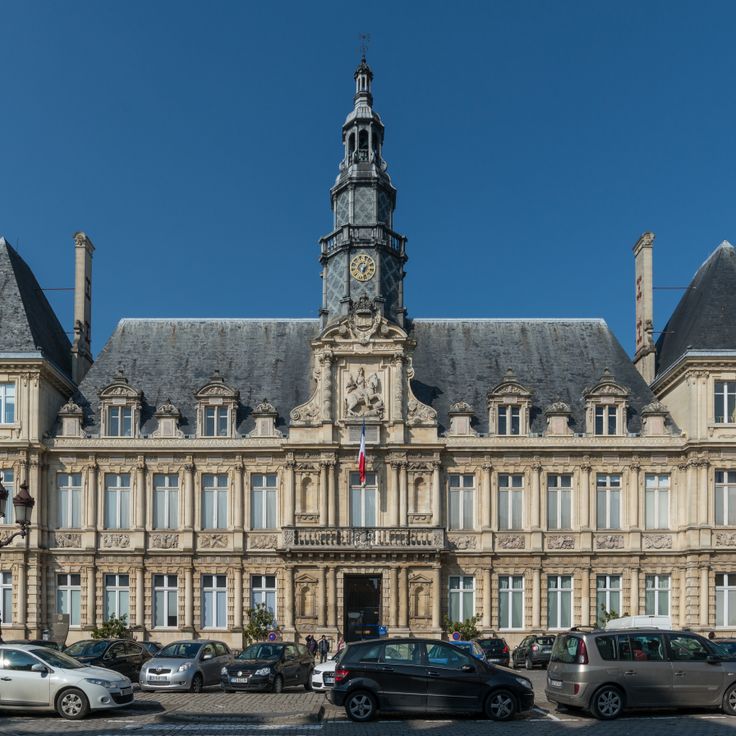
The Hôtel de Ville de Reims stands in the center of a city long associated with the coronation of French kings. Built in the 17th century, it features a classical stone facade with columns and sculptures. It houses the city's municipal offices and faces one of the main squares in town. Anyone walking through central Reims will naturally pass in front of its long stone facade.
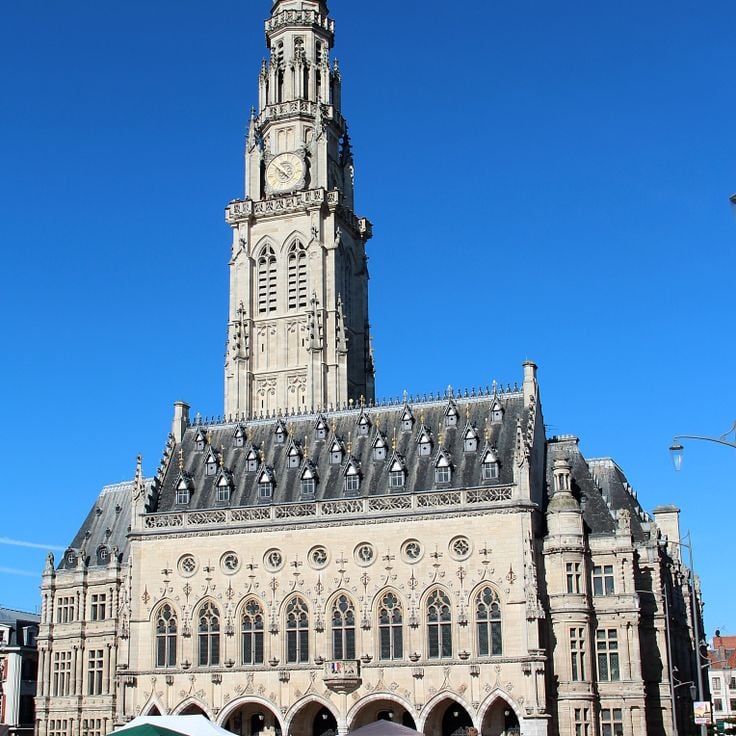
The Hôtel de Ville d'Arras stands at the center of the Grand-Place, the large square at the heart of the city. The building dates back to the 16th century, but it had to be rebuilt after World War I, which left it nearly completely destroyed. Its belfry towers above the square and has been a UNESCO World Heritage site since 2005, as part of a group of belfries in Belgium and France.
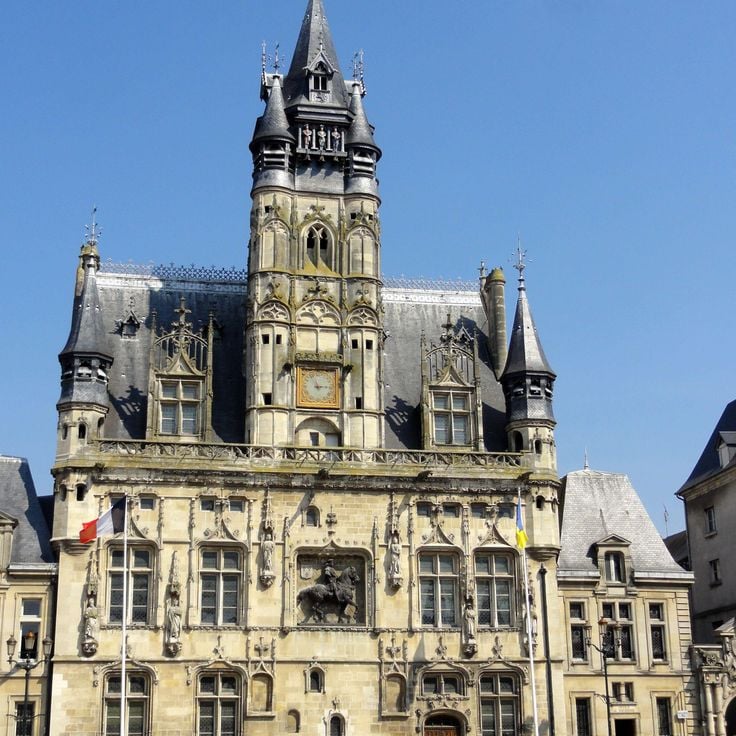
The Hôtel de Ville de Compiègne stands in the heart of a former royal city that played a role in French history for centuries. Its facade recalls a time when Compiègne was a favored stop for the kings of France, and the building still bears the marks of that past.
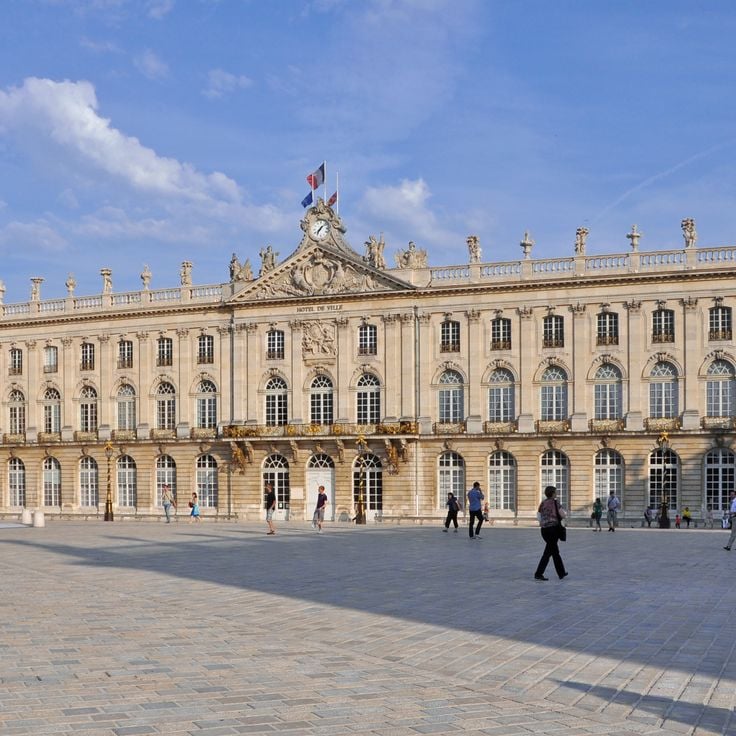
The Hôtel de Ville of Nancy stands directly on the Place Stanislas, one of the most celebrated squares in France. Built in the 18th century, it is part of a UNESCO World Heritage ensemble. Its facade, with golden ironwork and a symmetrical layout, shows the classical style that King Stanislas wanted to give the city. Anyone crossing the square naturally stops to look at this building, which shapes the space and tells the story of Nancy.
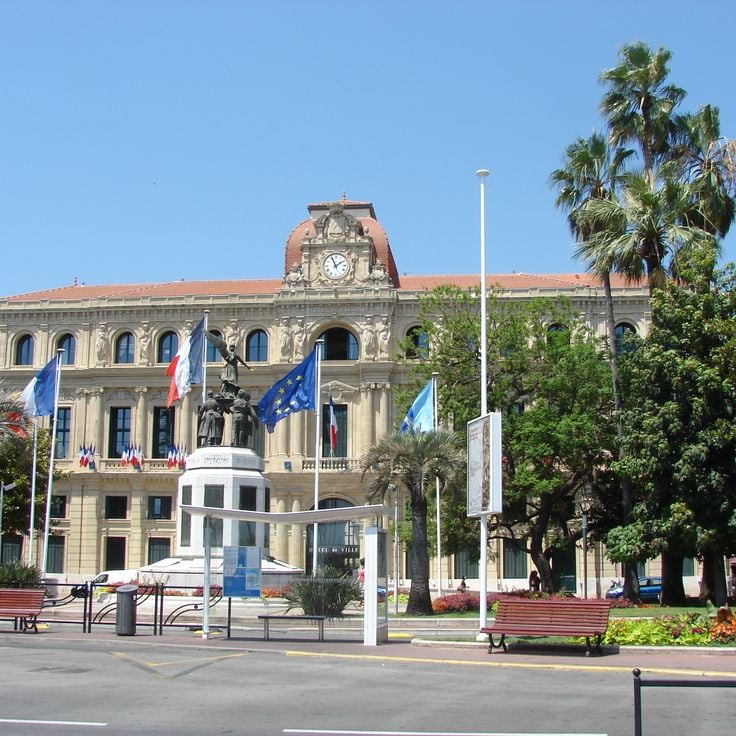
The Hôtel de Ville de Cannes stands in the heart of the city, not far from the port and the waterfront promenade. The building dates from the 19th century and follows the style common to French town halls of that era: a symmetrical facade, tall windows, and a presence designed to convey authority. In a city known mostly for its film festival, the town hall is a reminder that Cannes also has an ordinary municipal life, with public services, local decisions, and the daily routines of its residents.
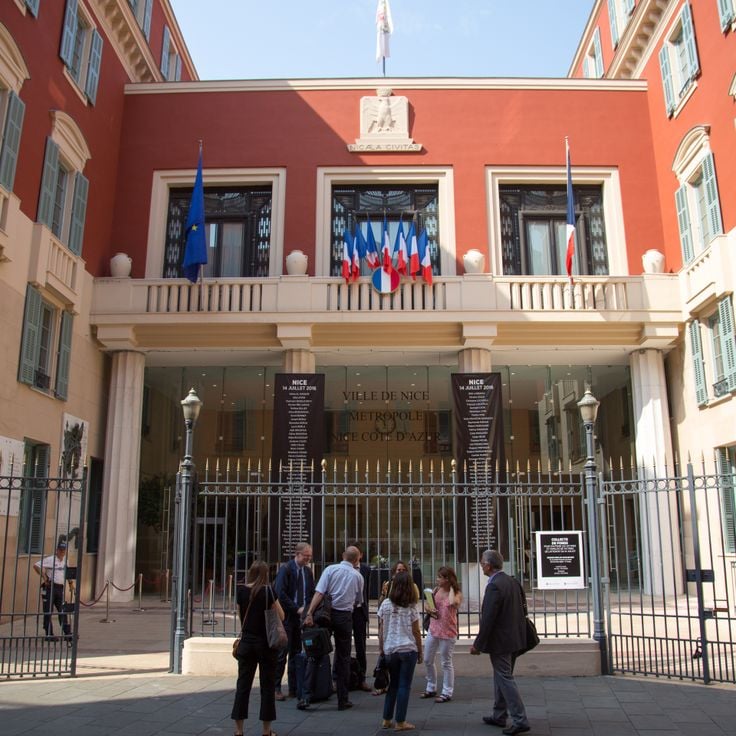
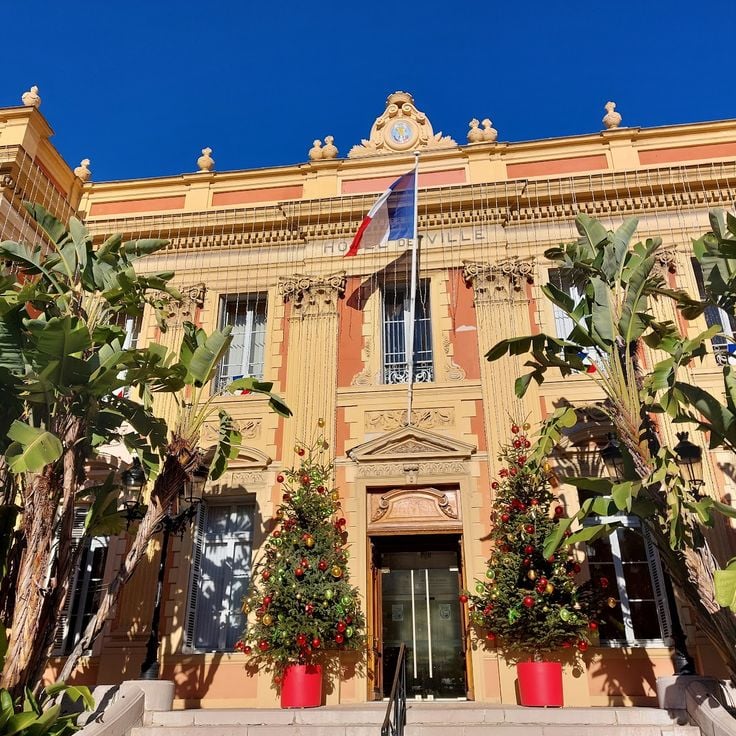
The Hôtel de Ville de Nice sits in the heart of the city, close to the Mediterranean coast. Built in the 19th century, its facade reflects the architectural style that shaped Nice during that period. It plays a central role in the daily life of the city and serves as its main administrative building.
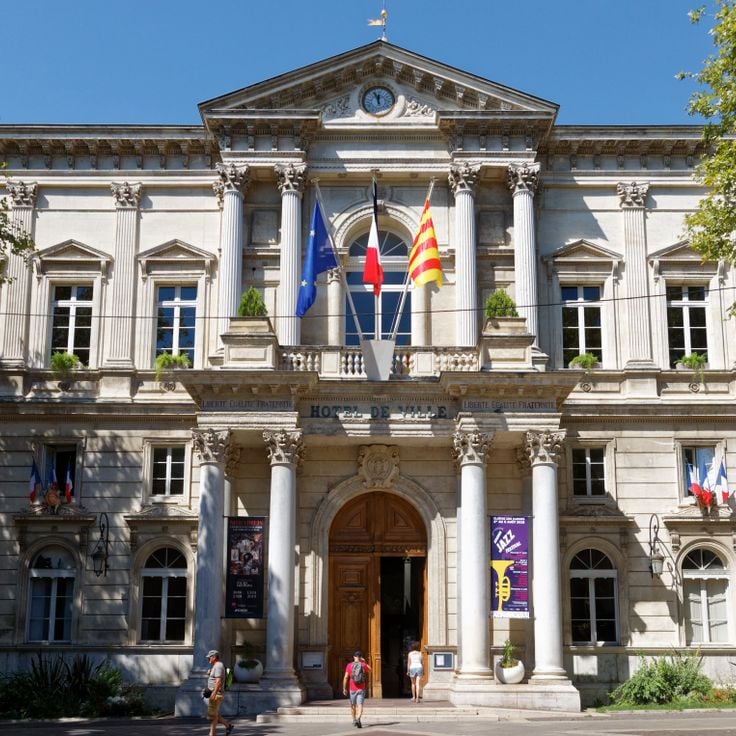
The Hôtel de Ville d'Avignon stands on the Place de l'Horloge, at the heart of the old city. Built in the 19th century, it sits next to the opera house and the clock tower that gave the square its name. Anyone walking through the historic center of Avignon will naturally pass this facade, which has long been part of daily life in the former papal city.
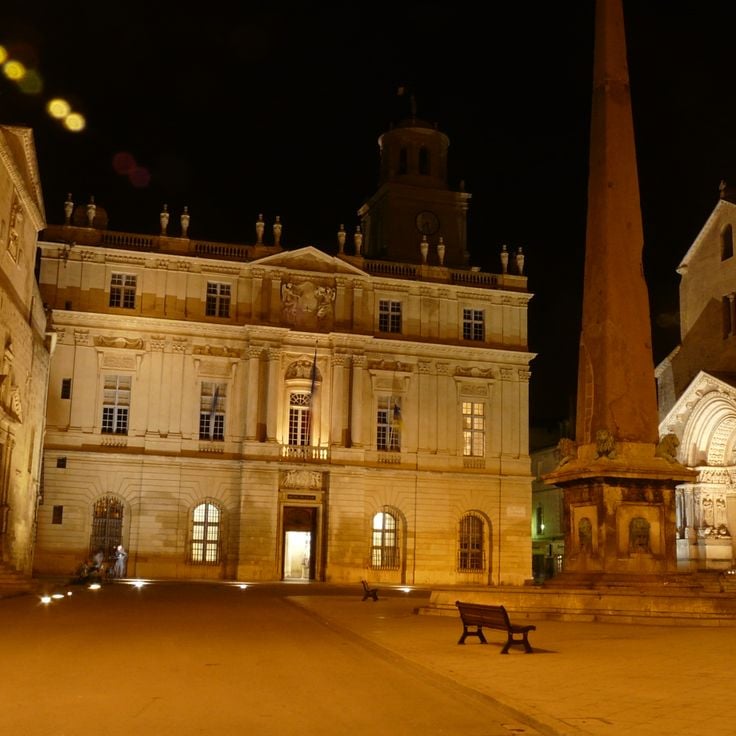
The Hôtel de Ville d'Arles stands in the heart of the old town, on a square surrounded by Roman remains. Built in the 17th century to plans by Jules Hardouin-Mansart, it features a classical stone facade and a vaulted passage that locals still walk through every day. The building sits at the center of daily life in this southern city, where ancient history and the present coexist naturally.
The Hôtel de Ville of Évian-les-Bains stands in the center of this spa town on the shore of Lake Geneva. Built in the 19th century, it reflects the prestige the town enjoyed as a favored destination for European high society. Its facade fits into a streetscape still shaped by the architecture of that era.
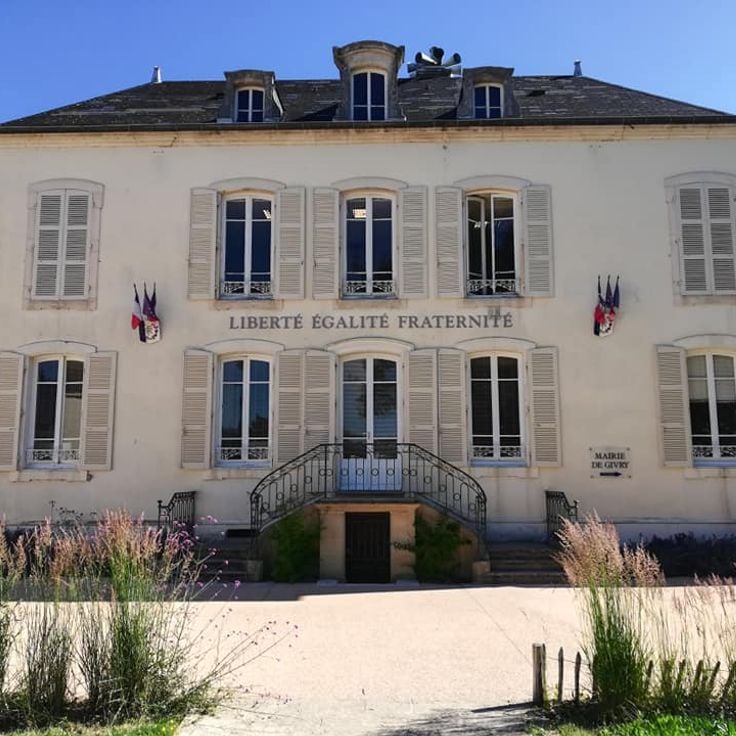
The Hôtel de Ville of Givry stands at the heart of this small Burgundian town in the Saône-et-Loire department. The building shows how towns in Burgundy have shaped their public spaces over the centuries. It is an example of regional civic architecture and a central point in the daily life of the town.
The Hôtel de Ville de Menton stands in the heart of this Côte d'Azur city, close to the Italian border. The 19th-century building has a facade that opens onto a central square where locals gather. It connects the old town to the seafront and gives the public life of Menton its setting.
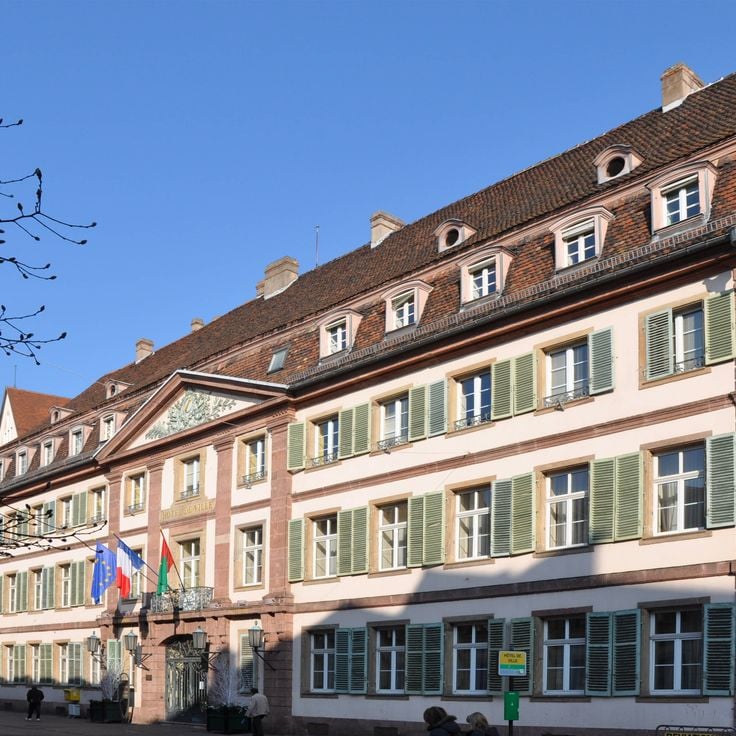
The Hôtel de Ville de Colmar stands in the heart of the city's historic center, a short walk from the half-timbered streets that define this Alsatian town. The 19th-century building has a sober, well-proportioned facade that fits naturally into the surrounding urban fabric. It is part of a tour of French town halls, from major cities to small towns with their own character.
The Hôtel de Ville de Valence stands in the heart of this city in the Drôme department, at the gateway to the Rhône valley. Built in the 19th century, it reflects the style of public architecture common in many French cities of that era. Its facade shapes the surrounding square and gives the city center much of its character.
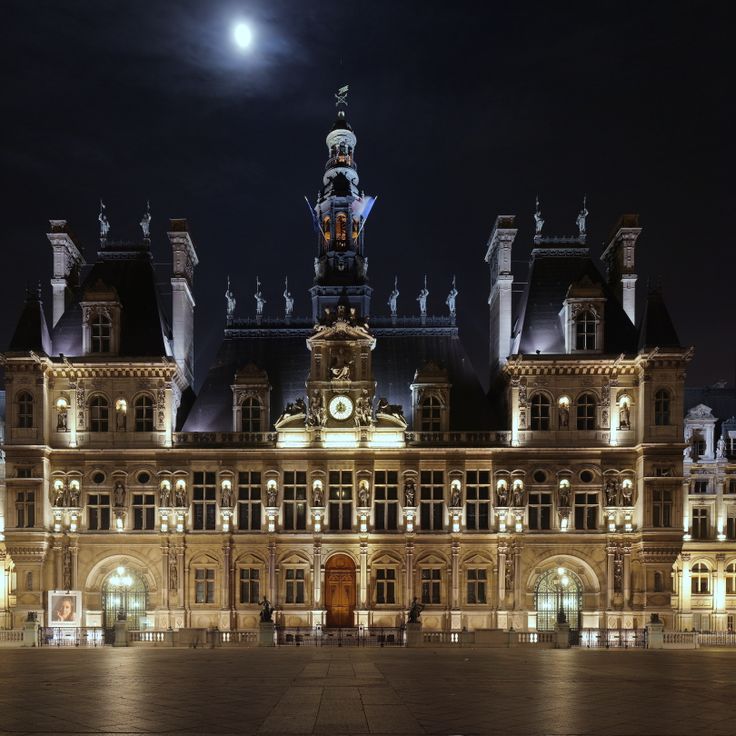
The Hôtel de Ville de Paris stands on the right bank of the Seine, close to Notre-Dame Cathedral. The current building was constructed in the 19th century in a Renaissance style, after its predecessor was destroyed. Its stone facade, decorated with towers and statues, faces a large square that regularly hosts public events. It serves as the seat of Paris's municipal administration and is one of the most recognized city halls in France.
The Capitole de Toulouse is the city hall of the Pink City, standing on one of the most central squares in the downtown area. Its long pink brick facade dates from the 18th century and sets it apart from other French city halls. Inside, large ceremonial rooms are decorated with paintings and gilded details. The Capitole has been the seat of local government in Toulouse for centuries.
The Hôtel de Ville de Lyon stands on the Place des Terreaux, one of the most well-known squares in the city. Built in the 17th century and rebuilt after a fire, it features a facade with towers and arcades that catch the eye as you pass by. It remains the seat of the city government and is part of daily life in the center of Lyon.
The Hôtel de Ville de Bordeaux, also known as the Palais Rohan, is an 18th-century building in the heart of the city. Its stone facade, with columns and carved ornaments, recalls the wealth that Bordeaux accumulated during its great maritime trade era. Walking through its inner courtyard gives a clear sense of how the city long combined everyday civic life with architecture of great ambition.
The Hôtel de Ville de Marseille stands at the edge of the Old Port, where it has carried out the city's administrative functions since the 17th century. Its pale stone facade faces the constant coming and going of boats and walkers. For the people of Marseille, it is a familiar landmark along one of the busiest quays in the south of France.
Lille City Hall was built in the 1920s in the heart of the city. Its belfry is listed as a UNESCO World Heritage Site among the belfries of Belgium and France, rising about 220 feet (67 meters) tall. The facade combines Flemish references with northern French architecture, featuring broad lines, pale stone, and a solid mass. Standing in the square in front of it, you quickly sense how much this building shapes the daily life of the city.
The Hôtel de Ville of Strasbourg stands in the heart of a city shaped by centuries of French and German history. Its facade carries the marks of this past, which gives Alsace its strong regional identity. The building is part of daily life for locals, and walking past it gives a clear sense of how much space civic architecture occupies in this city.
The Hôtel de Ville of Nantes stands at the heart of what was once the capital of Brittany. Its 19th-century facade faces a central square where locals gather on a daily basis. Walking past it, you get a clear sense of how deeply this building is tied to the history and everyday life of the city.
The Hôtel de Ville de Tours was built in the late 19th century and stands at the heart of the city. Its facade shows the Belle Époque style, with symmetrical lines, carved stone ornaments, and an architecture meant to express civic pride. For anyone walking through Tours, this building stands out as one of the most recognizable public landmarks in the Val de Loire region.
Limoges City Hall stands in the center of a city long known for its porcelain. Built in the 19th century, it displays the stone facade and formal layout typical of French civic buildings from that era. The building opens onto a public square where locals gather throughout the day. Walking through downtown Limoges, you naturally pass by it, as it has served as the center of public life since it first opened.
The Hôtel de Ville de Roubaix was built in the Belle Époque style, at a time when Roubaix was one of France's leading textile cities. Its facade reflects the architectural tastes of the late 19th century, with ornate stonework and a formal presence that expressed the city's confidence in its industrial rise. The building stands at the heart of Roubaix and remains a reference point in the urban landscape.
The Hôtel de Ville de Calais stands at the center of this port city on the Pas-de-Calais coast. Built in the late 19th century in a Flemish Gothic style, it features an ornate facade and a slender belfry visible from much of the city center. In front of the main entrance stands the sculpture group of the Burghers of Calais, a work by Auguste Rodin commemorating an episode from the Hundred Years' War. The square around it is a lively part of daily life in Calais.
Vichy's Hôtel de Ville was built around the turn of the 20th century, when the city was at the height of its fame as a spa town. The facade shows the style of that era: detailed stonework, ornamental touches, and a solid presence in the city center. The building stands in a city that once drew aristocrats and spa visitors from across Europe.
The Hôtel de Ville of Saint-Étienne stands at the heart of a city shaped by coal and steel. This 19th-century building has a classical stone facade that reflects the industrial past of the city. It sits on a central square where daily life flows naturally around it, making it one of the most recognizable landmarks in the urban landscape.
Dijon's City Hall sits at the heart of the city, built into the former palace of the Dukes of Burgundy. The building dates from the 17th century and opens onto a large cobbled courtyard lined with stone arcades. Walking through the city center, you naturally pass by this place, which has shaped daily life in Dijon for centuries. The stone facades and the wide courtyard give the square a sense of history that still feels very much alive.
The Hôtel de Ville de La Rochelle stands in the heart of this historic port city on the Atlantic coast. The building combines elements from the 16th and 17th centuries, with a facade dominated by a medieval tower. Walking along it, you sense the history of a city that was once one of the great trading centers of France.
The Hôtel de Ville de Reims stands in the center of a city long associated with the coronation of French kings. Built in the 17th century, it features a classical stone facade with columns and sculptures. It houses the city's municipal offices and faces one of the main squares in town. Anyone walking through central Reims will naturally pass in front of its long stone facade.
The Hôtel de Ville d'Arras stands at the center of the Grand-Place, the large square at the heart of the city. The building dates back to the 16th century, but it had to be rebuilt after World War I, which left it nearly completely destroyed. Its belfry towers above the square and has been a UNESCO World Heritage site since 2005, as part of a group of belfries in Belgium and France.
The Hôtel de Ville de Compiègne stands in the heart of a former royal city that played a role in French history for centuries. Its facade recalls a time when Compiègne was a favored stop for the kings of France, and the building still bears the marks of that past.
The Hôtel de Ville of Nancy stands directly on the Place Stanislas, one of the most celebrated squares in France. Built in the 18th century, it is part of a UNESCO World Heritage ensemble. Its facade, with golden ironwork and a symmetrical layout, shows the classical style that King Stanislas wanted to give the city. Anyone crossing the square naturally stops to look at this building, which shapes the space and tells the story of Nancy.
The Hôtel de Ville de Cannes stands in the heart of the city, not far from the port and the waterfront promenade. The building dates from the 19th century and follows the style common to French town halls of that era: a symmetrical facade, tall windows, and a presence designed to convey authority. In a city known mostly for its film festival, the town hall is a reminder that Cannes also has an ordinary municipal life, with public services, local decisions, and the daily routines of its residents.
The Hôtel de Ville de Nice sits in the heart of the city, close to the Mediterranean coast. Built in the 19th century, its facade reflects the architectural style that shaped Nice during that period. It plays a central role in the daily life of the city and serves as its main administrative building.
The Hôtel de Ville d'Avignon stands on the Place de l'Horloge, at the heart of the old city. Built in the 19th century, it sits next to the opera house and the clock tower that gave the square its name. Anyone walking through the historic center of Avignon will naturally pass this facade, which has long been part of daily life in the former papal city.
The Hôtel de Ville d'Arles stands in the heart of the old town, on a square surrounded by Roman remains. Built in the 17th century to plans by Jules Hardouin-Mansart, it features a classical stone facade and a vaulted passage that locals still walk through every day. The building sits at the center of daily life in this southern city, where ancient history and the present coexist naturally.
The Hôtel de Ville of Évian-les-Bains stands in the center of this spa town on the shore of Lake Geneva. Built in the 19th century, it reflects the prestige the town enjoyed as a favored destination for European high society. Its facade fits into a streetscape still shaped by the architecture of that era.
The Hôtel de Ville of Givry stands at the heart of this small Burgundian town in the Saône-et-Loire department. The building shows how towns in Burgundy have shaped their public spaces over the centuries. It is an example of regional civic architecture and a central point in the daily life of the town.
The Hôtel de Ville de Menton stands in the heart of this Côte d'Azur city, close to the Italian border. The 19th-century building has a facade that opens onto a central square where locals gather. It connects the old town to the seafront and gives the public life of Menton its setting.
The Hôtel de Ville de Colmar stands in the heart of the city's historic center, a short walk from the half-timbered streets that define this Alsatian town. The 19th-century building has a sober, well-proportioned facade that fits naturally into the surrounding urban fabric. It is part of a tour of French town halls, from major cities to small towns with their own character.
The Hôtel de Ville de Valence stands in the heart of this city in the Drôme department, at the gateway to the Rhône valley. Built in the 19th century, it reflects the style of public architecture common in many French cities of that era. Its facade shapes the surrounding square and gives the city center much of its character.
The Hôtel de Ville de Paris stands on the right bank of the Seine, close to Notre-Dame Cathedral. The current building was constructed in the 19th century in a Renaissance style, after its predecessor was destroyed. Its stone facade, decorated with towers and statues, faces a large square that regularly hosts public events. It serves as the seat of Paris's municipal administration and is one of the most recognized city halls in France.
The Capitole de Toulouse is the city hall of the Pink City, standing on one of the most central squares in the downtown area. Its long pink brick facade dates from the 18th century and sets it apart from other French city halls. Inside, large ceremonial rooms are decorated with paintings and gilded details. The Capitole has been the seat of local government in Toulouse for centuries.
The Hôtel de Ville de Lyon stands on the Place des Terreaux, one of the most well-known squares in the city. Built in the 17th century and rebuilt after a fire, it features a facade with towers and arcades that catch the eye as you pass by. It remains the seat of the city government and is part of daily life in the center of Lyon.
The Hôtel de Ville de Bordeaux, also known as the Palais Rohan, is an 18th-century building in the heart of the city. Its stone facade, with columns and carved ornaments, recalls the wealth that Bordeaux accumulated during its great maritime trade era. Walking through its inner courtyard gives a clear sense of how the city long combined everyday civic life with architecture of great ambition.
The Hôtel de Ville de Marseille stands at the edge of the Old Port, where it has carried out the city's administrative functions since the 17th century. Its pale stone facade faces the constant coming and going of boats and walkers. For the people of Marseille, it is a familiar landmark along one of the busiest quays in the south of France.
Lille City Hall was built in the 1920s in the heart of the city. Its belfry is listed as a UNESCO World Heritage Site among the belfries of Belgium and France, rising about 220 feet (67 meters) tall. The facade combines Flemish references with northern French architecture, featuring broad lines, pale stone, and a solid mass. Standing in the square in front of it, you quickly sense how much this building shapes the daily life of the city.
The Hôtel de Ville of Strasbourg stands in the heart of a city shaped by centuries of French and German history. Its facade carries the marks of this past, which gives Alsace its strong regional identity. The building is part of daily life for locals, and walking past it gives a clear sense of how much space civic architecture occupies in this city.
The Hôtel de Ville of Nantes stands at the heart of what was once the capital of Brittany. Its 19th-century facade faces a central square where locals gather on a daily basis. Walking past it, you get a clear sense of how deeply this building is tied to the history and everyday life of the city.
The Hôtel de Ville de Tours was built in the late 19th century and stands at the heart of the city. Its facade shows the Belle Époque style, with symmetrical lines, carved stone ornaments, and an architecture meant to express civic pride. For anyone walking through Tours, this building stands out as one of the most recognizable public landmarks in the Val de Loire region.
Limoges City Hall stands in the center of a city long known for its porcelain. Built in the 19th century, it displays the stone facade and formal layout typical of French civic buildings from that era. The building opens onto a public square where locals gather throughout the day. Walking through downtown Limoges, you naturally pass by it, as it has served as the center of public life since it first opened.
The Hôtel de Ville de Roubaix was built in the Belle Époque style, at a time when Roubaix was one of France's leading textile cities. Its facade reflects the architectural tastes of the late 19th century, with ornate stonework and a formal presence that expressed the city's confidence in its industrial rise. The building stands at the heart of Roubaix and remains a reference point in the urban landscape.
The Hôtel de Ville de Calais stands at the center of this port city on the Pas-de-Calais coast. Built in the late 19th century in a Flemish Gothic style, it features an ornate facade and a slender belfry visible from much of the city center. In front of the main entrance stands the sculpture group of the Burghers of Calais, a work by Auguste Rodin commemorating an episode from the Hundred Years' War. The square around it is a lively part of daily life in Calais.
Vichy's Hôtel de Ville was built around the turn of the 20th century, when the city was at the height of its fame as a spa town. The facade shows the style of that era: detailed stonework, ornamental touches, and a solid presence in the city center. The building stands in a city that once drew aristocrats and spa visitors from across Europe.
The Hôtel de Ville of Saint-Étienne stands at the heart of a city shaped by coal and steel. This 19th-century building has a classical stone facade that reflects the industrial past of the city. It sits on a central square where daily life flows naturally around it, making it one of the most recognizable landmarks in the urban landscape.
Dijon's City Hall sits at the heart of the city, built into the former palace of the Dukes of Burgundy. The building dates from the 17th century and opens onto a large cobbled courtyard lined with stone arcades. Walking through the city center, you naturally pass by this place, which has shaped daily life in Dijon for centuries. The stone facades and the wide courtyard give the square a sense of history that still feels very much alive.
The Hôtel de Ville de La Rochelle stands in the heart of this historic port city on the Atlantic coast. The building combines elements from the 16th and 17th centuries, with a facade dominated by a medieval tower. Walking along it, you sense the history of a city that was once one of the great trading centers of France.
The Hôtel de Ville de Reims stands in the center of a city long associated with the coronation of French kings. Built in the 17th century, it features a classical stone facade with columns and sculptures. It houses the city's municipal offices and faces one of the main squares in town. Anyone walking through central Reims will naturally pass in front of its long stone facade.
The Hôtel de Ville d'Arras stands at the center of the Grand-Place, the large square at the heart of the city. The building dates back to the 16th century, but it had to be rebuilt after World War I, which left it nearly completely destroyed. Its belfry towers above the square and has been a UNESCO World Heritage site since 2005, as part of a group of belfries in Belgium and France.
The Hôtel de Ville de Compiègne stands in the heart of a former royal city that played a role in French history for centuries. Its facade recalls a time when Compiègne was a favored stop for the kings of France, and the building still bears the marks of that past.
The Hôtel de Ville of Nancy stands directly on the Place Stanislas, one of the most celebrated squares in France. Built in the 18th century, it is part of a UNESCO World Heritage ensemble. Its facade, with golden ironwork and a symmetrical layout, shows the classical style that King Stanislas wanted to give the city. Anyone crossing the square naturally stops to look at this building, which shapes the space and tells the story of Nancy.
The Hôtel de Ville de Cannes stands in the heart of the city, not far from the port and the waterfront promenade. The building dates from the 19th century and follows the style common to French town halls of that era: a symmetrical facade, tall windows, and a presence designed to convey authority. In a city known mostly for its film festival, the town hall is a reminder that Cannes also has an ordinary municipal life, with public services, local decisions, and the daily routines of its residents.
The Hôtel de Ville de Nice sits in the heart of the city, close to the Mediterranean coast. Built in the 19th century, its facade reflects the architectural style that shaped Nice during that period. It plays a central role in the daily life of the city and serves as its main administrative building.
The Hôtel de Ville d'Avignon stands on the Place de l'Horloge, at the heart of the old city. Built in the 19th century, it sits next to the opera house and the clock tower that gave the square its name. Anyone walking through the historic center of Avignon will naturally pass this facade, which has long been part of daily life in the former papal city.
The Hôtel de Ville d'Arles stands in the heart of the old town, on a square surrounded by Roman remains. Built in the 17th century to plans by Jules Hardouin-Mansart, it features a classical stone facade and a vaulted passage that locals still walk through every day. The building sits at the center of daily life in this southern city, where ancient history and the present coexist naturally.
The Hôtel de Ville of Évian-les-Bains stands in the center of this spa town on the shore of Lake Geneva. Built in the 19th century, it reflects the prestige the town enjoyed as a favored destination for European high society. Its facade fits into a streetscape still shaped by the architecture of that era.
The Hôtel de Ville of Givry stands at the heart of this small Burgundian town in the Saône-et-Loire department. The building shows how towns in Burgundy have shaped their public spaces over the centuries. It is an example of regional civic architecture and a central point in the daily life of the town.
The Hôtel de Ville de Menton stands in the heart of this Côte d'Azur city, close to the Italian border. The 19th-century building has a facade that opens onto a central square where locals gather. It connects the old town to the seafront and gives the public life of Menton its setting.
The Hôtel de Ville de Colmar stands in the heart of the city's historic center, a short walk from the half-timbered streets that define this Alsatian town. The 19th-century building has a sober, well-proportioned facade that fits naturally into the surrounding urban fabric. It is part of a tour of French town halls, from major cities to small towns with their own character.
The Hôtel de Ville de Valence stands in the heart of this city in the Drôme department, at the gateway to the Rhône valley. Built in the 19th century, it reflects the style of public architecture common in many French cities of that era. Its facade shapes the surrounding square and gives the city center much of its character.
The Hôtel de Ville de Paris stands on the right bank of the Seine, close to Notre-Dame Cathedral. The current building was constructed in the 19th century in a Renaissance style, after its predecessor was destroyed. Its stone facade, decorated with towers and statues, faces a large square that regularly hosts public events. It serves as the seat of Paris's municipal administration and is one of the most recognized city halls in France.
Beyond their facades, these town halls work like open-air museums of architecture. Take time to look at the details of the decorations, sculptures, and materials, which change from region to region. A helpful tip: visit them late in the afternoon when the light highlights their facades, and check the days they are open inside.