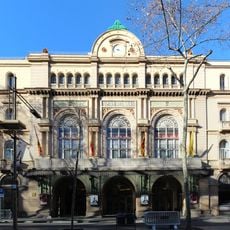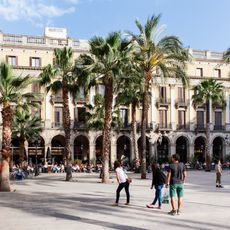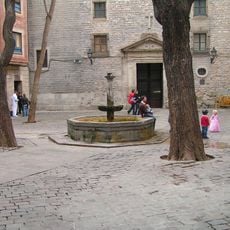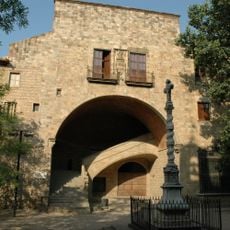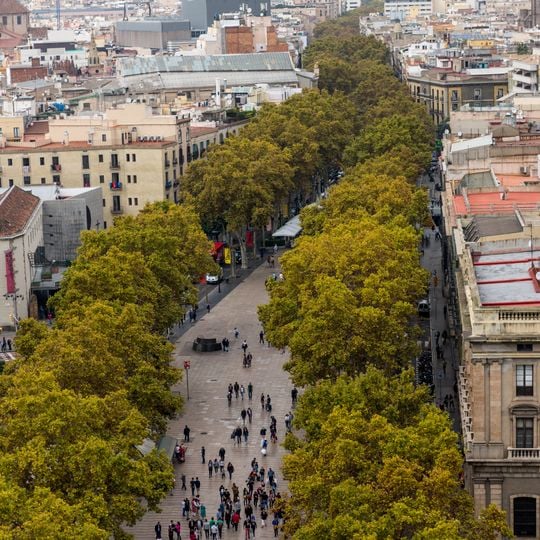
La Rambla, Pedestrian street in Barcelona, Spain
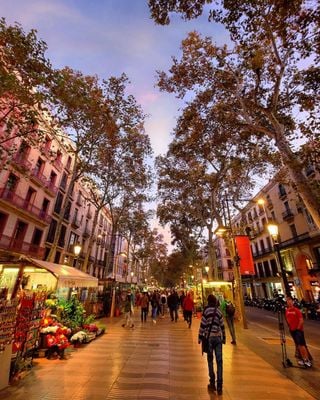
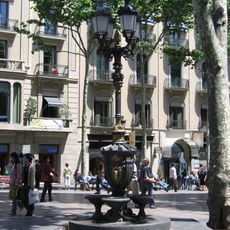
La Rambla is a central pedestrian promenade in Barcelona, running from Plaça de Catalunya down to the old port and separating the Gothic Quarter from El Raval. It is made up of five consecutive sections, each with its own name, lined by plane trees, historic buildings, and open public spaces.
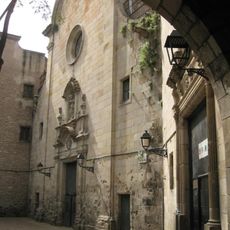
The course of La Rambla was originally a sewage-filled stream that drained rainwater from the Collserola hills. In 1377 work began on extending the city walls to include it and El Raval; in 1440 the stream was diverted outside the new walls and the way gradually became a street. Religious houses followed, including the Jesuit Bethlehem monastery and college in 1553.
The name rambla comes from the Arabic ramla, meaning a sandy bed. The mid-19th-century flower trade gave the Rambla de Sant Josep its second name, de les Flors, and Somerset Maugham called the promenade the most beautiful in the world. The caged-bird and small-pet stalls of the Rambla dels Estudis closed on 15 November 2013, when the last owner, Sr. Cuenca, shut his kiosk.
Three stops on Line 3 of the metro serve different parts of the street: Catalunya at the north end, Liceu in the middle, and Drassanes near the port. Mornings tend to be calmer than afternoons, particularly on weekends when foot traffic is heaviest.
The name comes from the Arabic ramla, meaning a sandy bed, because the street follows the course of the riera d'en Malla, a stream that ran dry most of the year but carried heavy rainwater down from the Collserola hills. In 1440 it was diverted outside the new walls, and the bed gradually became a street. The first trees, 280 of them, were planted in 1703.
The community of curious travelers
AroundUs brings together thousands of curated places, local tips, and hidden gems, enriched daily by 93,856 contributors worldwide.