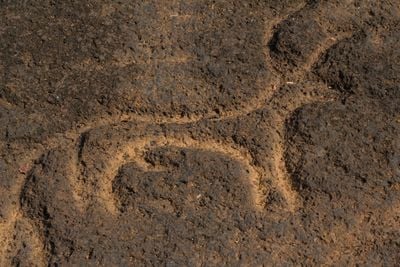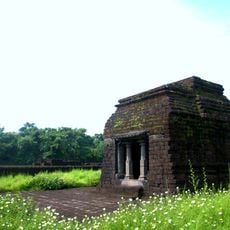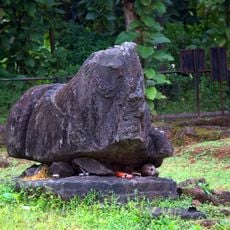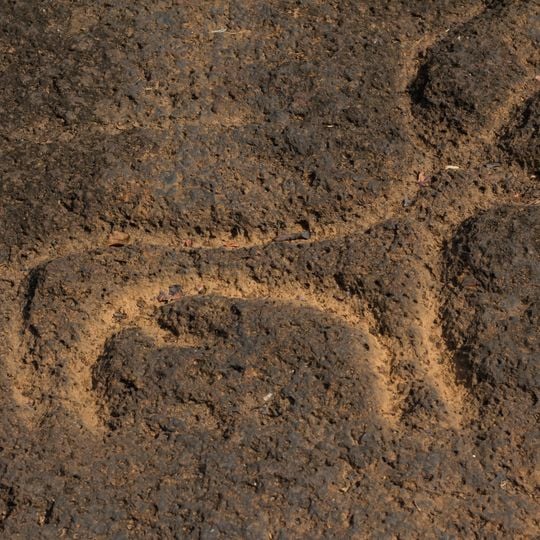
Usgalimal rock engravings, Archaeological site near Kushavati River, South Goa District, India.
Usgalimal is an archaeological site in South Goa, where ancient carvings cover flat laterite rock surfaces along the Kushavati River. The engravings show animals, human figures, and geometric shapes spread across a wide area of open rock.
These petroglyphs were made during the Neolithic period, roughly 6,000 years ago. They came to light in 1993 after monsoon floods washed away the layer of mud that had covered them for thousands of years.
The carvings show bulls, deer, and human figures that reveal how prehistoric communities saw and represented their world. These subjects repeat across the stone surfaces, offering insight into the daily life and imagination of these early people.
The site is looked after by the Archaeological Survey of India and is reached by a path from the Rivona-Neturlim road. Sturdy footwear is a good idea since the ground is uneven and can become slippery during the rainy season.
Among the animal and human figures, there is a labyrinth pattern cut into the rock whose meaning researchers have not been able to explain. This kind of motif is very rare in prehistoric rock art found across the Indian subcontinent.
The community of curious travelers
AroundUs brings together thousands of curated places, local tips, and hidden gems, enriched daily by 92,215 contributors worldwide.