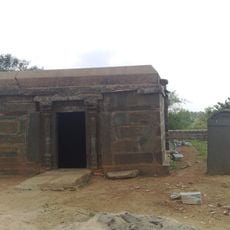
Shanti Sagara, Built lake in Channagiri taluk, Davanagere District, India
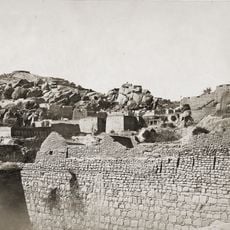
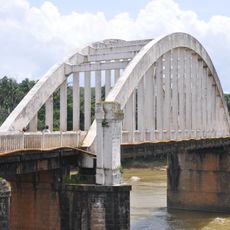
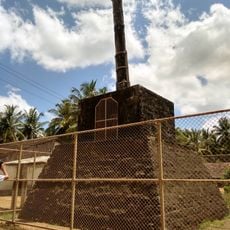
Shanti Sagara, also called Sulekere, is a reservoir formed by an earth embankment about 290 m long and up to 37 m wide, built between two hills in Kerebilachi, Channagiri taluka. Its water spread covers 6,550 acres (2,651 ha) and its circumference is 30 km. The Channagiri–Davanagere main road runs across the embankment, which has two sluices, Sidda to the north and Basava to the south.
The tank was built in 1128 and took three years to complete. Tradition credits Princess Shantava, daughter of King Vikrama Raya of Svargavathi, with building it as an expiatory act; the reservoir submerged her father's town, and a stone dated Shaka 1311 lies in the tank. In 1856 Sir Richard Hieram Sankey, Chief Engineer of Mysore, noted the site was unsuited to a tank yet the embankment held.
The name Sulekere comes from "sule" (courtesan) and "kere" (tank), recalling the curse that turned Princess Shantava into a prostitute. It was later renamed Shanti Sagara after her, with "sagara" meaning ocean because the tank is among Asia's largest. A stone dated Shaka 1311 lies in the tank.
The Channagiri–Davanagere main road runs across the 290-metre embankment between two hills, so the tank is seen from the road rather than from a formal entrance. The two sluices, Sidda to the north and Basava to the south, are the main built features to look for. During drought, water can be topped up from the Bhadra Dam right bank canal.
On 22 September 1952 an adult eel (Anguilla bengalensis) measuring 44 inches was caught in a dragnet in the Sulekere reservoir. After the Tungabhadra Dam was built, eel migration from the sea to the upper Tungabhadra was blocked on 17 April 1955.
The community of curious travelers
AroundUs brings together thousands of curated places, local tips, and hidden gems, enriched daily by 93,572 contributors worldwide.