Fahai Temple, Buddhist temple in Shijingshan District, Beijing, China
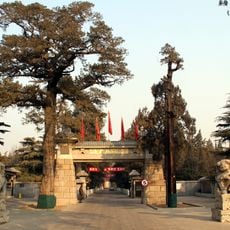
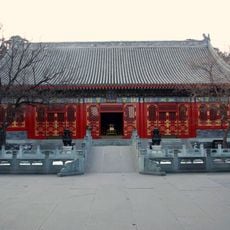
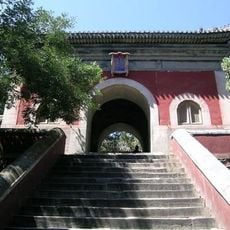
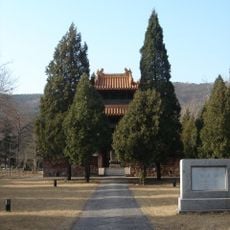
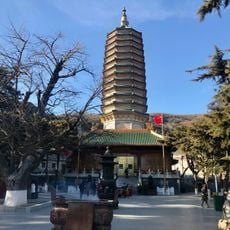
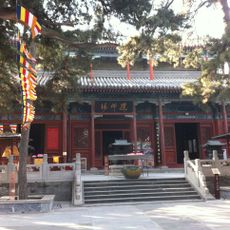
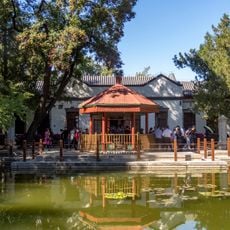
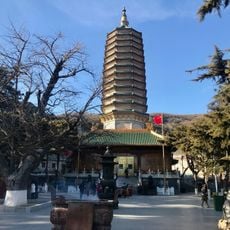
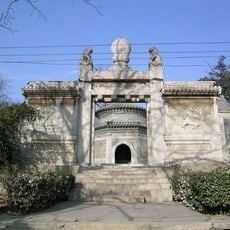
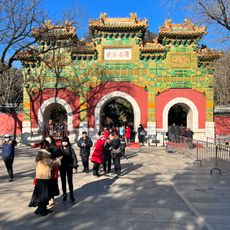
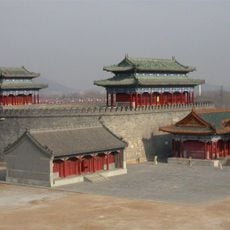
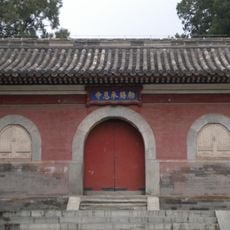
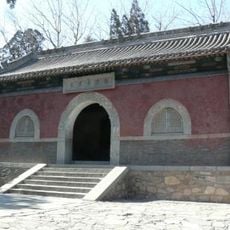
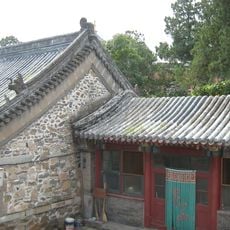
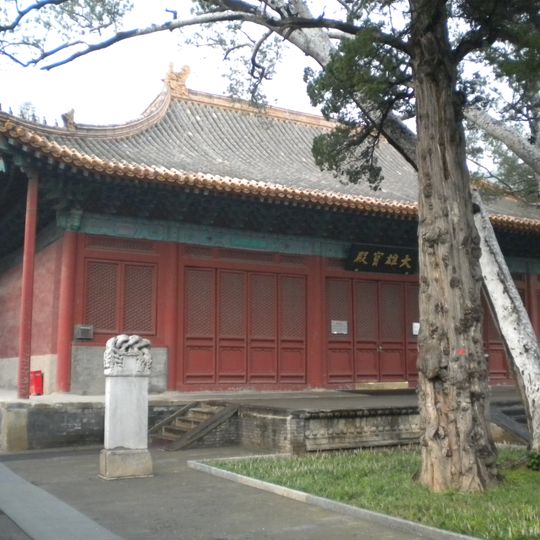
Fahai Temple is a Buddhist temple from the Ming Dynasty, built on the lower slope of Cuiwei Mountain in the western part of Beijing. The site is made up of a main hall and several smaller side buildings arranged along a central axis, following the layout typical of classical Chinese temple architecture.
The temple was built between 1439 and 1443 at the initiative of Li Tong, a court eunuch during the Ming Dynasty. It is one of the few surviving temple complexes from that era that still holds its original interior wall paintings largely intact.
The wall paintings inside the main hall show Buddhist figures gathered in ceremonial scenes that visitors can walk up to and study closely. The colors have kept their depth over the centuries, giving the paintings a presence that photographs rarely capture.
The temple sits on a hillside, so visitors should expect a short uphill walk to reach the main entrance and comfortable footwear is advisable. The paths can become slippery after rain and the site is more enjoyable on dry days, especially in autumn when the surrounding trees change color.
Unlike most Buddhist temples of its era, Fahai Temple still displays its original 15th-century wall paintings without major restoration work, which means visitors are looking at largely unaltered surfaces. One of the murals includes a six-tusked white elephant, an animal tied to Buddhist cosmology that almost never appears in Chinese temple paintings of that period.
The community of curious travelers
AroundUs brings together thousands of curated places, local tips, and hidden gems, enriched daily by 90,802 contributors worldwide.