Shuangqing Villa, Historical villa in Xiangshan Subdistrict, China
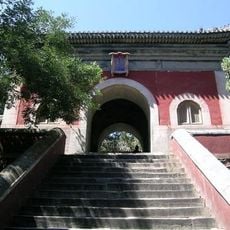
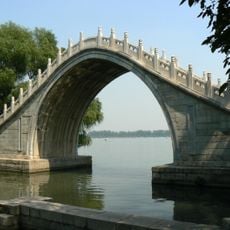
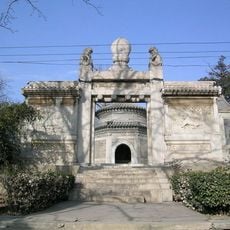
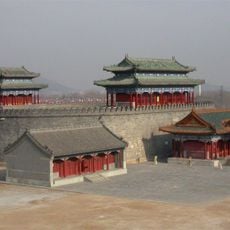
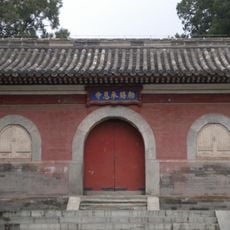
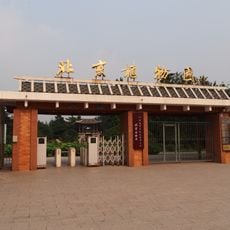
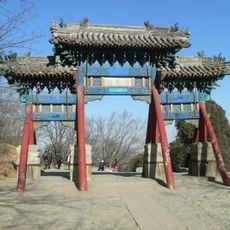
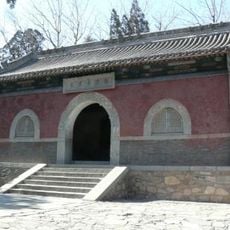
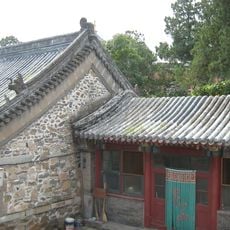
Shuangqing Villa is a walled estate on two terraces within Xiangshan Park, built around 1918 by Xiong Xiling on the site of the Qing dynasty Songwu Yunzhuang. Its gate is a Western-style stone structure with a triangular pediment and carved flowers, while the central pond has a curved south bank and a straight north side. A hexagonal red pavilion stands on a platform over the pond, and the main hall is a grey-brick building with a simplified hard-mountain roof.
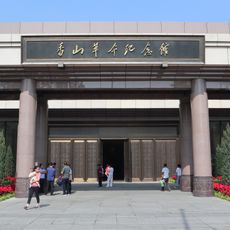
In 1949, the villa served as a base for key political and military planning at a turning point in Chinese history. Leaders stayed here for several months while major decisions about the country's direction were being made.
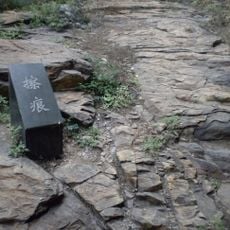
The name comes from the two springs that Qianlong had inscribed as "Shuangqing" on the rock wall in the southwest corner; they still feed the release pond. The pond's platform holds the Menggan Pavilion, a hexagonal red pavilion named after a Jin-dynasty dream of spring water. In 1949 Xu Xiaobing photographed Mao there reading the Nanjing liberation extra.
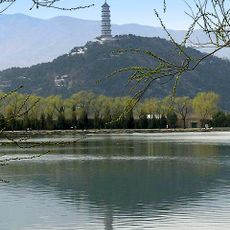
The estate is in the Xiangshan area on the western outskirts of Beijing, reachable by bus from the city center. The grounds cover a fair amount of space, so it helps to allow a good half-day to see both the outdoor areas and the indoor exhibition rooms.
The air-raid shelter cut into the southern cliff was finished on 15 March 1949, ten days before Mao moved in; its east entrance still bears the inscription naming the Fourth Field Army engineer unit that built it. Soldiers had painted slogans above the entrances, which Mao had removed.
The community of curious travelers
AroundUs brings together thousands of curated places, local tips, and hidden gems, enriched daily by 93,086 contributors worldwide.