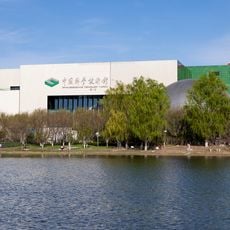
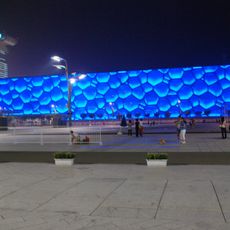
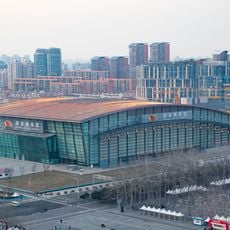
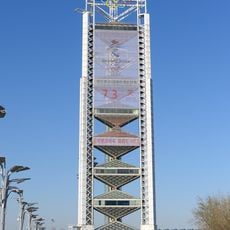
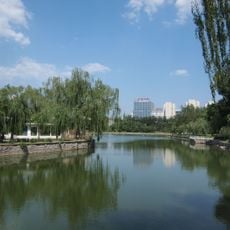
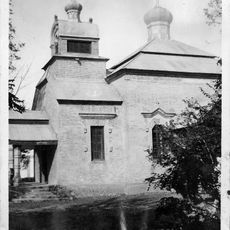
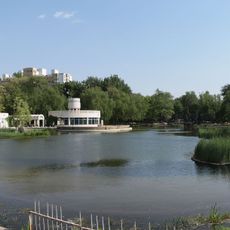
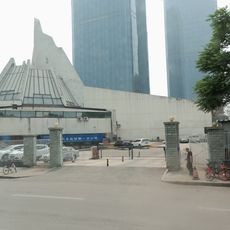
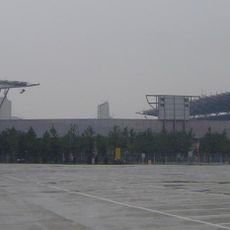
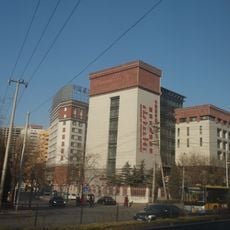
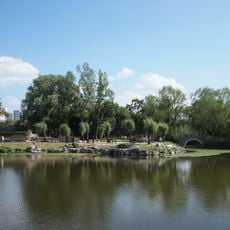
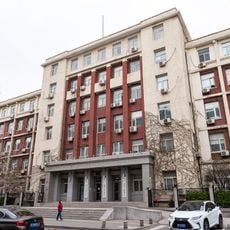
China Ethnic Museum, National museum of ethnicities in Yayuncun Subdistrict, Beijing, China.
The China Ethnic Museum is a national museum in Yayuncun that displays everyday items, traditional clothing, and artistic works from all 56 recognized ethnic groups of China. The collections are organized into different exhibition areas, each devoted to a specific ethnic group.
Construction of the China Ethnic Museum began in October 1992, initiated by the overseas Chinese community leader Lei Xuejin, whose ancestral home was Nan'an in Fujian and who was of She ethnicity. The North Section opened on 18 June 1994 and the South Section in September 2001. In August 2001 the Beijing Cultural Relics Bureau approved its renaming as the Beijing Museum of the Chinese Nation, a large anthropology museum.
The park's name is rendered both as Zhonghua Minzu Yuan (park) and Zhonghua Minzu Bowuguan (museum). Its 56 village compounds each house a branch museum presenting one ethnic group's history and folkways, and the main hall holds themed rooms such as an ancestral hall, a textile workshop and a Qing-dynasty bed display. Performances and seasonal festivals are staged in the villages.
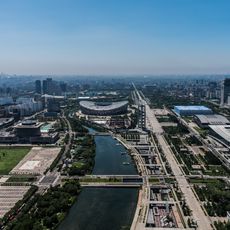
The grounds stretch 50 hectares between Beisihuan Zhonglu to the north and Beitucheng Xilu to the south, with Minzuyuan Road dividing the North Section (opened 1994) from the South Section (opened 2001). Enter from Minzuyuan Road, just west of the Olympic Green. The two halves are far apart, so plan which section to cover first.
The 56 ethnic villages are built at 1:1 scale, and each group's compound holds its own small museum. Tibetan lamas from Tar Monastery in Qinghai chant sutras there daily, and some groups cultivate traditional crops such as paddy rice and buckwheat on site. In 1998 the museum received the World Congress of Architects' award for preserving ethnic architecture.
The community of curious travelers
AroundUs brings together thousands of curated places, local tips, and hidden gems, enriched daily by 94,435 contributors worldwide.