Beijing National Stadium

Log in to your account

AroundUs is a community-driven map of interesting places, built by curious explorers like you. It grows with every review, story, and photo you share.
Connect to save your favorite spots, contribute locations, and create personalized routes.
By continuing, you accept our Terms and Conditions and our Privacy Policy

Beijing National Stadium

Add to collection
Map
Suggest a change
Share

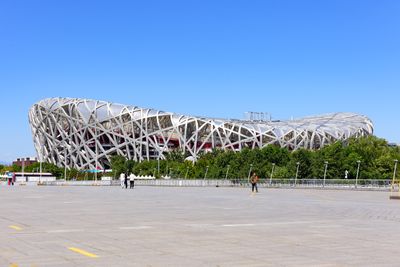
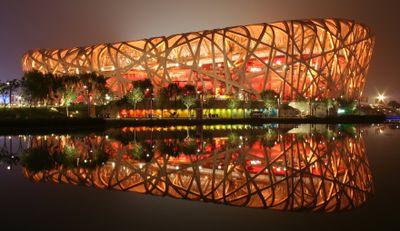
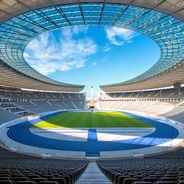
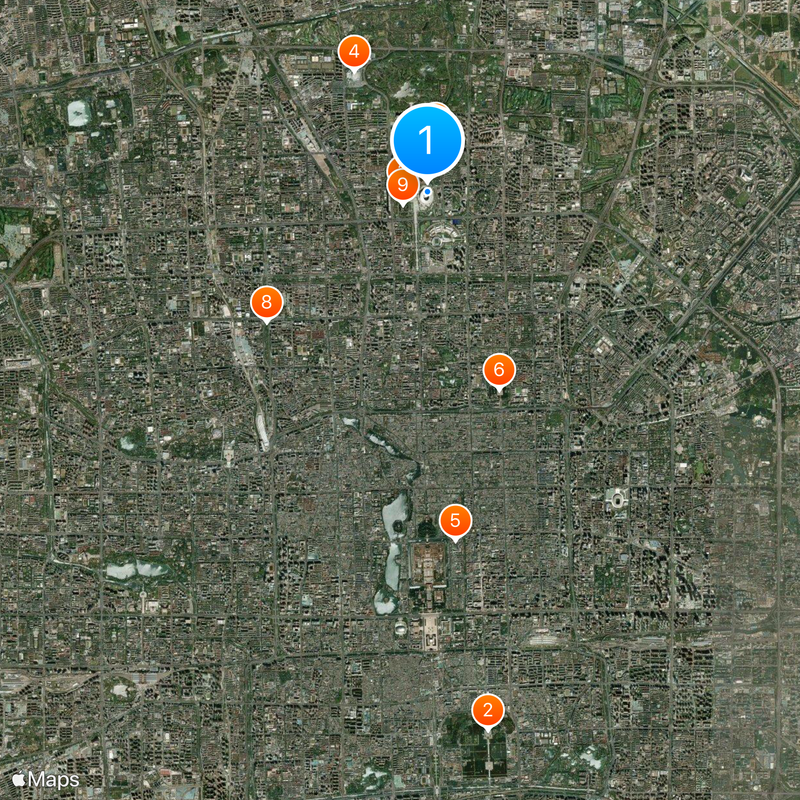
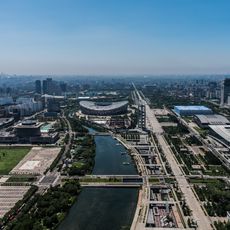
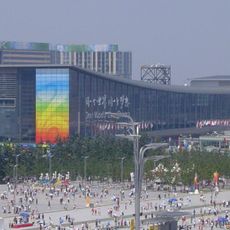
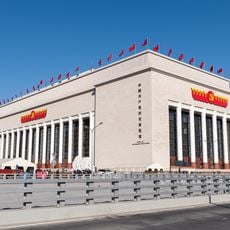
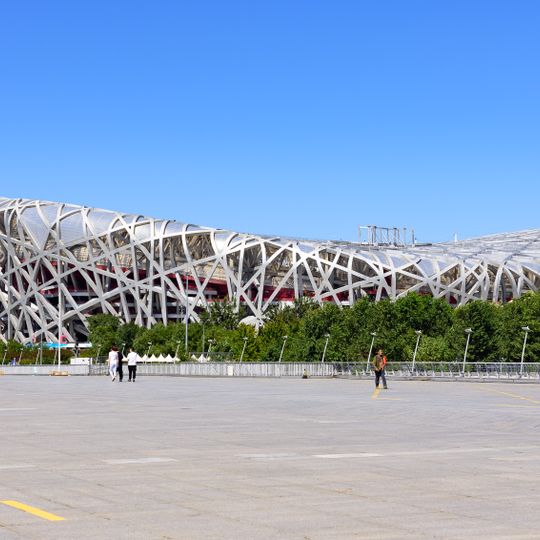
Beijing National Stadium, Olympic stadium in Chaoyang District, Beijing, China

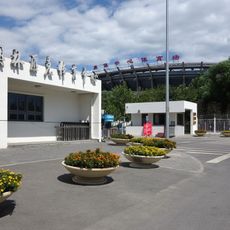
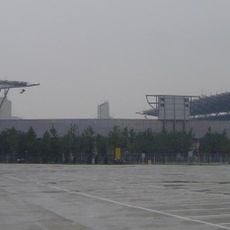
The Beijing National Stadium features an intricate steel structure with intersecting beams forming a curved exterior resembling natural patterns of woven branches.

Completed in 2008, the stadium hosted both the Summer Olympics opening ceremonies in 2008 and the Winter Olympics ceremonies in 2022.

The stadium design emerged from collaboration between Swiss architects Herzog & de Meuron and Chinese artist Ai Weiwei, integrating Chinese ceramic patterns.

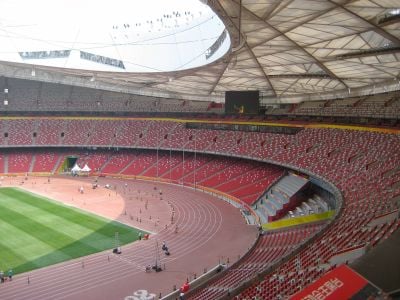
The stadium contains 80,000 seats with excellent sightlines, multiple entrances, restaurants, shops, and dedicated spaces for media coverage during events.

The structure incorporates 121,000 tons of steel arranged in a pattern that permits natural ventilation through spaces between the exterior beams.

Location: Aoyuncun Subdistrict

Architects: Herzog & de Meuron, Ai Weiwei

Official opening: March 2008

Architectural style: high-tech architecture

Capacity: 80000

Website: http://n-s.cn/en

GPS coordinates: 39.99154,116.39048

Latest update: May 27, 2025 20:12

Modern 21st-century architecture: skyscrapers, museums, and landmark buildings

20th and 21st-century architecture has transformed city centers with structures that push engineering boundaries. Observation towers like the Seattle Space Needle and experimental residential complexes like Habitat 67 in Montreal demonstrate the evolution of construction techniques. Architects have explored new forms using materials such as steel, glass, and concrete, creating structures that meet the growing demands of metropolitan areas. This collection includes buildings that marked their time with innovative design. In Barcelona, Antoni Gaudí's Casa Milà features a wavy facade that breaks traditional norms, while in London, 30 St Mary Axe incorporates energy-saving technologies into its 180-meter structure. From Bilbao's Guggenheim Museum clad in titanium to artificial islands shaped in the Persian Gulf in Dubai, these projects illustrate the diversity of architectural approaches worldwide. Each building reflects its urban context while offering solutions to technical and functional challenges of its era.

Architecture in China: modern skyscrapers, historic fortresses, temples

Chinese architecture spans modern skyscrapers, historic fortifications, and technical structures. From the glass bridge in Longtan Valley to the Canton Tower, these buildings combine tradition and modern technology. Temples, fortresses, and museums tell the country's history, while newer structures like the Tianjin Binhai Library and the Beijing National Stadium represent contemporary development. The collection includes examples from different regions across China. In Beijing stand the Phoenix Center, the National Stadium, and the Pangu Plaza. Shanghai houses the Oriental Pearl Tower and Nanjing Road. In Jiangsu Province, the Danyang-Kunshan Bridge extends for 102 miles (164 kilometers). The Canton Tower in Guangzhou reaches a height of 1,970 feet (600 meters). Historic sites complement the modern structures. The Xi'an City Wall in Shaanxi dates from the Ming Dynasty. The Ancient Town of Pingyao in Shanxi preserves traditional architecture from several centuries. The Leshan Giant Buddha in Sichuan was carved into a cliff face during the 8th century. The Wenchuan Earthquake Museum documents the 2008 natural disaster.

Jacques Herzog buildings: modern architecture, museums, stadiums

Jacques Herzog co-founded Herzog & de Meuron with Pierre de Meuron, an architecture firm that has completed projects across multiple continents. The portfolio includes museums, stadiums, residential buildings and cultural centers in Europe, Asia and the Americas. Each project responds to its specific urban context with tailored architectural solutions. Completed works include the conversion of the Tate Modern in London, the National Stadium in Beijing for the 2008 Olympics, the Elbphilharmonie concert hall in Hamburg, and the Pérez Art Museum in Miami. The buildings feature experimental facade treatments and innovative use of materials. Herzog & de Meuron received the Pritzker Prize in 2001.

Photo locations in Beijing: social media spots, Instagram places

Beijing offers photographers a mix of imperial palaces, Buddhist temples, traditional hutongs, and contemporary architecture. The city combines the Great Wall at Mutianyu and the Forbidden City with modern structures like the CCTV Headquarters and Bird's Nest stadium. Historic sites such as the Temple of Heaven and Summer Palace stand alongside the 798 Art Zone and Sanlitun's bars. From the Bell and Drum Towers to the National Centre for the Performing Arts, this collection includes locations across multiple districts. Nanluoguxiang Hutong and Yandaixiejie Hutong showcase traditional alleyways, while Beihai Park and Jingshan Park provide elevated viewpoints. Temples like Yonghe and Fayuan, plus the ruins of the Old Summer Palace, add to the city's architectural variety for social media content.

Largest stadiums in the world: capacity, architecture, sports

This collection gathers the largest stadiums on the planet, ranked by seating capacity. From the Narendra Modi Stadium in Motera, India, which hosts major cricket matches, to the vast American university arenas dedicated to football, and the May Day Stadium in Pyongyang, North Korea, these sports facilities demonstrate the scale that infrastructures for competitions and mass gatherings can reach. Each stadium has its own identity: some are exclusively dedicated to a specific sport, while others serve as flexible venues capable of hosting various events. Their sizes enable them to accommodate between 100,000 and over 150,000 spectators, providing organizers the opportunity to gather large crowds for international competitions, national finals, or major ceremonies.

Reviews

Visited this place? Tap the stars to rate it and share your experience / photos with the community! Try now! You can cancel it anytime.

« Beijing National Stadium - Olympic stadium in Chaoyang District, Beijing, China » is provided by Around Us (aroundus.com). Images and texts are derived from Wikimedia project under a Creative Commons license. You are allowed to copy, distribute, and modify copies of this page, under the conditions set by the license, as long as this note is clearly visible.

Discover hidden gems everywhere you go!

From secret cafés to breathtaking viewpoints, skip the crowded tourist spots and find places that match your style. Our app makes it easy with voice search, smart filtering, route optimization, and insider tips from travelers worldwide. Download now for the complete mobile experience.

Around Us App Screenshot

A unique approach to discovering new places

Le Figaro

All the places worth exploring

France Info

A tailor-made excursion in just a few clicks

20 Minutes