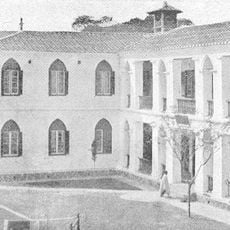
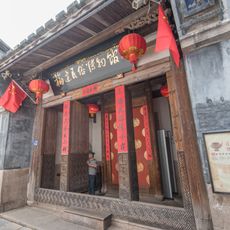
Fuzhou Mosque, Provincial heritage mosque in Gulou District, Fuzhou, China.
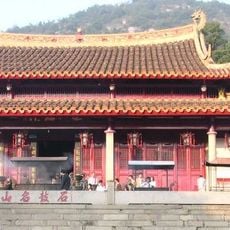
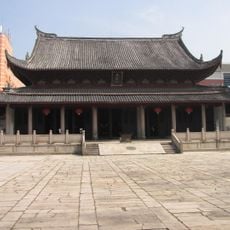
Fuzhou Mosque is a historical religious building in Gulou that merges Islamic and Chinese architectural styles. The structure displays prayer halls, traditional decorative elements, and construction methods that reflect both cultural influences.
Founded in 628 CE, in the second year of the Zhenguan era of the Tang dynasty, the mosque was rebuilt after a fire in 1541 under the leadership of Wen Ming, a descendant of the Guli envoy Ge Buman, and completed in 1549. Renovations had already been completed in 1407, and further repairs were funded in 1921 by Tang Keshan, superintendent of Xiamen customs. The mosque was listed as a Fuzhou municipal cultural relic in 1983.
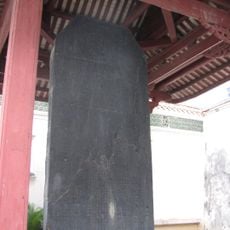
The mosque's name changed over time: the Ming dynasty called it Zhenjiao Temple (真教寺). Its worshippers come mainly from Hui, Uyghur and Uzbek communities, and the Fuzhou Islamic Association is based here. Seven steles from the Ming to the Republican era stand in the courtyard, including a 1407 imperial edict protecting Islam and the 1549 stele recording the rebuilding.
The mosque is accessible and located near transit points, though standard etiquette applies when visiting sacred spaces. Plan your visit accordingly and respect active prayer times and dress codes expected at this religious site.
The stone balustrade outside the prayer hall, with six pillars and four carved panels of flowers and birds, survives from the Song-dynasty Wanshou Yuan, a Buddhist temple that once stood on this site. The mosque also keeps seven steles, from a Ming Yongle imperial edict of 115 by 65 cm to a 1922 repair record.
The community of curious travelers
AroundUs brings together thousands of curated places, local tips, and hidden gems, enriched daily by 93,230 contributors worldwide.