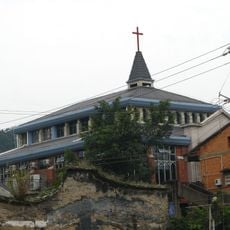
Yongquan Temple, Buddhist temple on Gushan Mountain in Jin'an District, China
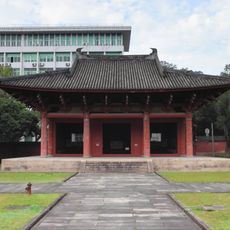
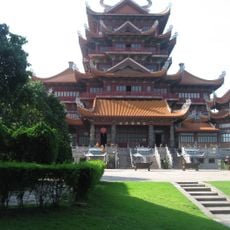
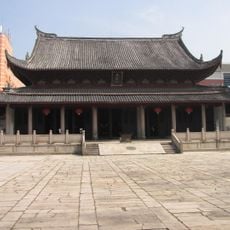
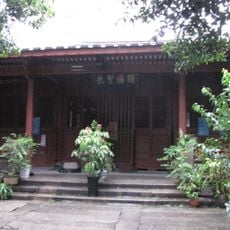
Yongquan Temple is a Buddhist sanctuary on Gushan Mountain featuring more than 25 halls and rooms arranged in traditional Chinese architectural style. The structures display elaborate wooden frameworks and carved details that reflect building practices from different periods.
Founded in 783 as Huayan Temple, it was destroyed during Emperor Wuzong's anti-Buddhist persecution. In 908 Wang Shenzhi had monk Shenyan rebuild it, and a spring flowing through the Four Heavenly Kings Hall gave it the name Yongquan Chan Temple. Fires struck in 1408 and 1542; the Mahavira Hall was restored in 1619 by Cao Xuequan and Daodong Zhidi. Kangxi bestowed a plaque in 1699.
The name Yongquan, "Gushing Spring", refers to a spring that flowed through the Hall of the Four Heavenly Kings. The temple is the head of the Caodong-school Gushan lineage, and Taiwan's four major Buddhist lineages — Yuehmei Shan, Guanyin Shan, Fayun Temple and Dagang Shan — trace their dharma transmission to it. Its printing house preserves more than 20,000 Ming, Qing and modern woodblocks.
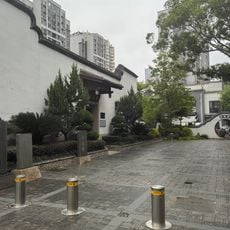
The temple sits on the slopes of Gushan Mountain and is reachable via various pathways, with some areas requiring some climbing. Guided tours are available to help visitors explore the religious and architectural elements, and comfortable shoes are recommended due to the hilly terrain.
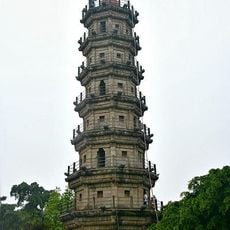
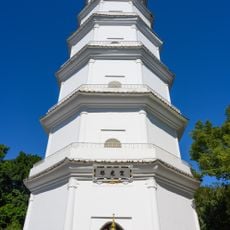
The pair of Thousand Buddha pottery pagodas in front of the temple date to 1082. Each octagonal, nine-storey pagoda stands 6.83 metres tall and is carved with over 1,078 niches holding small Buddha statues, above a base decorated with flying phoenixes, lotuses and Hercules figures.
The community of curious travelers
AroundUs brings together thousands of curated places, local tips, and hidden gems, enriched daily by 94,269 contributors worldwide.