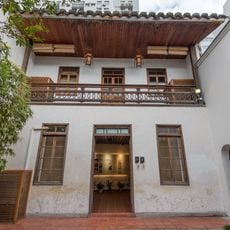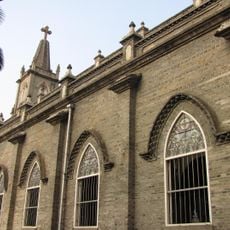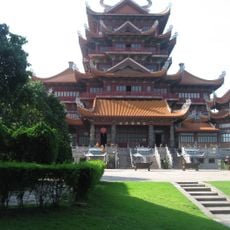
Ŭ-ták, National cultural heritage site in Fuzhou, China.
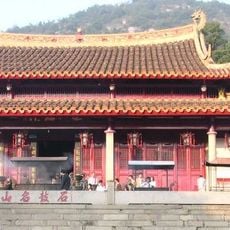
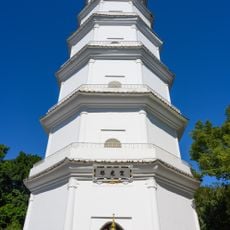
Ŭ-ták is a stone tower standing in Fuzhou's old district, protected as a major national cultural site for its historical importance. The structure displays traditional Chinese building methods with carefully fitted stones and multiple tiers.
Wang Yanxi, emperor of the Min state, began the tower in 941 on the site of the Tang-era Wugou Jingguang Pagoda, planning an octagonal structure of nine storeys. After his assassination in 944 work stopped at seven storeys. It was repaired in 1621, when eight Vajra figures were set into the base corners, and again in 1696, when the finial was recast; in 1958 steel hoops and cement were added to check its lean.
Each of the seven storeys holds one Buddha, from Jinfunwang on the ground floor up to Shakyamuni on the seventh; the black shale reliefs differ in posture, hand gesture and attribute. Beside each figure, carvings give the Buddha's name and the names of the donors who paid for it, so the tower records its own lay supporters.
Wear comfortable shoes as visiting requires walking around the structure and exploring its surroundings. Daytime visits work best for seeing the stonework clearly and taking in the details of the tower.
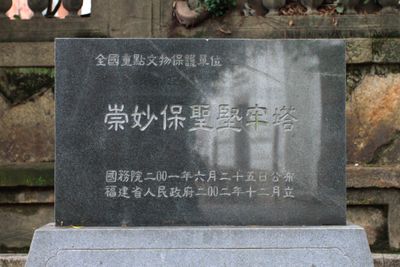
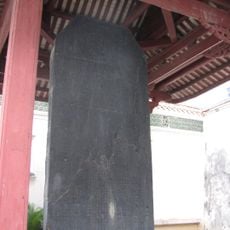
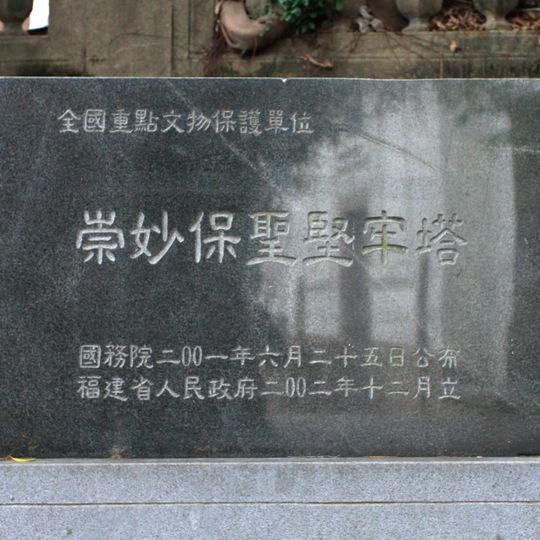
The tower's name is carved on two stele set into its own walls: a 1.73 m black shale plaque on the fourth level's east face and a 1.37 m inscription on the fifth level's south face. Beside the tower stands a 4 m stele of 799, the oldest surviving inscription in Fujian.
The community of curious travelers
AroundUs brings together thousands of curated places, local tips, and hidden gems, enriched daily by 93,872 contributors worldwide.