吴氏宅第, Historical residence in Yangzhou, China.
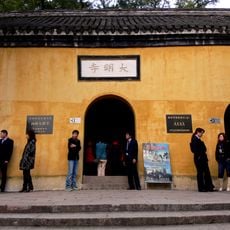
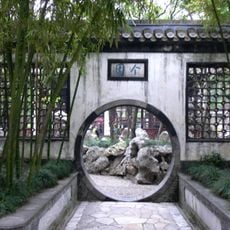
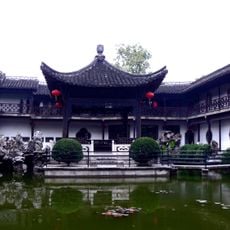
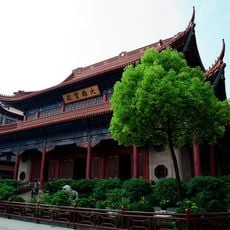
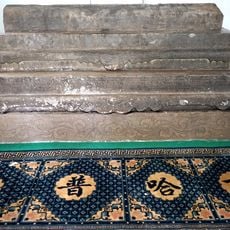
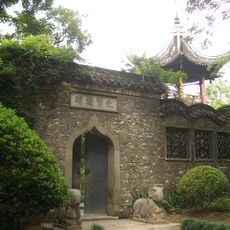
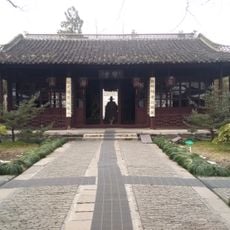
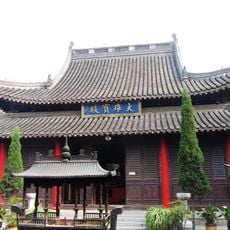
The Wu Family Residence in Yangzhou is a dwelling built with traditional Chinese architecture, multiple courtyards, and elaborate wooden carvings on beams and walls. The house contains numerous rooms with stonework details and displays the typical design of wealthy homes from its period.
Wu Yinsun (1848–1917), who served as Ning-Shao-Tai circuit intendant and later as Gansu and Zhejiang provincial treasurer, built the residence from 1888, modelling it on the Ningbo circuit intendant's yamen. The Wu ancestors were salt merchants from Shexian, Anhui, who moved to Yangzhou under the Qianlong emperor and changed their registration to Yizheng. During the War of Resistance the garden was occupied by Japanese troops; the compound later housed a provincial hospital, then the Subei People's Hospital, and from 1952 Yangzhou's First People's Hospital.
The residence displays classical Chinese architectural principles through its symmetrical rooms and carved wooden details that reflect the family's social standing. The arrangement of spaces and courtyards follows traditional design patterns that remain visible in how the building is organized today.
The residence stands at 45 Taizhou Road in Guangling District, Yangzhou. Only the residential section survives: the garden (Wuyuan) and the ancestral hall are gone. A fire lane divides the compound into an eastern part with two axes and a western part with three, of which the central axis keeps one bay and the western axis is destroyed. Allow time to walk both halves.
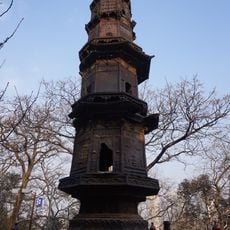
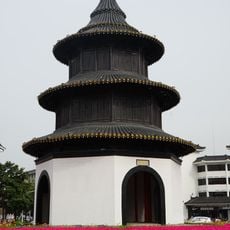
The Cehai Tower, on the eastern axis, was modelled on Ningbo's Tianyi Pavilion and once held 200,000 volumes. The residence is split by a fire lane into an eastern part with two axes and a western part with three; of the western part's central axis only one bay survives, and its western axis is gone entirely.
The community of curious travelers
AroundUs brings together thousands of curated places, local tips, and hidden gems, enriched daily by 93,380 contributors worldwide.