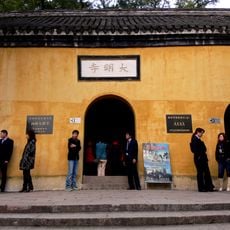
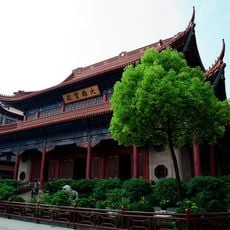
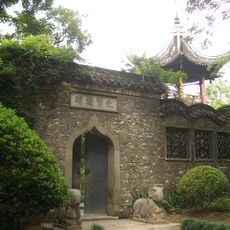
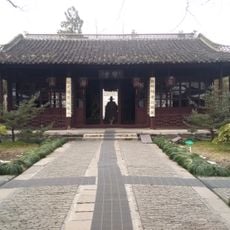
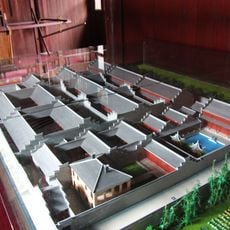
Jinshan Temple, Buddhist temple on Mount Jin in Zhenjiang, China.
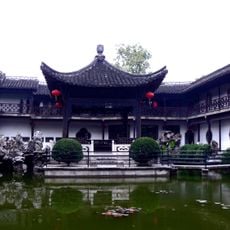
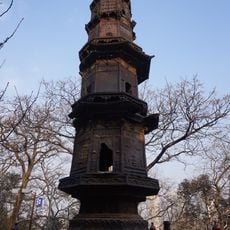
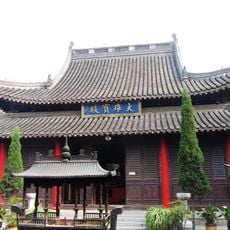
This temple complex features traditional Chinese architecture with multiple halls, pavilions, and the notable 36-meter-high Cishou Pagoda, all integrated harmoniously with the natural mountain landscape.
Founded between 323-325 AD during the Eastern Jin dynasty by Emperor Ming of Jin, the temple has survived over 1,700 years through multiple dynasties, reconstructions, and name changes.
Xu Xian, a young man, is not a monk; the legend of the White Snake, in which the snake spirit Bai Suzhen floods Jinshan Temple, is set here. A local saying praises Jinshan monks for sitting in meditation most upright, and the temple has housed the Jinshan Buddhist College since 1995.
Visitors can reach the temple via buses 2, 8, 17, 29, 34, 35, 40, 49, 60, 92, 102, 104, 115, 133, or 216 to Jinshangongyuan Station, with entrance fees of CNY 50.
The temple holds the "Four Treasures of Jinshan": Su Dongpo's jade belt, a Zhou dynasty ding, the Jinshan map and a bronze drum. The Song poet Su Shi, a friend of abbot Foyin, left his belt here. The Cishou Pagoda on the summit, rebuilt in 1900, stands 36 metres tall with seven octagonal storeys.
The community of curious travelers
AroundUs brings together thousands of curated places, local tips, and hidden gems, enriched daily by 94,347 contributors worldwide.