Nanjing Man Cave, Archaeological cave site in Tangshan, China
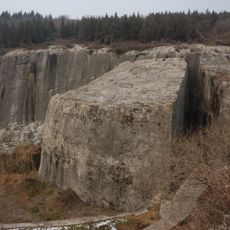
Nanjing Man Cave is the fossil site in Hulu Cave (Coloquinte Cave) on Leigong Mountain at Tangshan, about 28 km west of Nanjing. The cave lies in limestone and consists of a large chamber and a smaller side chamber where the fossils were found. Two partial Homo erectus skulls, one male and one female, and an isolated molar were recovered there.
Scientists found fossil remains here in the 1990s that date back several hundred thousand years, confirming human habitation in this region during the middle Pleistocene. These discoveries helped establish the Yangtze River area as an important location for tracing early human evolution in Asia.
The site takes its name from the ancient humans whose remains were discovered here, marking a key location in understanding early human settlement patterns in East Asia. Walking through these chambers, visitors sense how inhabitants used this space for shelter and survival in prehistoric times.
Wear sturdy shoes since the cave paths are uneven and can be slippery in places due to moisture and mineral deposits. Plan to spend several hours exploring the site, and consider visiting during drier seasons when conditions are most comfortable for walking through the chambers.
The first skull was found on 13 March 1993 by workers developing the Tangshan caves for tourism, in a small chamber below the south side of Hulu Cave; a second skull followed on 17 April 1993 as Nanjing Museum staff cleaned animal fossils dug out by farmers. A human tooth was then recovered on 8 January 1994 during excavations led by Lü Zun'e.
The community of curious travelers
AroundUs brings together thousands of curated places, local tips, and hidden gems, enriched daily by 94,191 contributors worldwide.