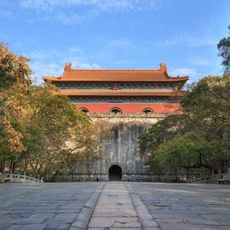
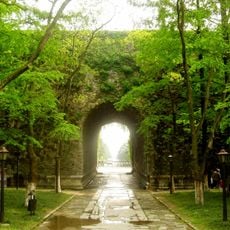
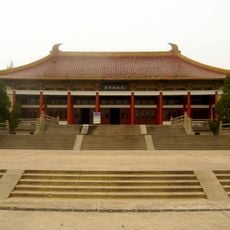
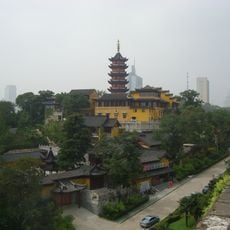
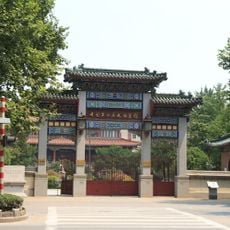
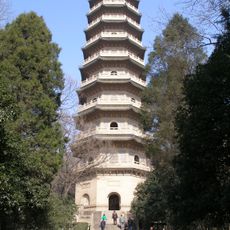
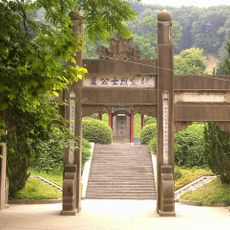
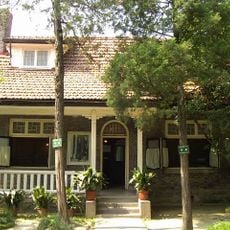
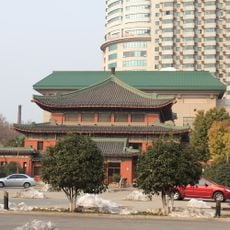
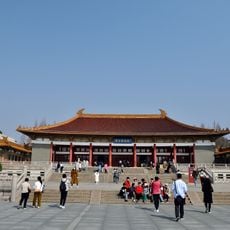
Tomb of Wu Zhen, Imperial tomb in Xuanwu, Nanjing, China.
The Tomb of Wu Zhen is a Ming Dynasty burial site in Xuanwu, Nanjing, decorated with stone carvings and ritual symbols. The complex displays traditional Chinese architectural elements arranged through several ceremonial pathways and spaces.
Wu Zhen died in Nanjing in 1379 and was granted burial at the northern foot of Zhongshan, the highest honour for Ming founding officials. His tomb was excavated in September 1983 by the Nanjing Municipal Museum, when the plot belonged to the Nanjing Film Machinery Factory. In 2006 it was included in the national Ming Xiaoling site.
The burial site reflects how the Chinese honored their deceased through careful spatial design and architectural choices that showed status and respect. Walking through the layout helps visitors understand the values that shaped funerary practices at the time.
The tomb lies inside the Xinshijie Huayuan residential compound at 3 Bancang Street, Xuanwu District, north of the Wu Liang tomb; ask the gatehouse staff for permission to enter. The stone figures were moved west of the Wu Liang tomb in 1952 and again in 2002, so the eastern group is labelled as Wu Zhen's. The underground brick chamber, 6.96 m long, was excavated in 1983 and is not open to visitors.
The tomb chamber was built from bricks taken from the Nanjing city wall, some still bearing inscriptions; the walls are 0.42 m thick and the vaulted ceiling 1 m thick. The chamber is 6.96 m long, 2.87 m wide and 2.82 m high, split by a 0.52 m partition wall into a front room holding the epitaph, a porcelain plum vase, an iron sword and armour, and a rear room with a decayed wooden coffin and bronze, tin and jade utensils.
The community of curious travelers
AroundUs brings together thousands of curated places, local tips, and hidden gems, enriched daily by 93,507 contributors worldwide.