Qixia Temple, Buddhist temple in Qixia District, Nanjing, China
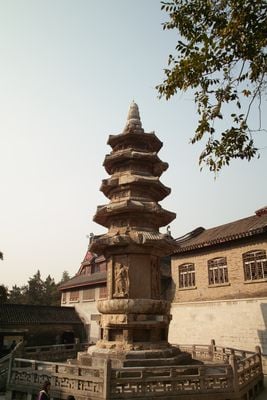
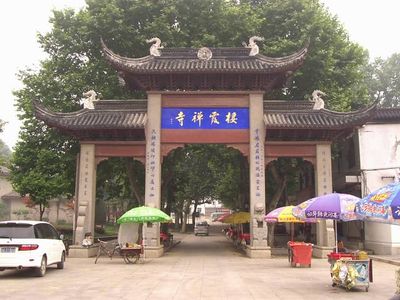
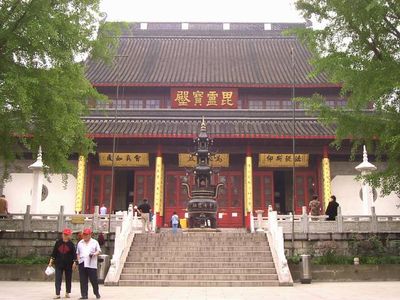
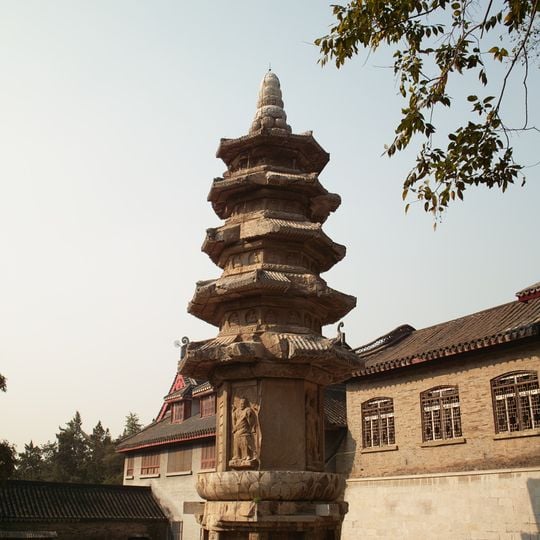
Qixia Temple is a Buddhist monastery on the west slope of Qixia Mountain, 22 km northeast of downtown Nanjing. Its main buildings include the Mountain Gate, Maitreya Hall, Vairocana Hall, Dharma Hall, and Sutra Library. Southeast of the temple stands the five-story, octagonal Qixia Stupa, 18 m high on a two-tier base carved with waves, fish, and crab apple. The Dafo Pavilion houses a 10.8 m seated Amitabha statue.
The temple was established in 489 and underwent several reconstructions over the following centuries. A major restoration during the early Republic period helped shape what visitors see today.
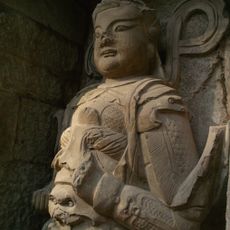
The temple serves as an active place of worship where visitors can observe Buddhist practices and see how the site remains meaningful to the local community. The carved Buddha statues in the mountain niches represent a tradition of devotion that has continued for more than 1,500 years.
The temple sits on the western slope of Qixia Mountain, about 22 kilometres northeast of downtown Nanjing. The grounds climb the hillside, and the Thousand Buddha Rock and stupa lie beyond the main halls, so allow time for walking on slopes and steps. The site is reached from the Qixia District suburbs by road.
The Thousand Buddha Rock east of the stupa holds 297 niches and 515 statues, carved from the Southern Qi period onward; the Qixia flying-apsara mural found there in 2000 is the only intact wall painting discovered in the grotto. The Dafo Pavilion's seated Amitābha, begun in the 5th century, is 10.8 metres high, 13.3 metres with its throne.
The community of curious travelers
AroundUs brings together thousands of curated places, local tips, and hidden gems, enriched daily by 93,565 contributors worldwide.