定慧寺, Buddhist temple in Zhenjiang, China
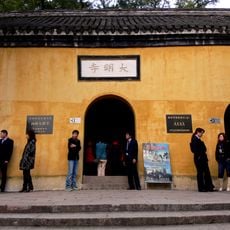
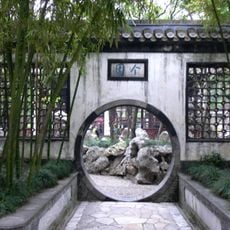
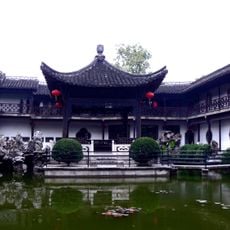
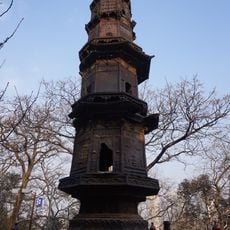
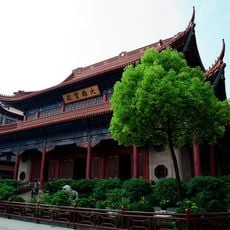
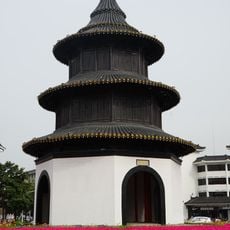
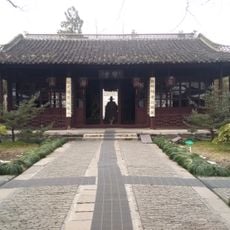
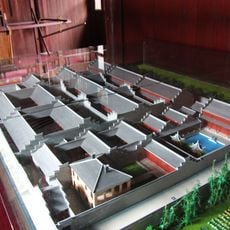
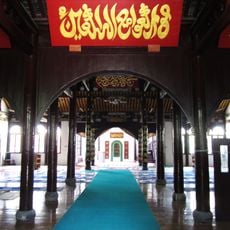
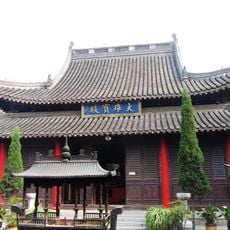
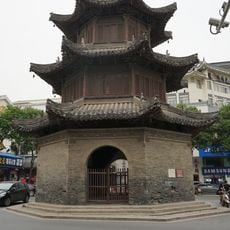
Dinghui Temple occupies a large rural setting with multiple buildings and courtyards arranged across the grounds, with main halls displaying Buddhist statues. The complex also includes a tall tower that allows visitors to see views toward nearby mountains and the surrounding region.
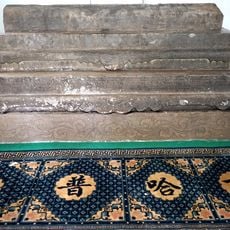
Founded in 194 CE during the Eastern Han Xingping era as Puji Temple, it became Puji Chan Monastery in the Northern Song Yuanyou years, when Su Shi's friend Foyin was installed as abbot. Renamed Jiaoshan Temple in the Yuan dynasty, it received its current name in 1703 from the Kangxi Emperor. The Ming dynasty was its peak, with 98 halls and 3,000 monks.
The name Dinghui was bestowed by the Kangxi Emperor in 1703 during his southern tour, when the temple was still called Jiaoshan Temple. Its halls are arranged in sequence: the Mountain Gate, Heavenly King Hall, Mahavira Hall, Haiyun Hall and Huayan Pavilion. Master Mingshan resided here in the 1980s and 1990s.
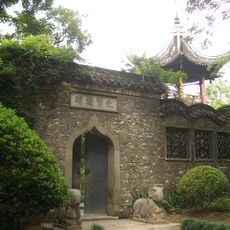
The grounds are walkable throughout, with paths and stairs connecting the various buildings and allowing visitors to move between levels. The best times to explore are early morning or late afternoon when fewer crowds are present and lighting is favorable for viewing the structures.
The temple stands on Jiaoshan, an island in the Yangtze northeast of Zhenjiang. In 1983 the State Council named it a National Key Buddhist Temple of the Han region, and in December 2011 Jiangsu province listed it as a provincial cultural relic. Its halls run from the shanmen through Tianwang Hall and Mahavira Hall to Haiyun Hall and Huayan Pavilion.
The community of curious travelers
AroundUs brings together thousands of curated places, local tips, and hidden gems, enriched daily by 93,477 contributors worldwide.