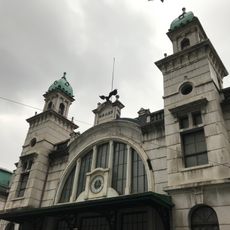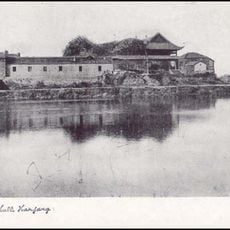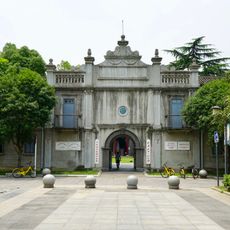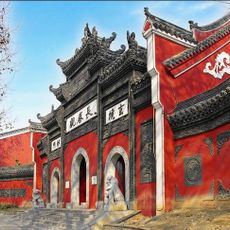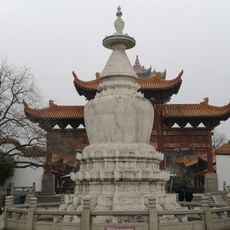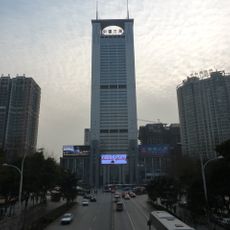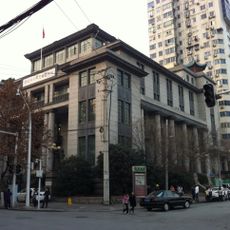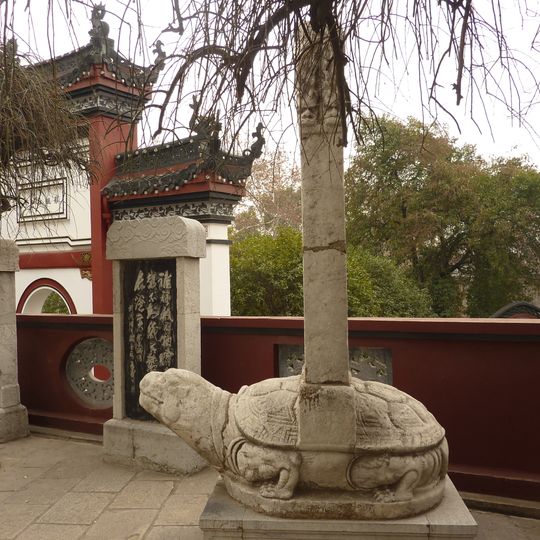
Qingchuan Pavilion, Historical pavilion in Wuhan, China.
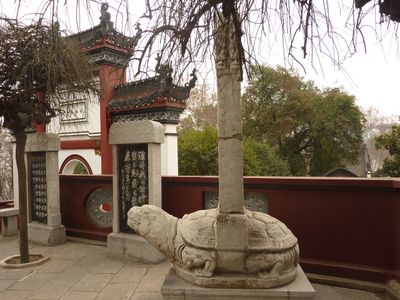
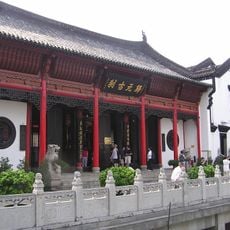
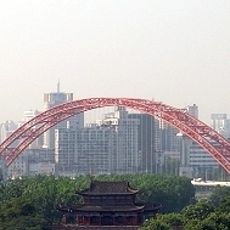
Qingchuan Pavilion sits on the northern bank of the Yangtze River with views across the water toward the opposite shore and surrounding areas. The wooden structure rises over the water and can be seen from both the river and the city streets nearby.
The pavilion was built during the Ming Dynasty as a memorial to an ancient flood-control figure from legend. Over the centuries it has undergone changes but remained a significant landmark along the river.
The name draws from classical poetry associated with this stretch of the river and its historical significance. The pavilion represents how literature and architecture intertwine in Chinese tradition.
The location is easy to reach on foot and sits in a bustling part of the city near the river edge. The best time to visit is during daylight hours when views across the water are clearest.
The building houses an ancient stone tablet carved with rare characters that documents accomplishments from long ago. This inscription is one of the most important details and explains why scholars have visited this site for centuries.
The community of curious travelers
AroundUs brings together thousands of curated places, local tips, and hidden gems, enriched daily by 91,124 contributors worldwide.