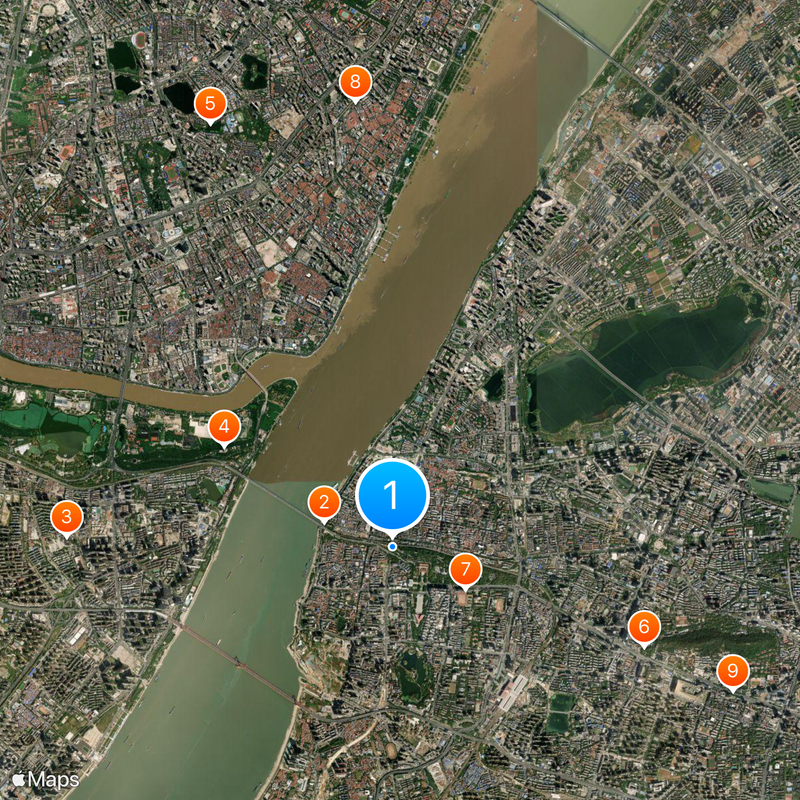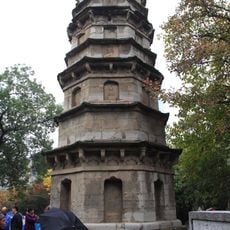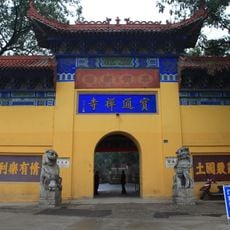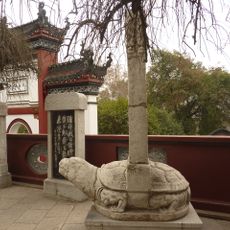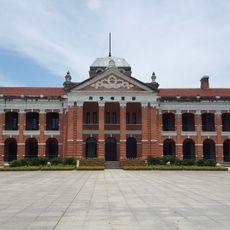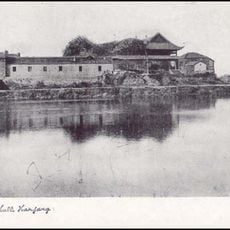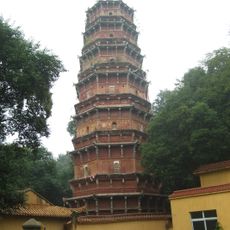
Tower of the Yellow Crane, Chinese pagoda on Snake Hill in Wuhan, China.
The Yellow Crane Tower is a five-story structure on Snake Hill covered with about 100,000 yellow glazed tiles, rising roughly 51 meters above the Yangtze River's shore. The building follows classic Chinese architectural patterns with stacked roof tiers and is surrounded by smaller pavilion-like structures that enhance the overall composition.
The original structure was built in 223 as a military watchtower under Sun Quan's rule but underwent multiple reconstructions through the centuries. The current version was fully rebuilt in 1985, blending authentic historical designs with modern craftsmanship.
The tower takes its name from an ancient tale about a Taoist priest who sketched a crane on a wine house wall, a story that shaped its spiritual meaning for locals. Today you can see traditional Chinese art and poetry displayed throughout the structure, reflecting how the place continues to honor these cultural roots.
The site is well connected by several bus lines including routes 10, 61, 401, and 402, plus trolleybus lines 1, 4, and 7 that go directly to the base of the hill. Early morning or late afternoon visits tend to be less crowded, and you'll find better lighting conditions for photos and a more relaxed experience overall.
The original tower owes its name to a legendary tale about a Taoist priest who sketched a crane on a wine house wall, prompting the community to build the structure in response. This element of local mythology has remained so central to the place's identity that it continues to be reflected in the name even today.
The community of curious travelers
AroundUs brings together thousands of curated places, local tips, and hidden gems, enriched daily by 91,150 contributors worldwide.