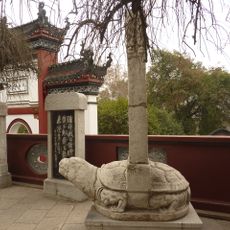
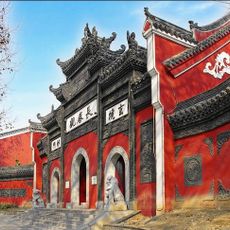
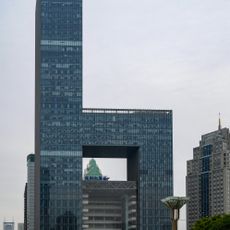
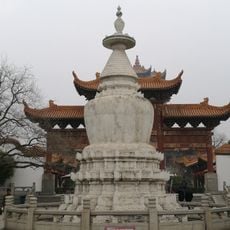
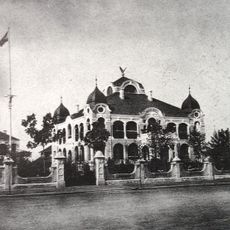
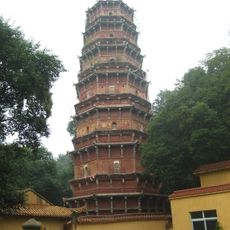
Wuying Pagoda, Stone pagoda at Xingfu Temple in Wuchang, China.
Wuying Pagoda is an eight-sided stone structure built over seven levels that rises prominently in the landscape. Its surfaces display Buddhist carvings at several levels, showing the craftsmanship of medieval Chinese builders.
The first pagoda on this site belonged to Jin'an Temple, built under Emperor Yuan of Liang and later renamed Xingfu Temple under Emperor Wen of Sui. The present stone pagoda was rebuilt in 1270, during Emperor Duzong's reign, as the Southern Song was collapsing. Xingfu Temple was ruined in the 19th century during the Taiping Rebellion; the pagoda was moved in winter 1962/1963 from the temple's east slope to the west foot of Mount Hong.
This structure has served as a place of worship and devotion for centuries, drawing visitors interested in Buddhist traditions. The carved niches and statues within show how religious practice shaped the space and continues to define its character today.
The pagoda stands at the western foot of Mount Hong, beside Shi Yang's tomb in Hongshan Park, in Wuchang. It was moved to this spot in the winter of 1962/1963 after tilting at its old site east of the mountain. The stone carvings sit in small niches on four of the seven storeys, so look up closely.
Local accounts mention an unusual optical effect that occurs during specific times of year, when the structure's shadow nearly vanishes from the ground. This rare occurrence makes the site particularly intriguing for visitors interested in how architecture and natural cycles intersect.
The community of curious travelers
AroundUs brings together thousands of curated places, local tips, and hidden gems, enriched daily by 93,834 contributors worldwide.