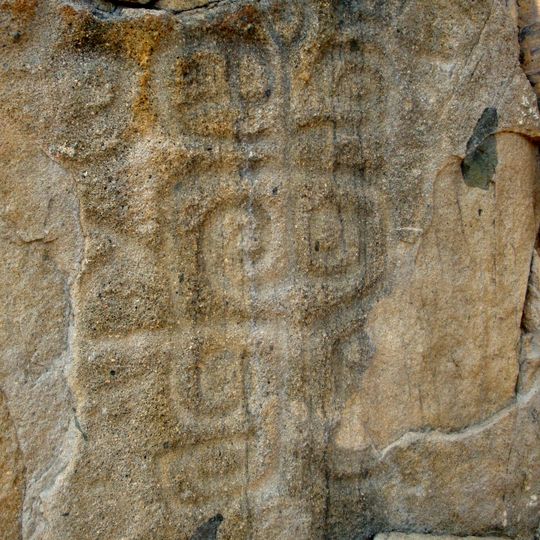
Po Toi Rock Carving, Bronze Age rock carvings on Po Toi Island, Hong Kong.
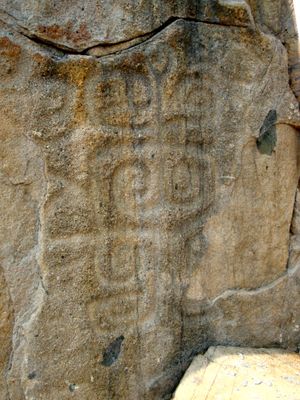
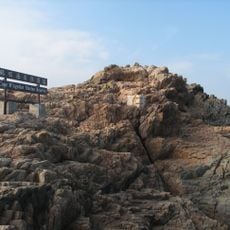
Po Toi Rock Carving is split into two parts by a rock fissure about 0.7 metres wide. The left section bears patterns resembling fish and animals, while the right section is made of spiral lines joined together. The carving lies at the southern end of Po Toi Island, south of Hong Kong Island in Islands District.
The carvings are estimated to be 3,000 years old, dating to Hong Kong's prehistoric period. They were discovered in the 1960s on the southern tip of Po Toi Island and are now a declared monument. In 2007, a black biofilm of cyanobacteria and lichen was found covering the carvings, prompting a conservation dispute.
The left half of the carving carries patterns resembling fish and animals, while the right half is made of spiral lines joined together; the two halves are split by a rock fissure about 0.7 metres wide. The site is a declared monument in Islands District, and in 2007 researchers found a dark film of cyanobacteria and lichen covering the motifs.
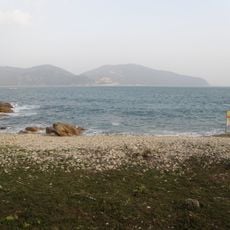
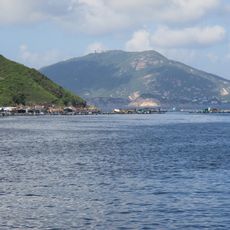
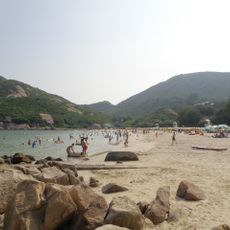
The carving sits at the southern end of Po Toi Island, in Islands District south of Hong Kong Island, and is reached on foot from the island's main landing point. The two halves are split by a 0.7-metre-wide fissure in the rock, so look at both sides of the gap. The stone lies in the open along the coast, where flowing hill water and strong sun encourage the dark microbial film noted on the surface.
In November 2007, University of Hong Kong honorary researcher William Meacham found a black layer on the carving, judged to be a biofilm of cyanobacteria and lichen. The Leisure and Cultural Services Department later sprayed an isothiazolinone-based biocide and a protective coating on it and on the Wong Chuk Hang carving; Meacham argued such treatment may itself erode the carved patterns.
The community of curious travelers
AroundUs brings together thousands of curated places, local tips, and hidden gems, enriched daily by 93,689 contributors worldwide.